40 years ago, a dinosaur called the Talbot Sunbeam Lotus was born


What Sunbeam and Lotus brought to the market back then was actually incredible.
In March 1979, the British presented the Sunbeam Lotus at the Geneva Motor Show. While young sports drivers were already enjoying themselves in front-wheel-drive VW Golf GTIs or Renault 5 Alpines, Sunbeam, soon to be known as Talbot, showed what a rear-wheel-drive compact hatchback could achieve. In fact, this compact five-seater in Group 4 trim went down in history as the 1981 World Rally Champion.
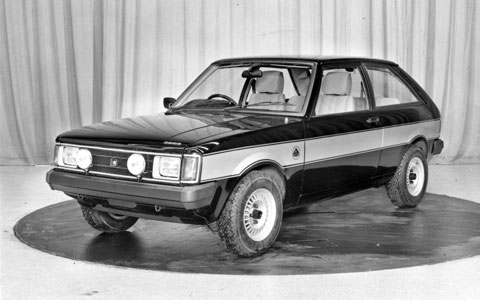
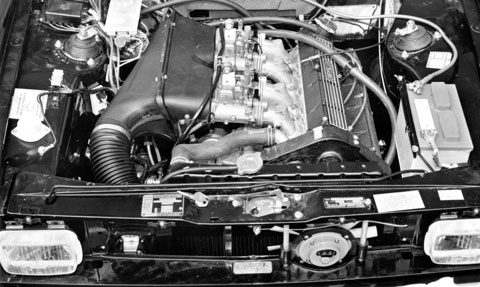
A narrow version, mostly painted black and silver, was built for the road, with a Lotus 2.2-liter engine producing 149 hp, which was transmitted to the rear axle via a ZF five-speed gearbox.
4000 vehicles were to be built, and in Germany the three-door models with 185/70 HR 13 tires were offered for DM 22,500. So the car was not cheap, but it was fun, as Automobil Revue reported after an early test drivein 1979:
" On a flat road, the Sunbeam Lotus initially understeers in corners, but as the speed increases, it gradually switches to oversteer, which is easy to keep under control by turning the steering wheel back slightly. Virtuosos of the valance can effortlessly provoke a vehement wiping away of the rear end in tight bends by applying power and maintain this driving state right up to the exit of the bend by controlled use of the accelerator pedal and by counter-steering with the pleasingly precise and quite direct steering (3 2/3 turns from stop to stop). This decidedly sporty driving style is facilitated by the well-spaced ZF five-speed gearbox, which - once you get used to the unfamiliar shift pattern with the first gear on the left at the rear - can be shifted with lightning speed and precision."
Because the Peugeot-Citroën Group PSA had little use for the Sunbeam products after the takeover of Talbot/Sunbeam, the Talbot Sunbeam Lotus only had a short life. It was built for just over two years. Today, however, it is one of the most sought-after classics, although only a few examples have survived in their original condition. We hope to portray one of them this year!