BMW M3 versus Über-Baby-Benz or, the curse of the four doors?

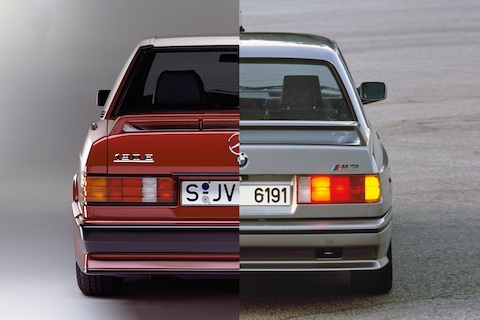
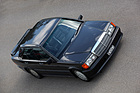
In 1983, Mercedes-Benz launched the 190 E 2.3-16, a sports version of the baby Benz that not only left potential buyers scratching their heads, but also its competitor BMW. Perhaps this is why Mercedes chose smoky silver as one of the two standard colors.

It would be almost three years before the Munich-based company was able to follow suit with the BMW M3 based on the E30 series.
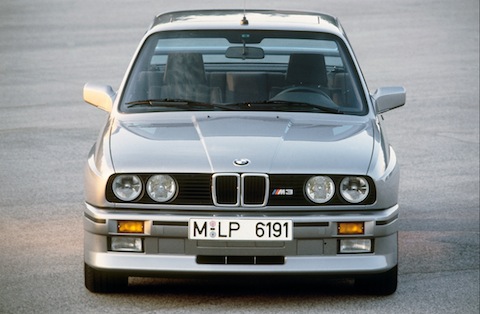
At the time, the two cars were similarly expensive at around DM 60,000 or CHF 55,000, but today well-preserved M3s cost around four times as much as the Mercedes alternative. Why is that?
One concept, two versions
At first glance, both manufacturers pursued similar concepts, and the engine was almost identical.

Both were powered by a 16-valve four-cylinder engine with two overhead camshafts and a displacement of 2.3 liters. While Mercedes (with the help of the English engine manufacturer Cosworth) produced 185 hp, BMW produced 200.
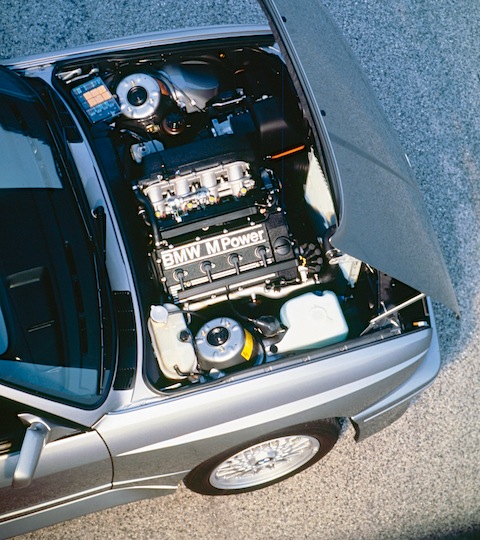
High revs were necessary for both, but the torque did not fall by the wayside, which is why the sports engines also made a good trap in everyday use.
Four doors as a disadvantage?
There were no other fundamental differences. In BMW and Mercedes, the engine was located at the front and drove the rear wheels. While the five gears were always changed manually at BMW, Mercedes traditionally also offered an automatic as an alternative.

Inside, the expensive Evolution models were similar to their cheaper standard versions, although the manufacturers did allow their customers a little more equipment.
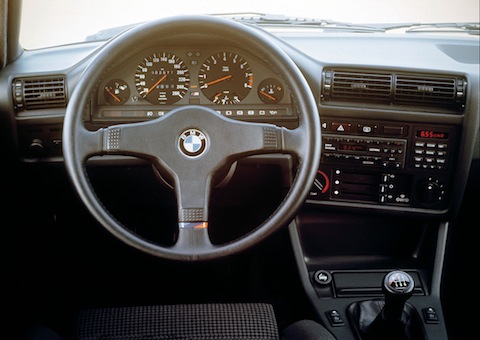
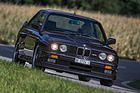
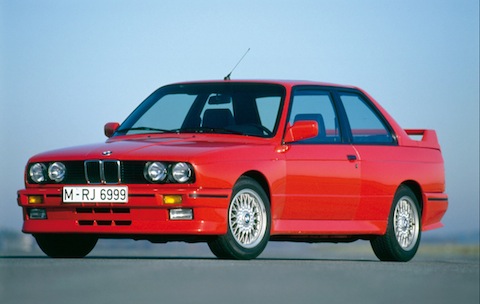
On the outside, the two sports saloons showed that there was more to them with intrusive wings, aprons and fender extensions. BMW also flattened the rear window to improve the aerodynamics, giving the M3 and 2.3-16 the same Cd value of 0.33.

Both BMW and Mercedes were designed as four-seaters, but due to the W201 model series, Mercedes offered four doors as an entrance, whereas BMW always had two.
Similarly successful?
The 190 E 2.3-16 (and its direct successor, the 2.5-16), built from 1983 to 1993, and the M3 E30, which was produced between 1986 and 1991, proved to be similarly successful on the market. In the end, there were around 18,000 Bavarian sixteen-valve cars compared to around 25,000 Swabian baby Benzes.

In motorsport, however, the M3 overtook the baby Benz, although Mercedes did manage to wrest the championship title in the German Touring Car Championship from BMW in 1992. However, the BMW was unbeatable in terms of the number of victories on the international stage.
What makes the difference?
Today, a good BMW M3 in its original condition costs around 50,000 euros/CHF, while the normal Mercedes-Benz 190 E 2.3-16 can still be bought for less than 20,000 euros/CHF. Two similar vehicles, both equipped with motorsport honors, have developed completely differently in terms of value.
Is it the four doors of the Mercedes, the slightly poorer performance or perhaps the slightly less brute appearance of the Baby Benz? We don't know, but you can also look at it from the other side. While the M3 is already worth its original price (or more) today, the Mercedes still has a lot of upside potential. Both are fun to drive, on the racetrack the M3 is still ahead today, in everyday life the Mercedes can score points. To each his own, you could say.
BMW M3 E30 and Mercedes-Benz 190E 2.3.16 in comparison
| BMW M3 E30 ECE Cat |
BMW M3 E30 CH Cat |
Mercedes 190E 2.3-16 ECE without catalytic converter |
Mercedes 190E 2.3-16 ECE Cat |
|
|---|---|---|---|---|
| Price DM | 59800 | 58140 | ||
| Price CH | 54000 | 56280 | ||
| Power PS | 185 | 185 | 185 | 170 |
| at rpm | 6750 | 6750 | 6200 | 5800 |
| cw value | 0.33 | 0.33 | 0.33 | 0.33 |
| Length cm | 436 | 436 | 443 | 443 |
| Width cm | 167.5 | 167.5 | 170.5 | 170.5 |
| Height cm | 136.5 | 136.5 | 137 | 137 |
| Weight kg | 1280 | 1285 | 1260 | 1310 |
| 0-80 km/h | 5 | 5.4 | 5.4 | |
| 0-100 km/h | 6.8 | 7.4 | 7.5 | 7.8 |
| 0-160 km/h | 16.9 | 18.5 | 19 | |
| 40-120 km/h 5th gear | 22 | 23.4 | 23.3 | |
| Vmax km/h | 233 | 235 | 231 | 221 |
| Test consumption l/100 km | 11 | 10.7 | 11.7 | |
| Number of units (all types) | 18283 | 25230 |
Detailed individual reports on the Mercedes-Benz 190 E 2.3-16and the BMW M3 E30 have been published previously.