The word on decay

But there is one thing that unites everything, because the ravages of time gnaw at everything. Every tree gets its annual ring, every person sooner or later gets their gray hair and a few wrinkles. Houses begin to crumble, paintings and carpets turn pale, flowers wither, life dies. As long as we think and pass on, an unstoppable cycle runs its course.
Unfortunately, our beloved automobile is also part of this cycle. But I don't think there is any other object in our lives that provides as much material for discussion about its decay as the automobile. Church frescoes are being restored to their former glory. Centuries-old paintings are painted over with new paint, missing parts are reconstructed or added. No art historian will ever stand in front of a newly restored Michelangelo and say: it's no longer real, it should be destroyed.
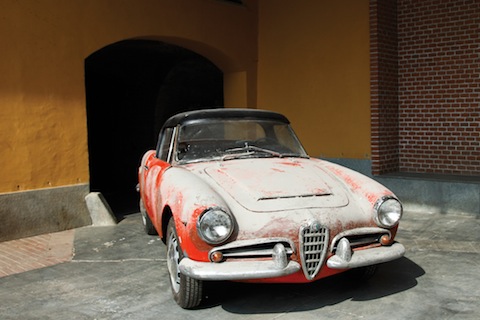
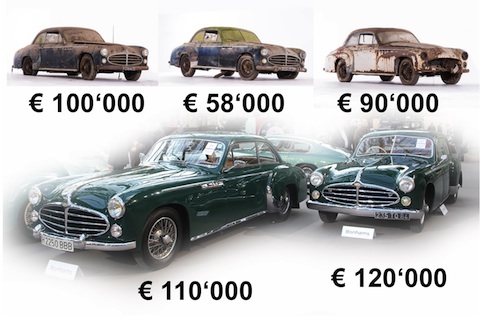
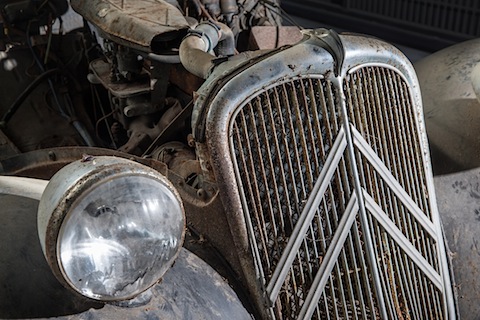
When it comes to cars, however, there is a constant debate about what should and should not be done with a "barn find". Conserve or restore? Actually, only preservation, because restoration would mean new parts, which in turn would mean that the car would no longer look like it did when it left the factory. New sheet metal, new block, new pistons, fresh brakes, new paint, fresh leather, etc. ...
In Paris this spring, the Baillon collection went under the hammer at the highest possible prices. Cars in absolutely unrepairable condition fetched millions. Who would believe that all the new owners of these extremely morbid cultural assets are retired pathologists who are content to let their cars fall apart? The cars will certainly come back. In just a few years, they will shine in new splendor somewhere. They will be better than they ever were when they left the factory. They will be more drivable than they ever were and all teething troubles will have been rectified before the maiden voyage. The only thing that has probably survived is the chassis number, perhaps a needle on the fuel gauge or the trip meter. I welcome this attitude and am happy about every car that is saved from its final death.

All cars, just like every person or every house, are in a constant state of restoration. The house gets a fresh coat of paint, the person gets new teeth, the car gets a freshly overhauled engine. Racing cars are prime examples of this. After every race, they are prepared for the next outing. Anything that no longer guarantees optimum reliability is replaced. The engine is overhauled after a certain period of use. In addition, there are also cold deformations that have to be repaired. The longer a car remains in use, the greater its regeneration. It should be noted that in the 50s, 60s and 70s, a racing car remained in active service for up to ten or more years. Over the course of a decade, various new technical developments were added to the vehicle. If you buy a racing car today with the oh-so-beloved history, the vehicle really does have history and has probably mutated into a completely different car in the process.
Jim Clark, for example, was the only one to drive his own Cortina Lotus in its original condition; all of his successors have already had various modifications and have probably had to change or overhaul the engine and gearbox. If you buy Clark's ex-car today, you can be sure that even Clark would no longer recognize his own car. You can now restore the car and leave it as it is, or build it back to what it once was, but both options involve adding new parts.
What I want to say is that it is actually pointless to have such discussions. Let's just be glad that there are friends of old cars who cherish and care for them, restore and rebuild them. They preserve cultural assets by any means necessary. It really doesn't matter whether the bulb for the interior lighting was manufactured before the war or just yesterday. The only important thing is that the car was assembled from exactly the same components that were used in the original and not fitted with LED light for the interior lighting. The limit is certainly also massively exceeded when an MG TC with a V8 big block, a Ford T with disc brakes, a 190 SL with sequential gearbox or a 250 GTO with nitrous oxide injection comes along.
But at the end of the day, everyone should be able to enjoy their own vehicle and drive it in the wild.
All these thoughts came to me when I visited the current exhibition on "Barn Finds" at the Pantheon Basel , which I can only recommend.