Low-consumption classic cars

In car manufacturers' advertising, progress in fuel consumption is always a weighty argument. In fact, a lot of brainpower and engineering is invested in getting as much propulsion as possible out of every liter of petrol (or diesel). Old cars, on the other hand, are often portrayed in popular opinion as fuel wasters. Fuel consumption miracles do not really fit in with the comparatively primitive technology. It is therefore all the more interesting to read in Auto Bild Klassik what old cars really consume.
In two issues (12/2012 and 8/2013), the testers drove 30 cars over a 155 km course, which included 54 km of highway, 61 km of country road and 40 km of city traffic. On the highway, however, the old cars were not overloaded with full throttle, but the maximum speed was limited to around 70% of the possible maximum speed. The overall driving style in the test therefore corresponds roughly to the normal behavior of a classic/young car owner.
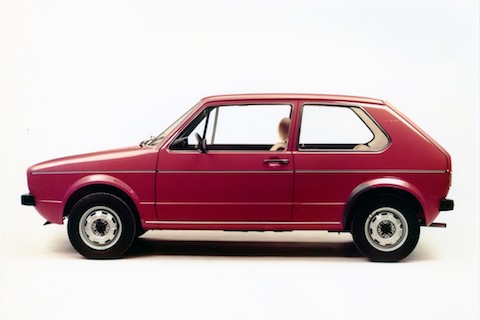
The VW Golf Diesel came top of the table in terms of fuel consumption. With 3.9 liters of diesel per 100 km, it produces just 103 grams of CO2, which is still exemplary even by today's standards, if one disregards the presumably horrendous particulate matter values.
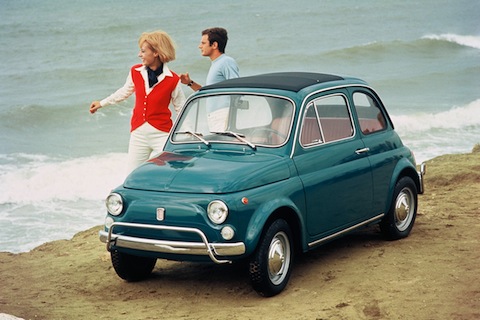
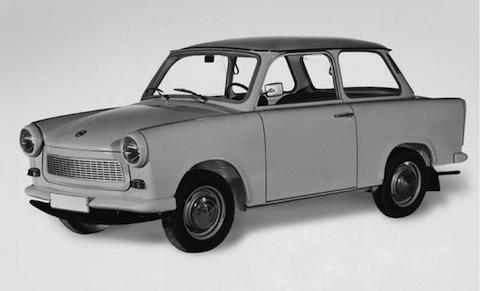
Second place goes to the Fiat Nuova 500 with 4.8 liters, third place to the Trabant 601 S de Luxe.
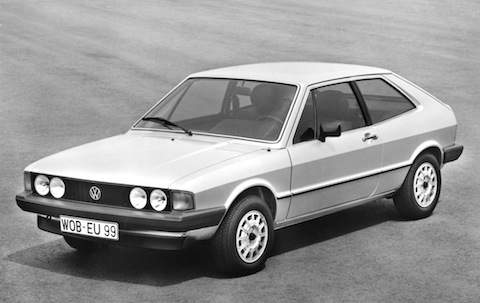
Another surprise follows in 4th place, namely the fuel-injected and anything but sleepy first-generation VW Scirocco GLI, which only needed 6.2 liters on the consumption lap.
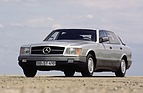
It was followed by the DKW F102 (6.4 liters), Mercedes Benz 190 (Baby Benz, 6.7 liters), BMW 325e Baur TC (7.9 liters) and then the first turbo in the form of the Saab 900 S Cabriolet (8.0 liters).
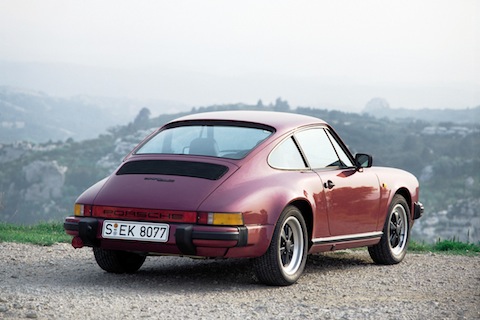
A Porsche 911 of the G-model generation (a Carrera 3.2 from 1983 was tested) can also be described as economical with 8.6 liters, as can an MG B GT with 8.2 liters.
At the back of the field are the displacement giants such as a Lincoln Continental Mk III with 17.3 liters or an Oldsmobile 98 Convertible with 23.5 liters.
As expected, the much-maligned Wankel performs mediocrely, the NSU Ro 80 needs 11 liters for 100 km, and a Ferrari 412 is content with a surprisingly humane 15.0 liters.
And the goddess? The forty-year-old Citroën DS 20 consumes 8.8 liters per 100 km, which is also very little, God knows.
Conclusion: The old cars need less fuel than expected, especially if they are driven gently. However, this requires well-maintained technology. The reasons for the sometimes exemplary economy lie primarily in the low weight and low-power design of the old cars, while aerodynamics probably play less of a role.
Of course, it would have been interesting to include older cars, such as a cycle car or a pre-war MG. I would also have been curious to see how a Tatra or a Renault R4 fared. But perhaps the colleagues from Auto Bild Klassik will do that in the third part?