On the road with the old racing car

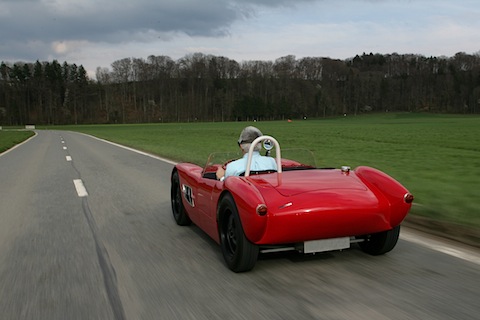
Today, it would be unthinkable to take a Le Mans race car or a Grand Prix car and use it to fetch bread rolls. Not only would you probably fail at the next level crossing, traffic circle or road shoulder, but there would also probably soon be problems with the engine temperature. And nobody would think of driving to a racing event in a high-powered racing car these days.
It used to be different, even the works teams brought their cars to the racetrack on axles. Until around the mid-sixties, most GT and sports cars were road-legal - the necessary requirements such as lighting system, ground clearance, handbrake, etc. were met - and could be driven in normal road traffic. Nevertheless, this was probably not always easy, as some racing cars did not have a cooling fan and could not cope well with long periods of standing still or slow-moving traffic.
Some racing cars from the past even behave much more civilized on the road today than they did in the past, so you can actually take a drive in today's traffic without fearing the worst. Nevertheless, even today, bumper-to-bumper traffic and slow driving are not the preferred environment for a racing car, even if it has a temperature-controlled fan and spark plugs that don't fuse so quickly. The racing cars of the past often only felt really comfortable in a narrow speed range, below which the engine optimized for racetrack use can easily choke. The clutch and gearbox (usually unsynchronized, straight-toothed) are also not tailored to city traffic. And hardly any racing car is prepared for large weekend luggage ...
To cut a long story short - you can (and may!) still drive an old racing car on the road today, but the clever driver will choose the route carefully beforehand and take the fragile machinery into consideration.