Driving 50 years ago - the problem of the undercooled engine

Driving a car used to be much more demanding in many areas than it is today. Things that are self-evident and automatic in modern vehicles used to have to be controlled and monitored by the driver. For example, a report in Motorrundschau 23 from 1961 warned against driving with an "undercooled engine":
"Nothing is as damaging to an engine as driving in a supercooled state. Cooling water temperatures below -70 degrees Celsius damage the lubricating oil by preventing it from reaching the low viscosity required for circulation in the engine. The consequences of chemical wear are even worse. When the engine is undercooled, the lubricating film on the cylinder walls is washed away by fuel condensation, resulting in the risk of short-term dry friction from metal to metal. Above all, however, acidic combustion residues are formed which attack the cylinder liners, pistons, piston rings and bearings. A single cold start is equivalent to the wear that occurs in around 10 hours of operation at full throttle."
Those were strong words. Even back then, many "modern" vehicles already had a thermostat that supported rapid heating from a cold start, but the problem of keeping the operating temperature at the desired level even at low outside temperatures remained unsolved. Car and accessory manufacturers therefore offered various solutions.
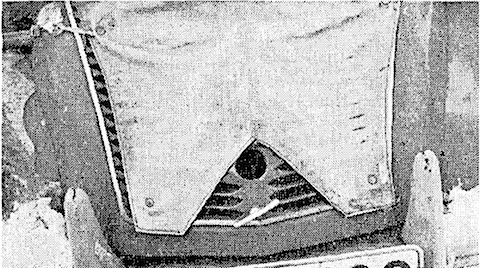
There were "semi-official skirts", as shown here on a Citroën 2CV:
And there were so-called "radiator shutters", which could (in some cases) be adjusted via Bowden cable from inside the car, or even automatically regulated the cooling air supply.
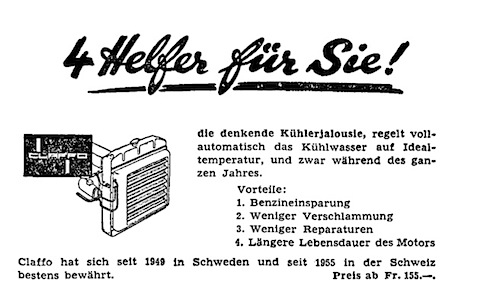
However, some of these solutions had the disadvantage that the opposite could also be achieved if they were not carefully monitored and operated - the engine could overheat. If you also consider that many vehicles at that time did not have a coolant thermometer, then you can imagine that operating errors could not be ruled out.