
Are modern cars (from 1980/1990) suitable as collectors' vehicles and future classic cars?


The question of whether cars from the modern era - and we can certainly go back to 1980 - can be preserved in the long term and kept on the road is a perennial issue for classic and vintage car fans and owners. The October issue of Oldtimer-Markt has also just been devoted to this topic again, with the conclusion that it will be difficult, but that hope is permitted.
There are actually five areas that call into question the future viability of modern cars:
(1) Electronics - a minefield, but hope is on the horizon
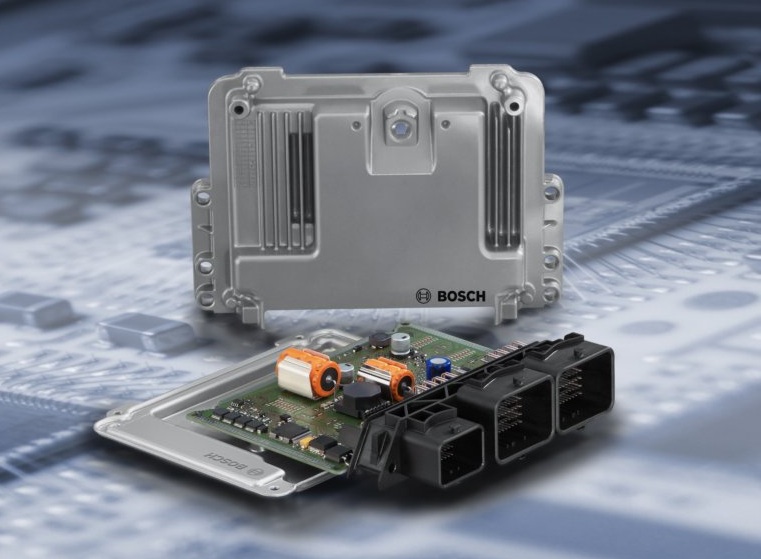
Since the late 1970s, more and more electronics have found their way into our cars. Starting with injection control, ABS controls and electronic ignition systems, these systems have become increasingly complex and interconnected. There are three problems here:
- Electronic components become old, frail and stop working, either because connections no longer conduct correctly or individual components no longer work properly
- Analyzing electronic problems is very time-consuming and depends on having correct and complete circuit diagrams and functional schematics
- The manufacturers of the components and control systems have often disappeared from the market, spare parts are no longer available or are themselves defective (see the problem with ageing).
What sounds relatively desolate in itself is, on the other hand, also a new field of business. Resourceful suppliers have already analyzed thousands of engine control units so that new parts can be offered when there is demand. In addition to the innards, however, the fact that there is also an enormous variety of plug connections and housing parts is also problematic and therefore a lot of engineering will be required to offer even simple spare parts again. What also helps in this situation is the fact that microprocessors are becoming increasingly powerful. It is therefore conceivable to build programmable standard controllers in larger quantities, which then simply simulate the simpler controllers of the past. Whether the whole effort will be worthwhile, however, depends on the value of the vehicle; for an Aston Martin DB7 Vantage or a Ferrari 360, one will certainly be prepared to spend 5000 or 10000 euros to get it running again, for a Golf III or Fiat Unto Turbo probably less.
(2) Modern car bodies are unrestorable
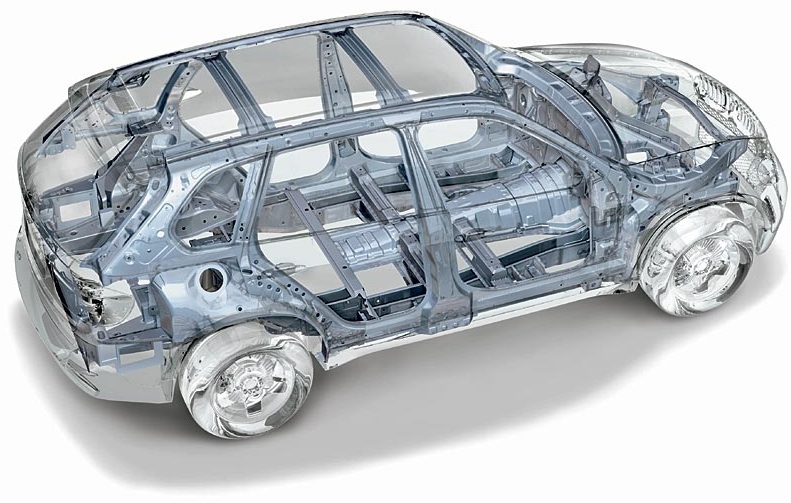
In order to increase passive safety and at the same time keep the weight increase within limits, car bodies have become increasingly complex over the last 10-20 years. The use of a wide variety of materials, high-strength steels for certain parts and structure-specific construction and repair instructions make modern car bodies practically unrestorable. Experts believe, for example, that a Mercedes R129, i.e. the SL generation built from 1989 onwards, will present the restorer with practically unsolvable problems. At the same time, however, the durability of these bodies has been improved by better choice of materials and good rust prevention, so that in many cases restoration will not be necessary at all, at least in the foreseeable future. It will therefore be more a case of buying a good or very good car from the outset.
(3) Complexity - many sources of error
As already mentioned with the electronics, cars have become increasingly complex. A modern car refuses to start if certain sensors do not provide the expected signal. Calculations and checks are carried out constantly while driving. If something in this network of sensors, microprocessors and actuators no longer works as expected, troubleshooting can often take days until the perhaps trivial source of the fault (cable connection, defective sensor, etc.) is found. This effort will always be worthwhile for expensive classic cars, but perhaps not for cheap ones. At the same time, the complexity leads to many more sources of error compared to cars from the 1930s or 1960s. While a Triumph TR3, for example, is still quite manageable, a Mercedes S-Class saloon from the 1990s can probably no longer be understood by some small maintenance companies.
(4) Lack of spare parts - too much variety
Vehicles require maintenance and wearing parts need to be replaced. This includes, for example, the airbags in cars from the 1990s. However, spare parts are often no longer available and parts from demolished vehicles have aged just as well and are not a solution. Here too, potential suppliers will probably first offer what is either in high demand or can be sold at a very high price. This means that expensive and rare vehicles will also have an advantage here. An interesting example here is tires - even today, some of the dimensions used in the early 1980s are no longer available.
(5) Important role of the legislator
Legislation has an important influence on the chances of more modern (but also older) cars becoming classic and collector cars. Here, it is not only promotional measures such as special license plates, interchangeable plates or free driving in low emission zones that are relevant, but in particular changes to registration regulations. If, for example, the principle that a vehicle only has to comply with the regulations when it is first put on the market is deviated from, this can become a considerable problem for classic car owners. Developments in legislation for safety reasons (daytime running lights, black boxes, car-to-car communication, etc.) also pose a risk to classic cars and sporadically used collector's vehicles. Just imagine if all new cars were equipped with systems that prevent the local speed limit from being exceeded. What would this mean for old cars, where it is not so easy to intervene in the vehicle control system?
Long story short - there is hope, but the chances of modern cars still being on our roads in large numbers in thirty years' time are certainly lower than they were for previous generations.
