Light and shadow in spotlight technology

While strolling through a center for classic and collector cars, my gaze was caught by two sports cars that were built half a century apart. Both were painted red, and that wouldn't be worth mentioning if the contours of their headlights hadn't been similar when viewed from above. So it makes you wonder...
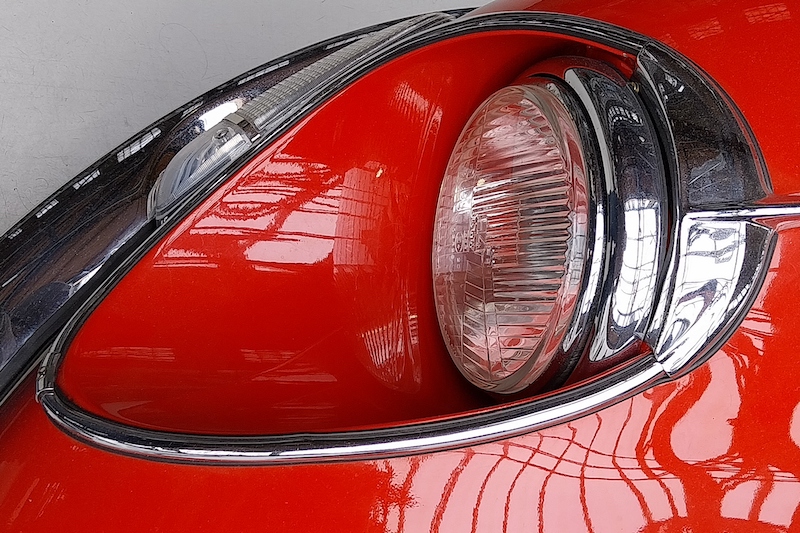
The picture above shows the headlights of a 1967 Jaguar E-Type, where the lights are exposed without a cover. Some people refer to this detail - at least on the Datsun 240 Z - as a "sugar shovel". The early version of the Jaguar headlamp with a transparent cover, which was visually more coherent in most eyes, had fallen victim to American approval regulations.
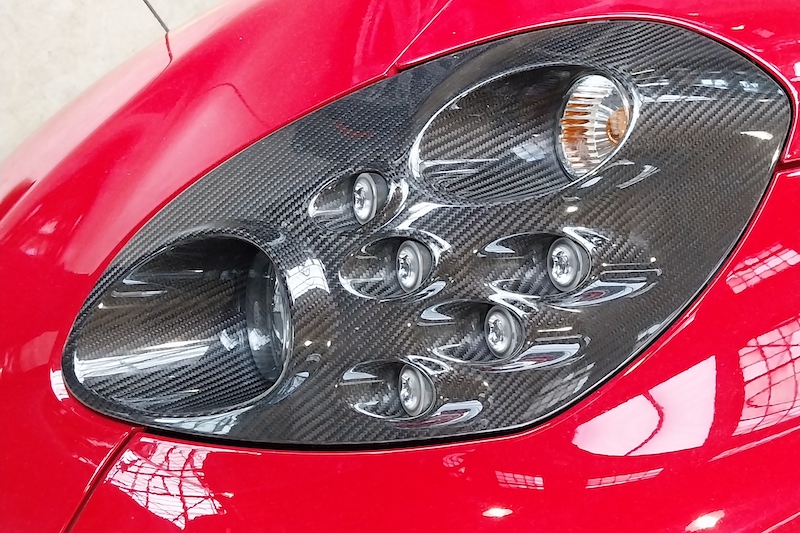
So everything used to be better. But is that true? Let's take the light output. The picture below shows the headlamp of an Alfa Romeo 4C 1.8 TBi 16 V from 2017, in which all the lights are housed in five small and two large individual "caves", surrounded by a carbon fiber plastic cover. Everything that should flash and light up is combined here in one unit.
The Jaguar illuminates the road with H4 bulbs. This was the state of the art decades ago. Nowadays, driving in the dark is perhaps less fun. The Alfa Romeo 4C lights up the night with xenon bulbs. But where there is light, there is also shadow. A glance at the spare parts catalogs shows that replacing the lens, the bulb or the entire headlamp on the Jaguar would not be too expensive an undertaking. On the Alfa, on the other hand, replacing the headlamp unit is likely to cost a four-figure sum. Optimum light output therefore has its price. It's all relative.