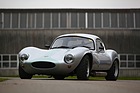
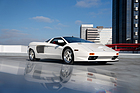
The forgotten Skoda Coupé

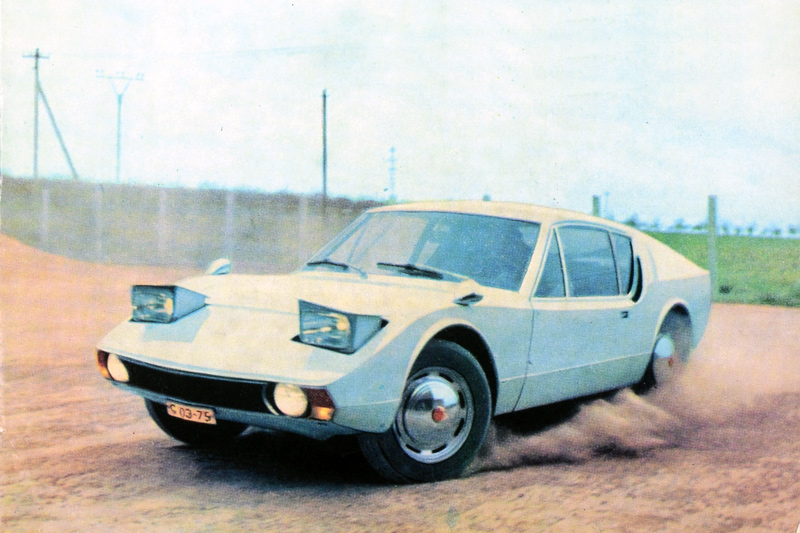
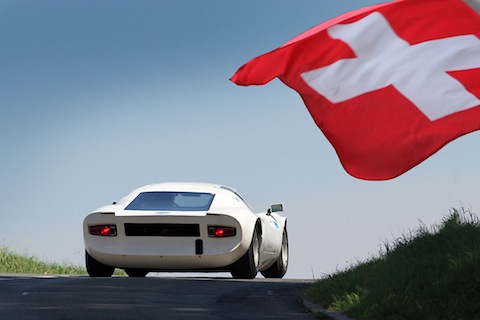
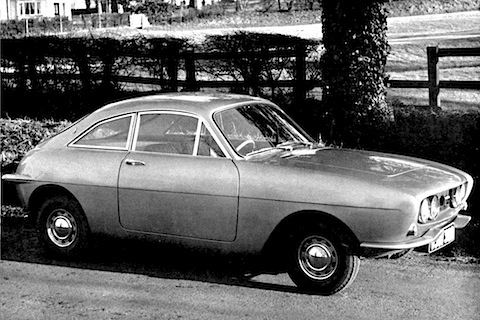
Well, it hasn't been completely forgotten, because we actually reported on this coupé ten years ago . We have since come across it again and also found more background information and pictures. In fact, the coupé was actually called ÚVMV and not Skoda, as it was developed at a university.
Milan Vacek, the engineer responsible, described what it was all about in the local automobile magazine:
"The wide range of sports cars with special coupé bodies is attracting more and more attention from the global motoring public. The Lotus Europa sports coupé, the Matra 530 A, the Lombardi-Fiat GP, the Saab Sonett V 4 and dozens of similar types are making the hearts of motorists of all ages and professions beat faster. In contrast to standard sports coupés, which are variants of standard saloons, e.g. from Opel, Ford etc., these vehicles have a unique body structure that is completely different from that of the standard vehicle. As a rule, they only take over the engine or at most some of the chassis elements. ... These small, likeable cars do not deny that they come from a common stock with their proud and unaffordable cousins from the Lamborghini, Ferrari and Maserati families.
When considering the construction of an experimental prototype vehicle at the ÚVMV Institute of Automotive Research, the choice fell on this specifically sporty type of car, which was naturally derived from the Š100/110 car production line.
The backbone of the entire project was the work of the bodywork team, which had the task of experimentally verifying methodical development procedures that had only been dealt with theoretically. The aim was to create a model body that could be used in a variety of technical applications.
The coachbuilders' task was to use as many modern design elements as possible and to verify the structural and technological possibilities of constructing a composite body in a combination of fiberglass and sheet metal."
The first step in the development of the new vehicle was the interior, the dimensions of which were designed as a starting point after measuring and evaluating the seating positions of various types of sports cars. Naturally, the coachbuilders wanted to reduce the frontal area of the vehicle to a minimum, as the dependence of the top speed on the inverted value of this area is of the same order of magnitude as the dependence on engine power.
A chassis design was then developed using a complete Š110 drivetrain, for which a new rear axle with triangular trailing arms with inclined pivot axle and two-joint wheel shafts was designed. Alternatively, the installation of a 2-OHC engine was considered, which was being developed at ÚVMV at the same time. The layout of the engine compartment and the air ducts had already been adapted to the needs of this engine. The front axle was retained except for the arrangement of the stabilizer behind the axle. The radiator was located at the front of the body and was equipped with an auxiliary electric fan."
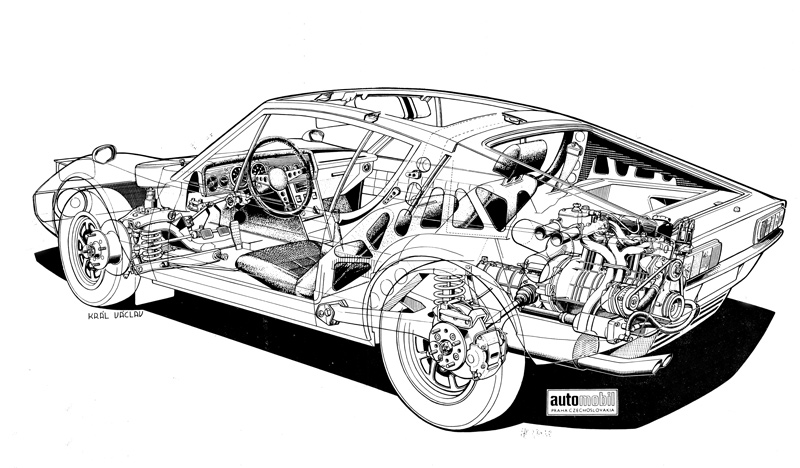
Apparently, the students and their supervisor managed to build a drivable automobile that would have found fans even in Western Europe ...