The curious mini sports car derivatives

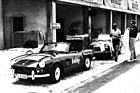
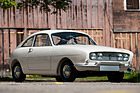
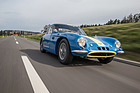
The" Mini", which was built around 5.4 million times between 1959 and 2000, provided the basis for a whole series of small-series sports cars, such as the Buckle Monaco, Davrian Mk7, Deep Sanderson, GTM Coupé, Maya GT, Mini Marcos, Nota Fang, Peel Viking Sport GT, Sabre Sprint, Unipower GT, Ogle SX 1000, etc..
The low-cost parts thanks to mass production and the practical design for kit car manufacturers, in which the engine/transmission together with the front suspension and frame could simply be adopted, created a good basis for sports cars of all kinds. What they had in common were the small wheels adopted from the Mini, the inherited excellent handling and plastic bodies.
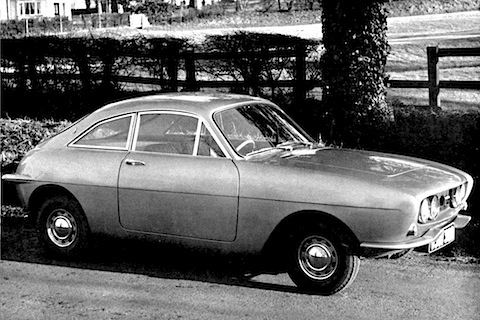
Perhaps the prettiest Mini-based sports car was the Ogle SX 1000, designed by David Ogle. Only 66 examples were built in the early sixties.

The Nota Fang, another example, was created almost by chance when Guy Buckingham, who had been producing sports cars in Australia since 1955, happened to buy a Mini Cooper S that had been involved in an accident. The result was a new sports car with the engine mounted behind the driver and components from the Nota Clubman at the front. As many as 115 of these vehicles were produced from 1968 onwards and they are certainly among the prettier Mini sports car derivatives, even though the designer was still at school at the time.

However, the Mini Marcos was probably the best-known and most frequently built Mini sports car derivative. From 1965, it was first sold by Marcos and later by other companies as a kit and finished vehicle. The Mini Marcos caused a sensation when it was the only British vehicle to finish the 24 Hours of Le Mans in 1966

A fast mid-engined sports car based on the Mini was the Unipower GT , of which around 75 were built between 1965 and 1970. Its top speed is said to have been 193 km/h
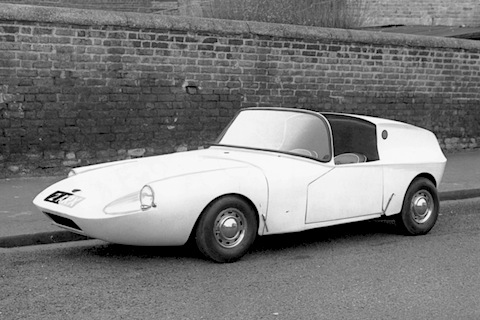
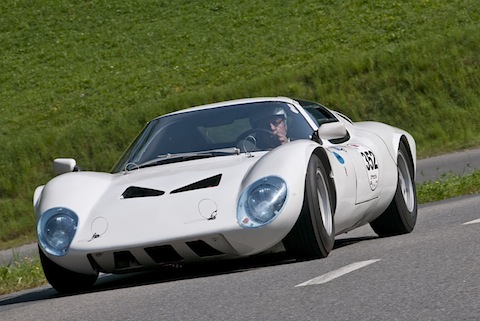
And then there was the Deep Sanderson, which was presented at the London Racing Car Show in 1962. It was mainly used on race tracks, including Le Mans, where the car made a very good impression but was never classified. While the prototype still had an aluminum body, the 14 or so production examples had plastic bodies. As with Unipower and Nota, the Mini engine was installed amidships and the builder Chris Lawrence used his own designs for the suspension.
The book "Maximum Mini: The Definitive Book of Cars Based on the Original Mini" lists over 50 Mini sports car derivatives, so if you would like to know more about these vehicles, please refer to the comprehensive English-language work by Jeroen Booij .