Once upon a time ... the Woodie

Wood is not really a suitable material for car construction: it works, splinters and is not really weather-resistant without a nourishing root. But when sheet steel is in short supply, the old carriage material does the trick for larger car bodies. Henry Ford even bought 160,000 hectares of maple forest in Michigan in 1926 in order to have enough material for the bodies of his station wagons. The functional collector vans didn't have to look fancy.
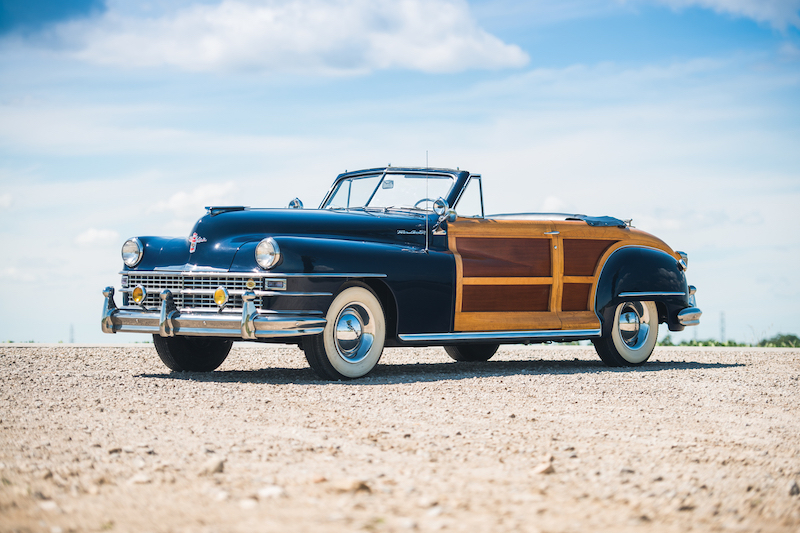
The public apparently had a somewhat different sense of style than the Ford patriarch, and so even in the mid-1930s the wooden rear end was considered particularly elegant. While popular brands increasingly switched to all-steel construction, more and more upper-class manufacturers added a wood-paneled luxury model to their range, which no longer even had to be a station wagon. From 1946, Chrysler even offered a convertible with a half-timbered body alongside the saloon and estate.
With the first post-war models, the wood became pure decoration, as the load-bearing body structures of the station wagons were now also made of steel, before the natural product was increasingly replaced by an imitation made of plastic at the beginning of the 1950s. Often it was even a large insert that did not even attempt to feign static utility. Buick built the last real wood estate car from US production in 1953 with the Roadmaster Estate - and also the last with grained decorative foil on the flanks in 1996.
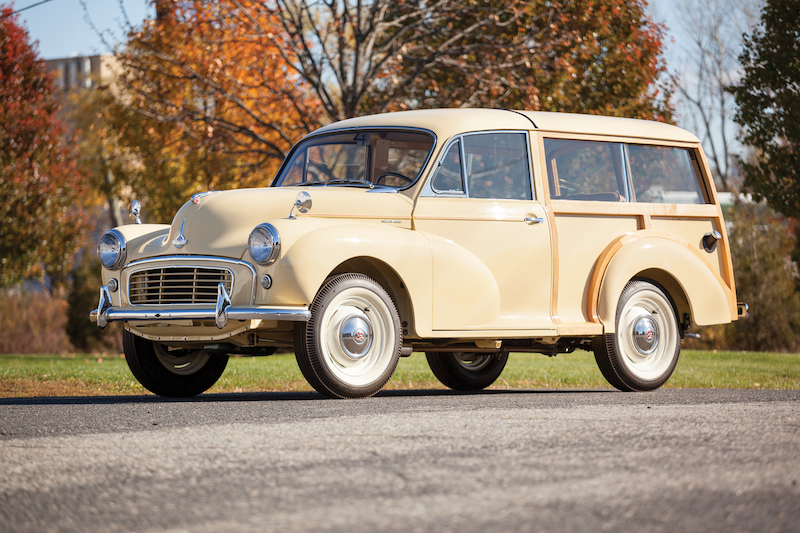
In Europe, wood remained a marginal phenomenon both as a visible building material and as exterior decoration. Nevertheless, the last "real" woodie was a European: from October 1953 until its discontinuation in April 1971, the Morris Minor Traveller had a skeleton made of ash wood that was as necessary for bodywork as it was decorative. Attempts to recreate this splendor with adhesive decor failed, however. Non-American foil goodies such as the Opel Ascona Voyage and the Honda Civic Country found no imitators.
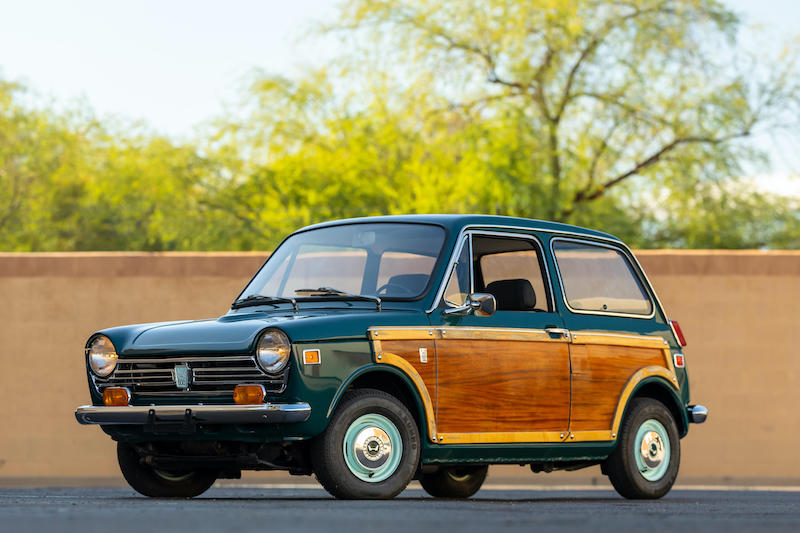
Today, the rustic mountain hut look is very popular with classic car fans - so popular that even once completely wood-free tin cars are being converted to a woodie look. This may not always be historically accurate, but it is sometimes very cute. Or who would say otherwise when looking at the paneled Honda N 600 ?