Classic pearls of the future - Aston Martin DB9

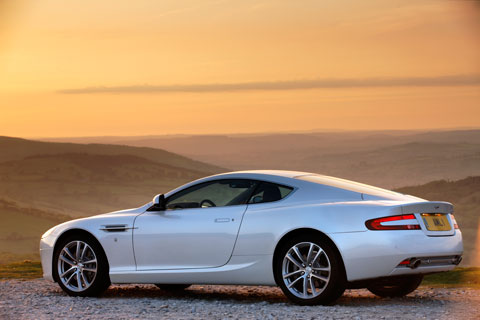
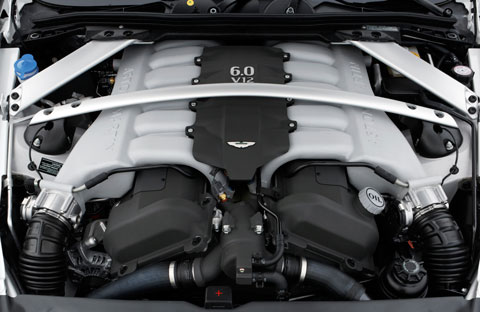
It was in 2003 when Aston Martin presented the DB9 at the IAA in Frankfurt as the successor to the DB7. The DB9 was a big step forward, so big that the DB8 was left out to show the progress even more impressively. At the time, there was also a fear that people would mistake a DB8 for an eight-cylinder. However, the DB9 had the further developed V12 engine from the DB7 GT under the light alloy hood. And this in turn can be traced back to two combined Ford Mondeo engines.
The platform of the DB9 was lighter and stiffer than that of its predecessor, it was called VH and was made of aluminum and other exotic materials. It was also cheaper to produce than the chassis of the Vanquish.
The DB9 was available from 2004 as a coupé and as a convertible called "Volante". Equipped with an automatic transmission, the coupé and convertible appealed more to the distinguished glider than the closet racing driver. The fact that the sleek and certainly not undemanding Gabrielle Solis drove a DB9 Cabriolet in the television series "Desparate Housewives" also fitted in well. When criticism of the sportiness arose, Aston Martin added a manual six-speed gearbox from Graziano, but this was ordered much less frequently (despite the lower price) than the version with the automatic torque converter.
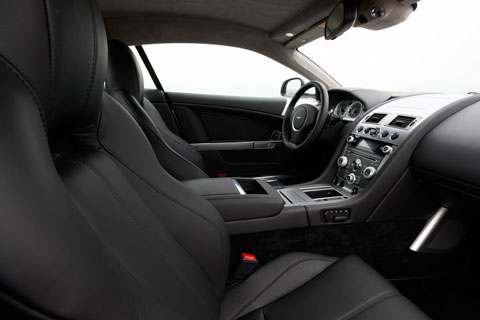
Inside, the DB9 was a revelation; the quality, mix of materials and styling were among the best available in this price range and nothing looked cheap, unlike its predecessor, the DB7, where some switches and components were a little too mass-produced.
Despite its lightweight construction, the DB9 weighed almost 1.8 tons, so even a 450 hp six-litre engine had its work cut out for it. So you couldn't expect any savings miracles, but there was probably no demand for them either. Acoustically, the DB9 won over all doubters.
There were many tests of the DB9 and it rarely came out on top when it came to comparing sheer driving performance, lateral acceleration or handling. Nevertheless, the test drivers said time and again that they would still choose the DB9 despite its obvious weaknesses. Style was often more convincing than pure longitudinal or lateral dynamics.

The DB9 was an important car for Aston Martin, as it contributed greatly to the company's profitability and survival. Even if the targeted production figures per year were not quite achieved, well over 30,000 DB9s were probably built between 2004 and 2016; the factory does not communicate exact production figures. The German Aston Martin Forum speaks of just over 15,000 vehicles by 2014, so that one could assume around 16,000 to 17,000 coupés and convertibles by the end of production. Of course, the DB9 did not remain a rarity, but it is certainly not a mass vehicle either.
Of course, there were various facelift measures, the performance also increased slightly over the production period and minimal changes were made to the body designed by Fisker/Callum, but thankfully these did not alter the intrinsic elegance.
Once the market was more or less saturated, used car prices also began to fall, although initially there was hardly any depreciation. Write-downs are still unavoidable, but there is a good chance that the DB9 in particular will retain its value in the medium term.
And anyone who secures one of the rare manual examples could drive even better (figuratively speaking). It is said that there are already Aston Martin owners who have had their Vanquish converted from an automatic to a manual gearbox, for a considerable five-figure sum.