Reunion after 38 years - a very personal Christmas story

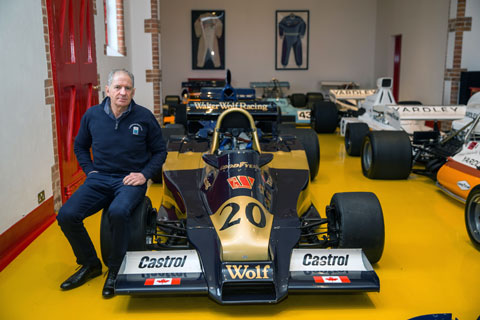
In 1973, I was just 13 years old and naturally heavily influenced by my father, so I was already a big motorsport fan. So it hit me like a bombshell when my great idol Jo Siffert was killed in an accident at Brands-Hatch on October 24, 1971. After all, I was very lucky to have known him personally, thanks of course to my father. But after the tragic accident, I was left without a driver, so to speak, who fascinated me more personally as a driver and racing driver than anyone else.
Then came the 1973 French GP in Le Castellet, where a complete newcomer in only his third F1 race started the race in second place and would even have won it if Emerson Fittipaldi hadn't stood in the way. There was a collision with the reigning world champion from Brazil. Just one race later at Silverstone, the biggest mass collision in the history of Formula 1 took place, with the same white McLaren again playing the leading role. It spun in fourth place at the end of the first lap in the Woodcote corner, then slammed into the pit wall, eliminating almost the entire field behind.
But who was in that McLaren? Who was driving so fast and, with only four GP starts under his belt, showed not the slightest respect for all the experienced men in the industry?
The madman looked like a cuddly teddy bear, had the melodious name Jody Scheckter and was born in South Africa. His F1 debut thrilled me and I became probably his biggest fan. He was always incredibly happy about the chocolate I brought him at the races where I was there live with my father.
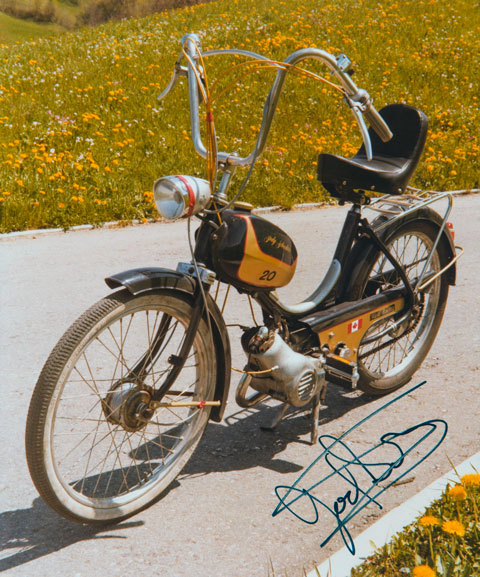
I had my moped painted in the colors of the Wolf WR1 in 1977 and my enthusiasm for the six-wheeled Tyrrell (1976) was astronomical.
Even as a Ferrari man and finally as world champion (1979), he never let me go unnoticed and I was even able to share my friendship with Gilles Villeneuve with him. It was a great time.
After his great racing career at the end of 1980, Jody practically disappeared physically from my life, only the fond memories remain to this day.
A few weeks ago, I sent him an email asking him to visit his farm in England. Less than two hours later, I received a reply with confirmation.
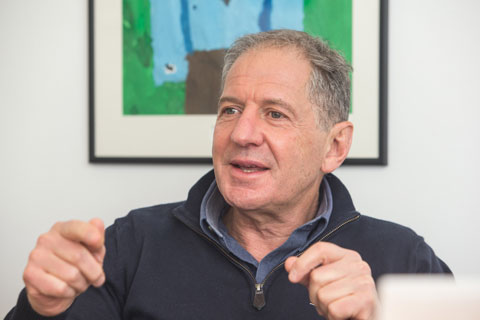
Just a few days later, we sat across from each other in his office over a coffee after 38 years. He spoke openly and honestly about his life after F1. He had made a lot of money by developing a professional shooting simulator and selling it to the US Navy. He used this money to buy the huge "Laverstoke Park Farm" in southern England and began producing countless organic products, from meat, cheese and yogurt to wine and beer, pretty much everything in fact. At times, around 120 of his products filled the shelves of local markets.
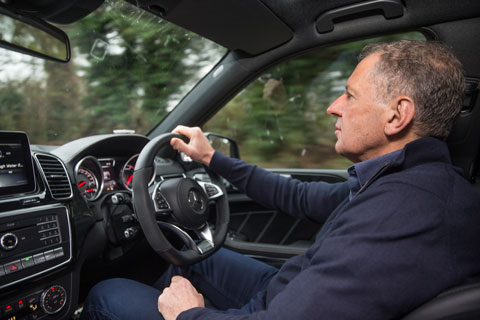
At the age of 68, he is still going very fast and has even set up his own small race track on his premises. Buffalo and sheep are already familiar with the black AMG Mercedes Estate and keep their distance, something the numerous pheasants still have to learn to do in order to survive.
Next to his spacious home is his museum, which now houses most of his former racing cars. The two McLaren M19s and M23s, the two Tyrrell 007s and the Project 34, as well as the Wolf WR1 and his Ferrari 312 T3, with which he eventually became world champion, stand there alongside various F3 and F2 monoposti.
His latest achievement is the CanAm-Porsche 917 10T that he drove in 1973. He was lucky enough to drive two revolutionary racing cars. One was Derek Gardner's six-wheeled Tyrrell, surely the craziest design in F1. The other was Harvey Postlethwaite's all-new Wolf WR1, with which Jody won the first GP in Argentina for the young F1 team and finished runner-up at the end of the season after battling for the crown until the very end.
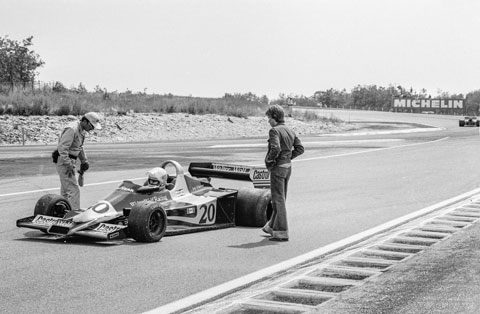
On the historically valuable photo, you can see me in 1977 at the French GP in Dijon right next to Scheckter's car, who had to retire with a puncture. Today, you would be stoned and tortured at the mere thought of stepping onto the track during a race.
There are very few racing drivers who have been able to build a second successful life after their racing career. Alongside Niki Lauda, Nelson Piquet and Gerhard Berger, Jody Scheckter certainly belongs in this group.
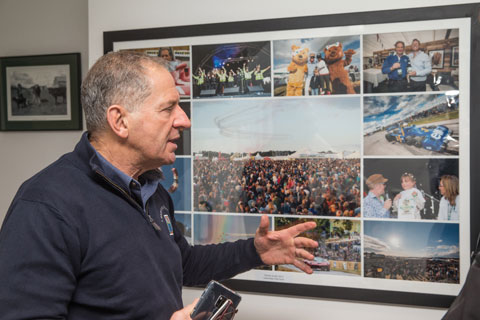
He is not an egotist and his social streak brings a million pounds a year into the coffers of needy children in England. Once a year, the doors and gates of his farm are opened to around 30,000 fans, mainly children, who are treated to a great show program. On this day, he also drives some of his racing cars around the small circuit, much to the delight of all those present.
Yes, it was very emotional for me to be chauffeured around by my great childhood idol on his farm, to get to know his current surroundings and to chat about the good old days.
He loves the Nürburgring, because for him there is no better racetrack in the world. He thinks the six-wheel Tyrrell is much better today than when he was active. He underestimated the car and he is sure that only the dependence on the tire manufacturer Good Year prevented the car from achieving even better results. He had a very close friendship with Gilles Villeneuve, whereas Enzo Ferrari said just three words when they first met after his world championship title: "Buon Giorno Campione". And then everything was back to normal.
But I am deeply impressed by everything that Jody has done with his life and that he has not forgotten his old great fan.
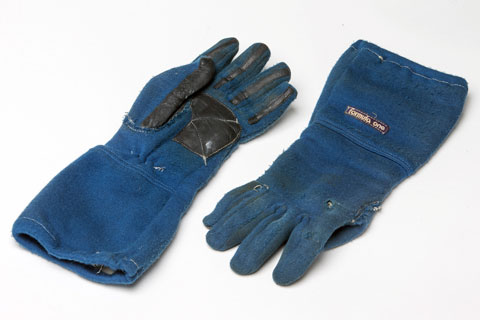
His gloves, with which he won the Monaco GP in 1977, have been in my display case for 41 years, but their significance has now been greatly enhanced.