Combustion engine ban in the EU from 2035 and the impact on classic cars

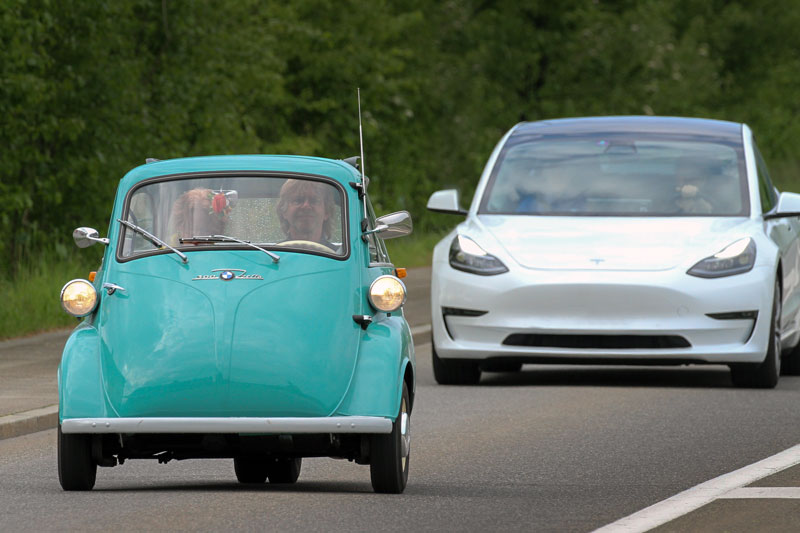
The EU Parliament voted clearly in favor of a proposal by the EU Commission to ban new cars that emit CO2 from 2035. This was, so to speak, a ban on the combustion engine for new cars. While the year 2035 still seems a long way off, car manufacturers have already given earlier dates for the complete abandonment of the classic combustion engine (petrol and diesel). It seems quite unlikely that this movement can be stopped. In 15 years' time, a large proportion of the cars on our roads will probably be electric.
Opinions may differ on this development, but the question we should be concerned with here is how the move away from the combustion engine will affect the existing fleet and historic vehicles in particular.
The questions on our minds include:
a) Will we still be allowed to drive our old cars with combustion engines on our roads without restriction?
b) Will manufacturers maintain and provide know-how and spare parts so that these old cars with slowly disappearing technology can continue to be maintained and operated?
c) Will there be enough service providers and know-how carriers available to keep these old cars running?
d) Will the necessary fuel of the required quality still be available in the future if the combustion engine car becomes a niche product?
e) Will it be socially acceptable or even welcomed (keyword: cultural asset) if the old cars with their combustion noises and exhaust fumes continue to drive on public roads
f) How will this technological change affect the value of the existing fleet, especially the classic cars and youngtimers?
It is clear that this is not the first technological change in history. After all, we went from the horse to the automobile or from the steam to the diesel to the electric locomotive. And yet there are still ridden horses, two-horse carriages and steam train rides. However, it cannot be denied that we are dealing here with niches rather than large-scale trends. In comparison, the classic car is widely anchored in society, at least today. It might also be interesting to look at the disappearance of the two-stroke engine. In new cars (and new motorcycles) they have disappeared (or are a super-thin niche), but older vehicles with this technology can still be found, albeit less and less frequently.
Tube televisions, on the other hand, have been almost completely replaced by today's LCD devices, while classic record players are currently enjoying a renaissance and wristwatches with mechanical movements are popular and expensive. Whenever haptics and design play an important role, technically obsolete technologies seem to last longer. So there is hope for the classic car (and motorcycle), because modern electric cars certainly can't compete in terms of feel with cars powered by an internal combustion engine with (manual) gear changes and impressive background noise. An old car can also be repaired for a long time to come, and the older it is, the easier it is to do so with comparatively simple means.
It will therefore depend on the people (of tomorrow) whether our old cars are still wanted on the roads and can be driven in public at a reasonable cost. As long as there is enough enthusiasm and nostalgia for them, our little treasures will hopefully continue to drive and drive and drive ....