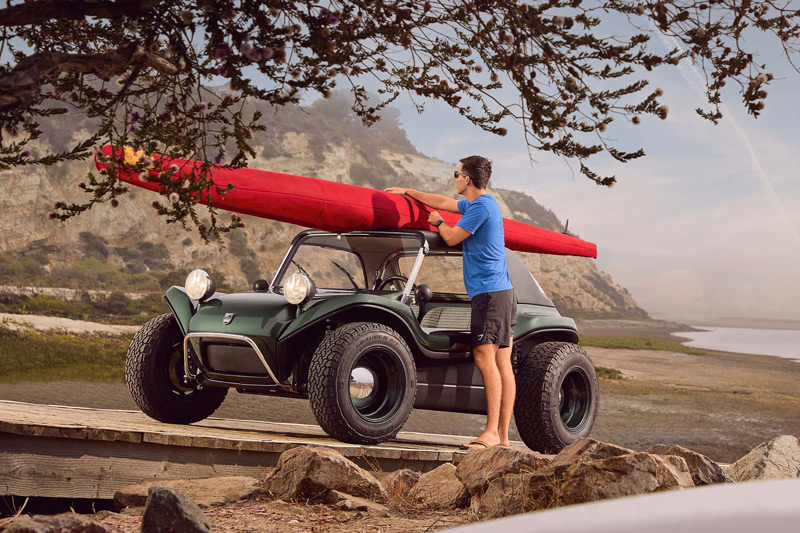
Do you know Teilhol?

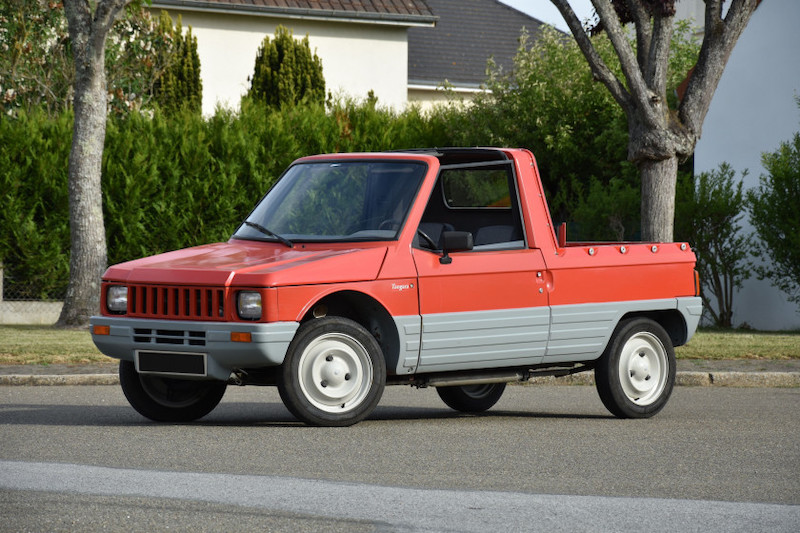
Even if not by name, you probably know at least one product from the company founded in 1958 by Raoul Teilhol, which called itself "Tejoll" and initially traded under the name Ateliers de Construction du Livradois (ACL). This is where the "Rodéo" beach cars based on the Renault types 4, 6 and 5 were built between spring 1970 and fall 1986, until Renault finally withdrew the order for the plastic convertibles due to steadily declining sales. Teilhol took a rather pragmatic approach to the situation. And so, from 1987, the successor to the Citroën Méhari was built instead of the competitor.
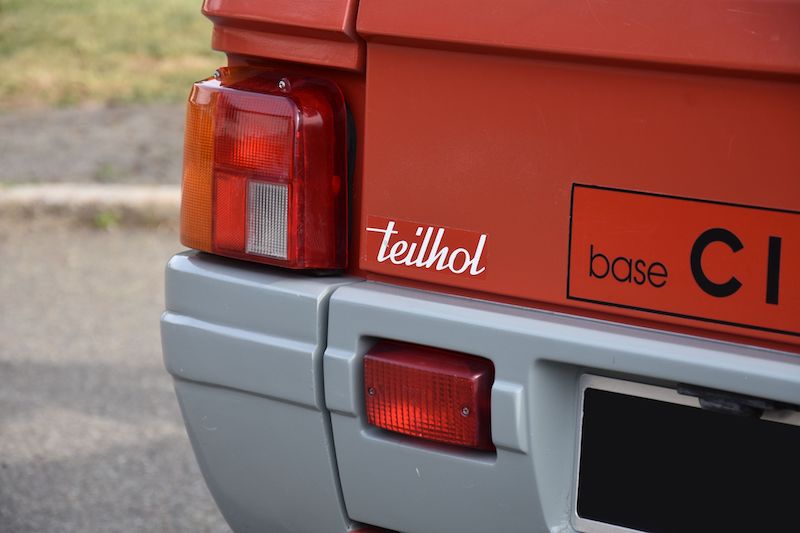
The Teilhol Tangara - named after a species of South American bird - was based on the technical backbone of the Citroën 2CV 6 and made its debut at the Geneva Motor Show in March 1987. In France, the plastic buggy with the Jeep face cost 53,049.78 francs including tax, but without folding top, hardtop and even hubcaps. The four-wheel drive option was also already on the price list in 1987. However, only 47 buyers were prepared to pay the additional 23,720 francs for it.

In the Federal Republic of Germany, it was available through importer Michael Granow from 1988 for 16,000 marks. The Tangara never came to Switzerland. Before an importer was found, the catalytic converter-free base was no longer allowed to be sold in this country. The solution would have been presented at the Geneva Motor Show in March 1990: the Tangara 1100 based on the Citroën AX 11 TRE with its emission-cleaned 54 hp four-cylinder engine. But something came up again. Teilhol was insolvent, and the Clermont-Ferrand Commercial Court ordered its liquidation in May 1990.
This resulted in just 63 Tangara 1100s and 88 of its sister model, the Théva, which had already been shown in Paris in October 1988. The two-cylinder Tangara was produced in 1344 units.

One of them, a red pick-up with a separate driver's cab (1228.69 francs surcharge) will be auctioned by Artcurial in Le Mans on July 2.
Like the Méhari, the Tangara was not intended purely as a leisure vehicle, but also as a commercial vehicle. With its open loading area, the Teilhol was therefore - attention, corny joke - ideal for fetching parts, for example for a 2CV. The question remains as to whether it automatically becomes a Bierhol, Brothol or Zigarettenhol when transporting malt beverages, basic foodstuffs or tobacco products...