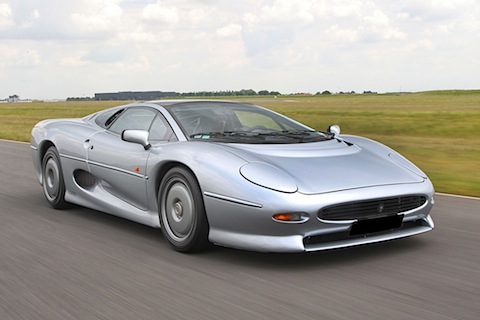
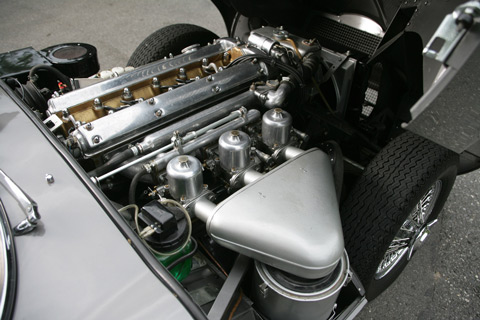
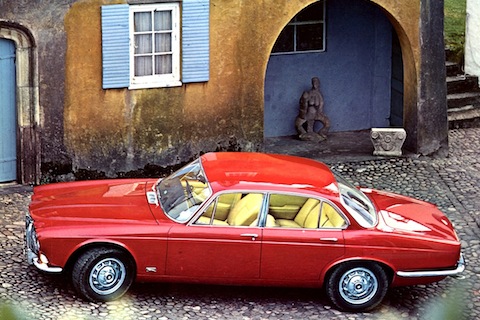
Jaguar XJ-S - the successor to the most beautiful sports car of its time


You have only
1 out of 67
images seen in high resolution




Summary
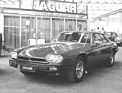
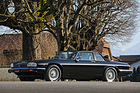
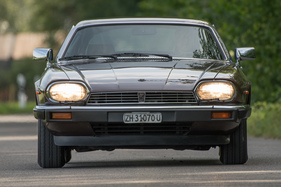
From 1975 to 1996, Jaguar built the luxurious XJ-S coupé, initially exclusively as a closed twelve-cylinder model, later also with a six-cylinder engine and as a convertible. Although the task of building a successor to the E-Type was almost impossible, the XJ-S was significantly more successful than its predecessor, not least thanks to continuous attention, which resulted in the famous H.E. engine based on Michael May's Fireball principle in 1981, for example. This driving report describes the history of the Jaguar XJ-S and shows the car in current and historical pictures.
This article contains the following chapters
- An impressive gallery of ancestors
- Developed in several attempts
- Proven technology, aerodynamic design
- The affordable luxury GT
- No match for the German opponents?
- More efficiency thanks to a Swiss invention
- Success in racing
- From coupé to convertible
- The gentle force
- Further information
Estimated reading time: 10min
Preview (beginning of the article)
Designing the successor to an iconic sports car while battling with the restrictions of modern safety standards can't be an easy project. The Jaguar E-Type was not even described by Enzo Ferrari as the most beautiful sports car of the sixties for nothing, and even if the elegance of the original design suffered somewhat over the years, the task of building a successor to it was certainly a major challenge. However, the Jaguar E-Type was just one of several outstanding sports cars to which Jaguar owed its reputation. Even before the war, William Lyons had shown what an elegant Gran Turismo should look like with the SS 100. He repeated this success with the XK series (120, 140, 150) and the E-Type, which was presented at the Geneva Motor Show in 1961. In order to cater to American buyers' tastes, however, the E-Type had gained in weight and length over the years, but was also given a contemporary engine with a twelve-cylinder engine.
Continue reading this article for free?
Images of this article