A dung beetle with a very special history

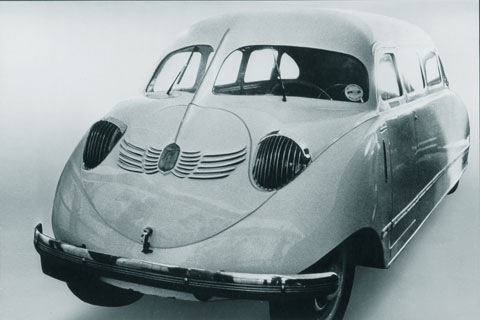
There are cars that almost seem to have fallen out of time. One of them is the Stout Scarab, built by aircraft engineer William B. Stout.
He wanted to reinvent the automobile in the 1930s, similar to what Tucker tried to do a few years later. Stout's aim was to create as much space as possible for passengers and to transport them efficiently at a low noise level. The result was probably the first mini-bus the size of a normal car, but with much more generous space.
In order to reduce wind noise, the shape resembled that of an airplane, the windows were fitted in such a way as to minimize air resistance and even conventional door handles were dispensed with. A Ford flathead V8 was used as the engine, which was mounted in the rear and drove the rear wheels. All wheels were individually suspended. At around 1400 kg, the car was relatively light. Accordingly, the Scarab is said to have completed the 0-60 mile sprint in just over 15 seconds.
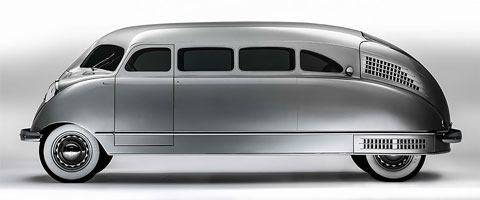
But so much innovation was expensive; the individually handcrafted Scarab (which stands for Scarabaeus, a kind of dung beetle) cost around four times as much as the already sophisticated Chrysler Airflow. Only a few could afford this and so the Scarab was a toy for the rich. These included Firestones (tires), Wrigleys (chewing gum), Dows (Dow Chemical) and Sranahans (Champion spark plugs).
US President Dwight D. Eisenhower is also said to have owned a Scarab, equipped with a large conference table and used as a mobile emergency vehicle. Eisenhower later gave the car to French President Charles De Gaulle. However, the Scarab itself ended up in the dung heap and was used as a stable for goats. At some point, the car - one of presumably only nine examples produced - was found again.
Designer Philippe Charbonneau personally took care of its restoration and subsequently exhibited it in his museum in St. Dizier. In total, around a handful of these "dung beetles" are said to have survived.
A historical video shows what the Stout Scarab looked like on the road: