How the term Gran Turismo has changed over time

On Sunday evening, the latest episode of Top Gear aired on BBC 1 in prime time, the theme was "best of british". In the usual style, the three presenters were asked to drive a British "Gran Turismo" (GT for short) and complete a few challenges. The selection was then interesting, as a four-door Bentley twelve-cylinder, a McLaren GT and an Aston Martin DBX came along. What these three cars have in common is that they are powerful (over 500 hp) and fast. But they could not have been more different. A sedan, a super sports car and an SUV? Does this betray the idea of the "Gran Turismo"? It was argued that all these cars would actually fulfill the desire to travel comfortably and quickly. And there is something to that, but let's look back a little.
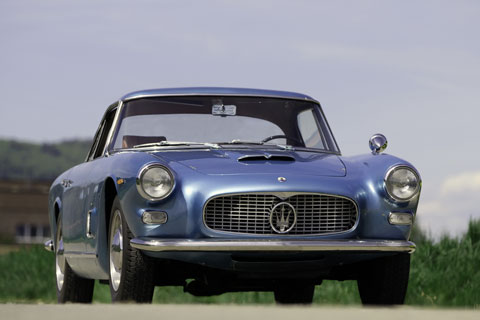
The Gran Turismo really came into vogue at the end of the 1950s. Sports cars such as the Maserati 3500 GT or the Ferrari 250 GT allowed high average travel speeds, offered high reserves for overtaking maneuvers, but at the same time had enough space. Comfort was not (completely) neglected either.
In the sixties, the GT concept was perfected, cars such as the Lamborghini Espada or the Ferrari 365 GT 2+2 came out and represented an alternative to the first mid-engined super sports cars. After all, nobody seriously wanted to use a Ferrari LM or even a Miura as a touring sports car for the family. However, the Maserati Bora already offered more comfort. Fast saloons such as the Mercedes-Benz 300 SEL 6.3 or the Maserati Quattroporte also existed, but they mostly (still) served other needs.
However, this segment became increasingly popular and in the 1980s cars such as the BMW M3, the Mercedes-Benz 190E 2.3-16 and the Lancia Thema 8.32 caused a sensation. Being able to travel very fast had long since ceased to be the privilege of sports cars, and the four-door models had followed suit.
In the nineties, all-wheel drive passenger cars with an off-road look began to emerge. The BMW X5 and Mercedes-Benz ML followed in the footsteps of the Range Rover, which had created the SUV segment together with Jeep offshoots. And these comparatively high-bodied 4x4 saloons became faster and faster. Even Porsche squeezed into the steadily growing niche, followed by Maserati, Lamborghini, Bentley and most recently Aston Martin. Sophisticated electronic aids and powerful engines ensured that these semi-trucks could also complete a fast Nürburgring lap, making them suitable for fast and comfortable travel, just like the GT sports cars of the past.
Perhaps the sports car has simply developed too little to be on a par with saloons and off-road vehicles today? In any case, Enzo Ferrari would be turning in his grave if he had to see what 2.5-ton alternatives his sports cars have to compete against today.
Perhaps it would be time to give the label "Gran Turismo" a new meaning, one in which the sports car would once again have a place?