Are bumpers actually good for bumping? They used to be ...

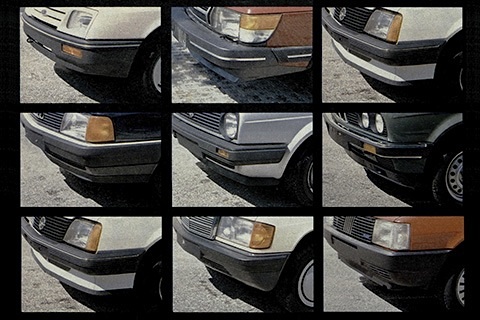
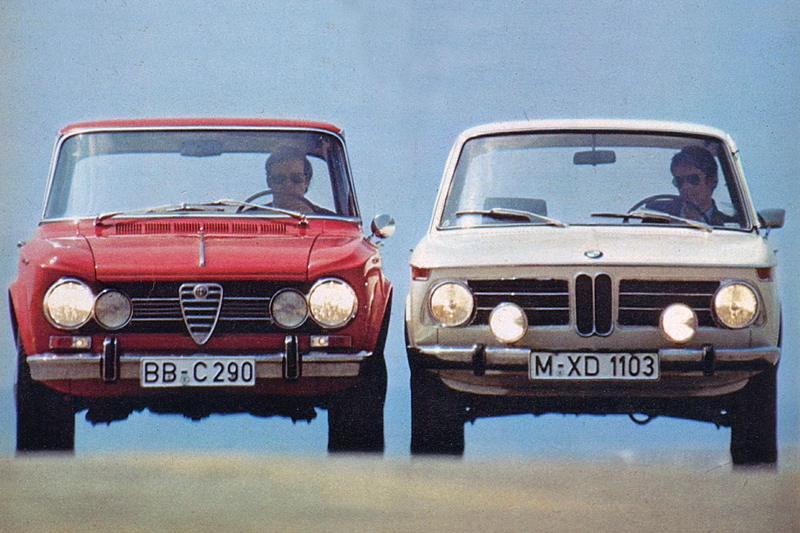
Bumpershave always been a topic of discussion. They were already found on vehicles before the First World War to prevent minor bumps from causing major damage. In the 1970s, plastic increasingly replaced steel and the design became more imaginative and more closely integrated into the bodywork. In the eighties, you hardly saw any uncovered metal and at some point the trend began to paint the bumpers in the same color as the car. However, rubber pads were usually added to reduce damage. Today, there are hardly any rubber-covered bumpers, and contact with them immediately leads to (expensive) paint damage.
Legislators have repeatedly influenced the shape and design of the bumper, especially the Americans. In the 1970s, they demanded that a car had to survive a head-on collision at 8 km/h without damage to the headlights and indicators. This was later corrected and the speed was reduced to 4 km/h, but from then on the bumpers had to protect the bodywork from any kind of damage. Europe also followed suit with ECE standard no. 42, which defined the protective measures for longitudinal impacts up to 4 km/h and corner impacts up to 2.5 km/h, but was not a regulation.
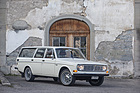
Thirty years ago, ADAC Motorwelt tested how expensive a minor impact could actually be, using eight vehicles: BMW 316, Fiat Uno, Ford Sierra, Audi 100, Opel Ascona, VW Golf, Mercedes Benz 190 and, as an outsider, the Saab 99. Saab had always placed great emphasis on safety and had patented its own bumpers. These were designed to withstand a longitudinal impact of 8 km/h and return to their original shape after a crash.
ADAC Motorwelt first meticulously had all eight vehicles hit four times at 2.5 km/h - from the front, front at the corner, rear and rear at the corner - by a standard ramming block and then determined the consequential damage. The Mercedes and Saab survived the test without any repair damage, whereas the damage to the BMW and Ford from the four impacts amounted to around 500 to 600 DM. Another problem was that not all bumpers were mounted at the correct height.
When the impact speed was increased to 4 km/h, the damage increased. Now the Saab also had to be repaired for corner impacts, but at around DM 600 the costs were the lowest, whereas for Audi, Opel, Ford and BMW they were already tending towards DM 1500 and more.
The impact speeds were then increased to 6 and 8 km/h. At maximum speed, only the Saab 99 was allowed to compete, but the total damage of the four "accidents" was still limited to just under DM 1000. And so it also achieved the top score, followed by the Fiat Uno, Mercedes Benz 190, VW Golf, Ford Sierra, Opel Ascona, Audi 100 and BMW 316.
And the moral of the story? In the modern car of the new century, even the smallest bump often costs more than an 8 km/h accident involving a Saab 99. And there were once rubber-reinforced bumper horns ...