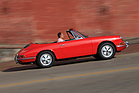
Is a road really necessary?

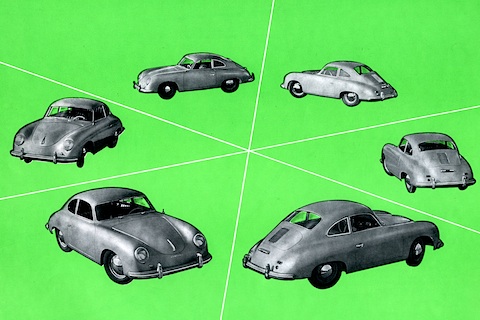
The market town of Weyer an der Enns in Upper Austria has not named a street after Erwin Komenda, nor has the local parish provided him with a grave of honor. This is according to Dr. Iris Steineck on the family-owned website komenda.at, marking the 60th anniversary of the Porsche designer's death. Komenda (1904–1966) was Ferdinand Porsche's chief engineer and the designer of the 356, 550, and, last but not least, the VW Käfer.
The Viennese doctor is Komenda's granddaughter and fights for her grandfather's legacy wherever she can. However, her lawsuit claiming his authorship of the Porsche 911 has so far been unsuccessful, even though he collaborated on F.A. Porsche's basic design. But now she is seeking recognition through a street name and the family grave.

According to the website, the municipality has stated that there are no plans to posthumously grant honorary citizenship. There won't be that many new streets, and renaming an existing one isn't exactly easy either. Especially not if it means another name would have to be removed.
For example, there is a street named after Josef Bachbauer, who was once a hotelier in Weyer. And one named after Josef Gabriel Frey, a leatherworker and painter. Both were clearly deserving locals. But there is no street named after Komenda, who—unlike what is often quoted in newspapers—is not actually a native of the market town.
Shortly after his birth in Jauern am Semmering, his family moved to Weyern, where Komenda spent his youth. Although he later returned there often and gladly, his life was likely centered in Zuffenhausen, where he worked as chief engineer until his untimely death at age 62.

It is said that he was very popular in Weyern and championed the interests of his fellow residents in his adopted home. Apparently, however, that isn't enough to warrant a street named after him—a decision that would have to be voted on by the town council of the village with a population of 3,989.
Still, when the Ennstal Classic recently passed through Weyer on July 24, 2026, the famous designer was honored in the town square. And one day after the anniversary of his death on July 22, Mayor Leopold Buchriegler and Elizabeth Spiekermann, spokesperson for the Weyer Tourism Forum, laid flowers on his grave. These flowers had reportedly already disappeared again by the time his daughter, Ingrid Komenda, visited her father's grave. That's what the website says.

Incidentally, the parish also does not feel obligated to act and refers the matter to the municipality should the grave be to receive a public tribute. The cemetery regulations say nothing about honorary graves. That almost sounds like something out of a Loriot sketch, but of course the matter is serious. Dead serious, one might say.
Is this really still about a lack of recognition? Or is it simply a knee-jerk reaction because not everyone is struck with awe at the name Komenda? Yes, designers used to receive less recognition, and it wasn't until the Italian contingent of the 1930s that they became not just well-known but famous: Spada, Giugiaro, Gandini, and all the rest.

In the postwar period, this wasn't yet the case; design often wasn't even its own department. At Mercedes, it was called “Stylistics” and was subordinate to the bodywork testing department. That's why the name Friedrich Geiger isn't familiar to many, even though he created a super-icon of automotive history with the 300 SL. And Komenda designed the Beetle, which, while driven worldwide, was loved less for its beauty than for its original design.
No one disputes that anymore, and his achievements have long since been recognized. There's no longer any need for a street named after him. Incidentally, there isn't one in Komenda's birthplace, Jauern, either. There are no street names there at all; instead, buildings are simply addressed with the town name and a number. 356 would be a nice idea, though…