Back then during Christmas shopping

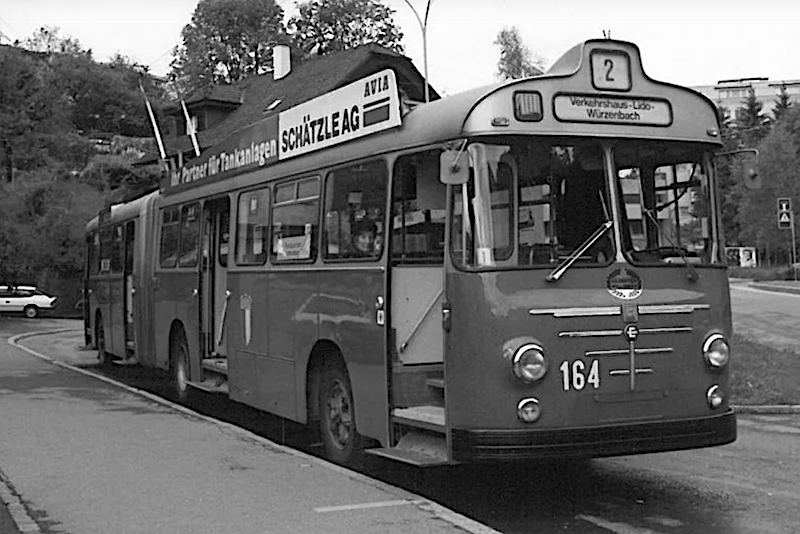
Christmas time, time of anticipation! As a little boy, it was always an adventure to go shopping in town with my mom. I still have fond memories of taking the trolleybus, which at that time in my home town of Lucerne were Büssing articulated buses from Germany; the Lucerne transport company was the only one in Switzerland to use this brand. Otherwise, public transport was dominated by Saurer, Berna and FBW. At off-peak times, however, there was a good chance of being picked up by a "Schindler" bus, a large two-axle vehicle. The rattling of the tachograph remains unforgotten to me to this day, as does the unexpected rattling of the compressor for the pneumatic equipment of the doors and brakes of the otherwise rather silent trolleybus. However, I was not yet aware of the cause of the noises.
Strange vehicles
It was also exciting to look out of the window, as there was a whole range of bizarre vehicles on the streets of my home town back then. I remember the VW T2s with flatbed bodies, which were so high that you could transport a proper closet upright in them and I was firmly convinced that one of them would have to fall over from time to time. The Unimogs from the "Gmür" warehouse seemed particularly strange to me. Thanks to an incredibly complicated mechanism, they could lower their loading area down to the road or raise it up to almost one and a half meters. Today I know that they were Ruthmann lift trucks with a Unimog drive head. The police had a large Chevy Suburban as an interrogation vehicle for accidents and the cantonal hospital relied on ambulances based on Opel Diplomats. That was the way it was back in the 1970s.
Dreamlike department store
The destination, or rather MY destination, was always the toy departments of the department stores or the two or three specialist toy stores in the city. This required all the persistence of a child, because mom was often looking for completely different things: Trouser buttons, fabrics or craft supplies for us two children to make our relatives happy with more or less motivated homemade items for Christmas. Mom probably knew that otherwise there would only be drawings of cars for grandma, grandpa, my godparents and all the other recipients. So I kneaded candlesticks and glued window pictures.
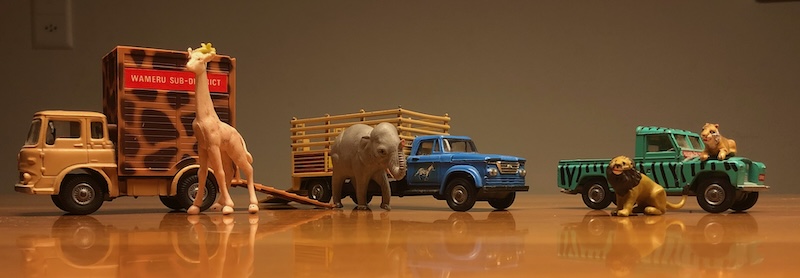
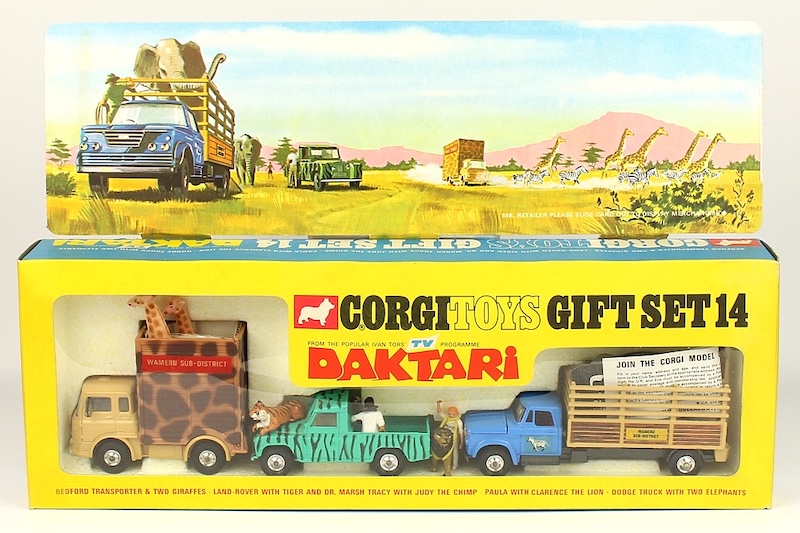
Once in town, my first success was usually at Manor, where I can still remember the layout of the racks in the toy department. There were three of real interest: One was reserved for the Matchbox brand on its front, then on the back was the range of Corgi toys. The other was a wild hodgepodge of Tonka tin trucks, Japanese tin cars and the 1/32nd scale pearls from Britains. However, I was mostly only interested in their Land Rover derivatives. At Corgi-Toys, I always paid particular attention to models with rubber tires that were still available, as I wasn't so keen on the plastic wheels of the 1970s, the Whizzwheels. The big fascination one Christmas was the discovery of the Gift Set Number 14, the big Daktari set with a Land Rover, a Dodge Fargo as an elephant transporter and a Bedford for the giraffes. There were also the figures of Dr. Marsh Tracy, Judy the Chimp and Paul with Clarence the Lion. That must have been a theme the whole way home - I usually spent the return journey sleeping in the overheated trolley bus with the windows steamed up. In 1975, the Daktari set was under our Christmas tree.
Classics and exotics
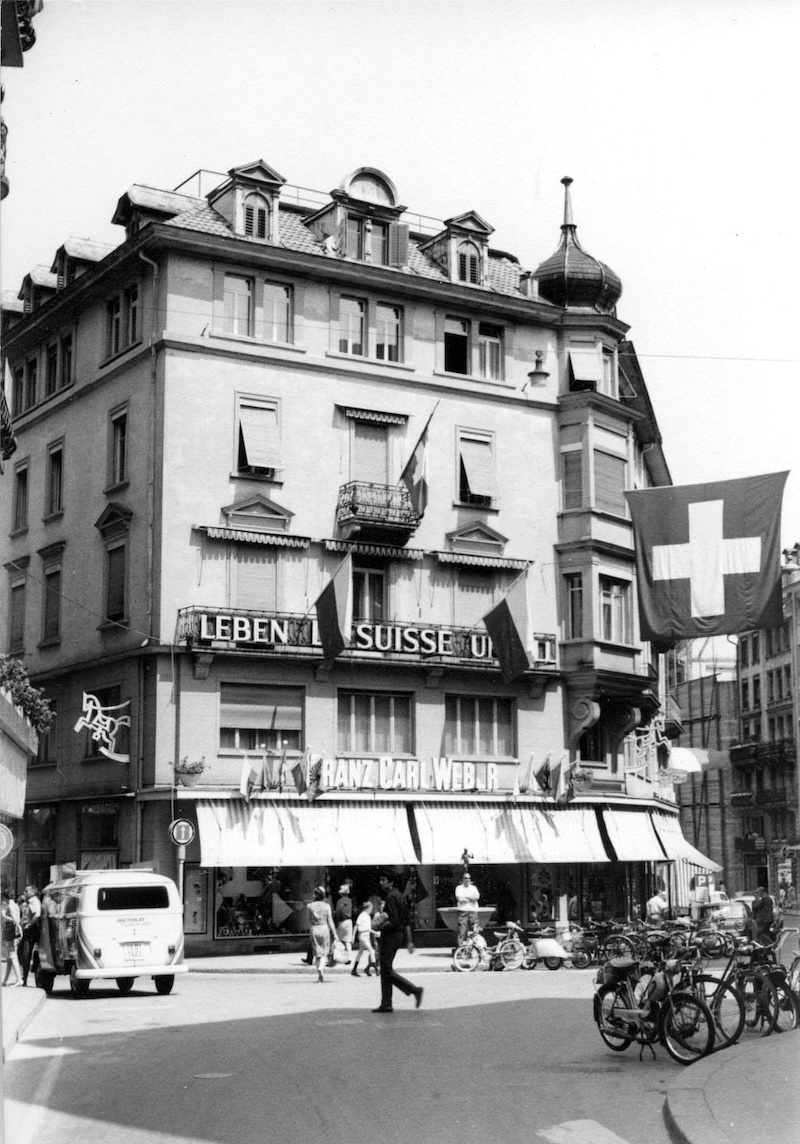
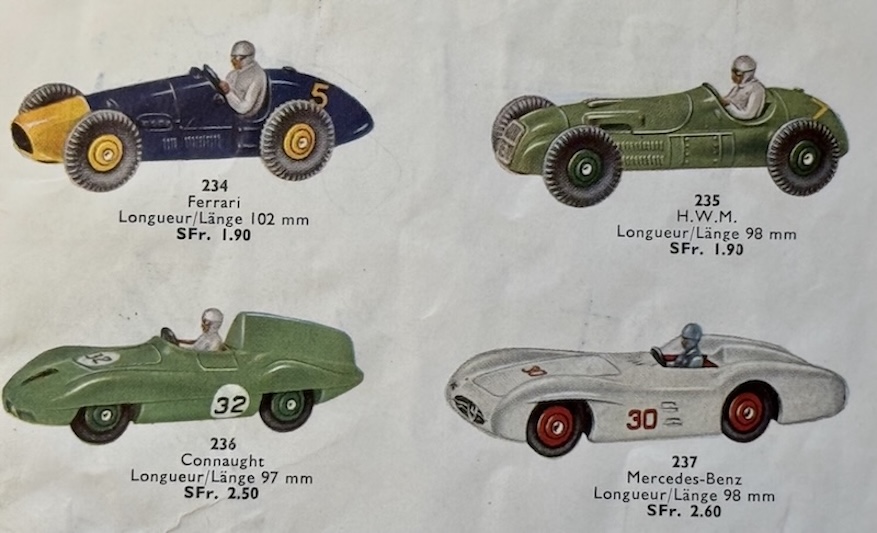
Back then, Dinky Toys were only (still?) available in the Franz Carl Weber specialist store on Falkenplatz in Lucerne. In the three-storey store, they were strangely located separately from the other manufacturers in the sous-sol, where there were technical toys and model railroads.
And for the exotic Solido, Schuco or even the Spanish manufacturer Pilen, there was no way around a dream toy store that had existed in Lucerne's Weggisgasse from 1975 to 1984: Playland. The store in an ancient building with a creaky wooden staircase had a long display window to the left and right of the recessed entrance, with girls' toys on the left and all the stuff for boys to dream about on the right: Electric Eheim trolley buses - often in operation, whizzing past under a catenary behind the lower edge of the shop window - model trains and toy cars of such fascinating exoticism that I still have fond memories of them today. The toy cars were stored on the second floor, directly in front of the staircase leading up behind them.
Expensive Germans but high-quality Spaniards
At the time, Pilen produced what were probably the best 1/43rd scale cars for relatively little money: accurate proportions, always with the correct wheels and rubber tires and a very good cast and paint finish. At almost the same price as Pilen from the then low-wage country of Spain, Playland also carried Schuco's miniature models in 1/66th scale. In addition to the Matchbox models, which were often quite grotesquely distorted in the 1970s, or the Corgi Junior cars, most of which were already equipped with plastic floors, these "super-fast" Schuco models, built from 1969 to 1976, were small marvels: Well proportioned, with opening doors that fit the cut-outs surprisingly well and packaged in a small transparent plastic box that looked good. But they were comparatively expensive.

Also in a plastic garage, even with a relief-like petrol pump, were 1/43 cars like those sold by Migros, the largest supermarket chain in Switzerland in the 1970s. As a child, I didn't know where they came from for a long time. Almost all of them were American cars and, unlike their competitors, the turned aluminum rims were not fitted with rubber tires but with - relatively hard - soft plastic ones. I now know that Migros once sold a batch of model cars from Israel. The manufacturer was called Gmada-Koor. In general, there was a good chance of finding exotic cars in supermarkets and places where you wouldn't necessarily expect to find toy cars. The Italian models from Mebetoys were also temporarily available at Migros, interestingly only those with rubber wheels in the 1970s, even when the company, which belonged to Mattel, had long since switched to plastic smooth-running wheels. And the EPA had models from Majorette. In 1/24 scale, Franz Carl Weber stocked the models from Bburago and Polistil - my favorites at the time in that size, but quite expensive and therefore very rare in my toy box at the time.
Bridging the wait
And yes, the models from Lone-Star, always at the lower end of the budget range and quite simple in design, I once found at the corner store as a souvenir - donated on a piece of chocolate! The mostly very hollow-looking trucks or tractors were never on my wish list, however, but were still happily received when grandma thought of her car-crazy grandson while shopping. And what else was there? The countless Hong Kong cars, most of which only appeared as short-term opportunities. Some were very passable, like the die-cast ones from Playart. These were available in the cheap ABM department store. Sometimes the car sets sold on blister packs were also quite exciting: some plastic car together with a gas pump or the like. As a happy child, I had a great-aunt who knew how to bridge the eternally long wait before Christmas with these things. I still like these exotic items, which were considered junk back then, to this day.
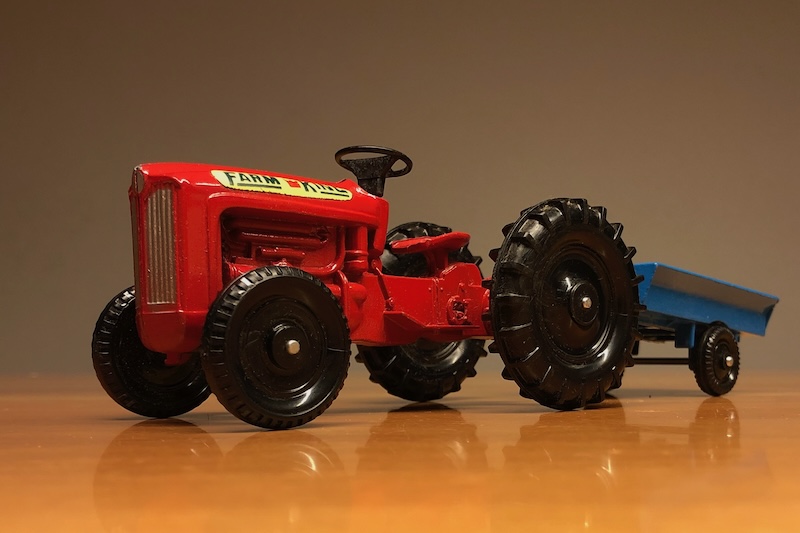
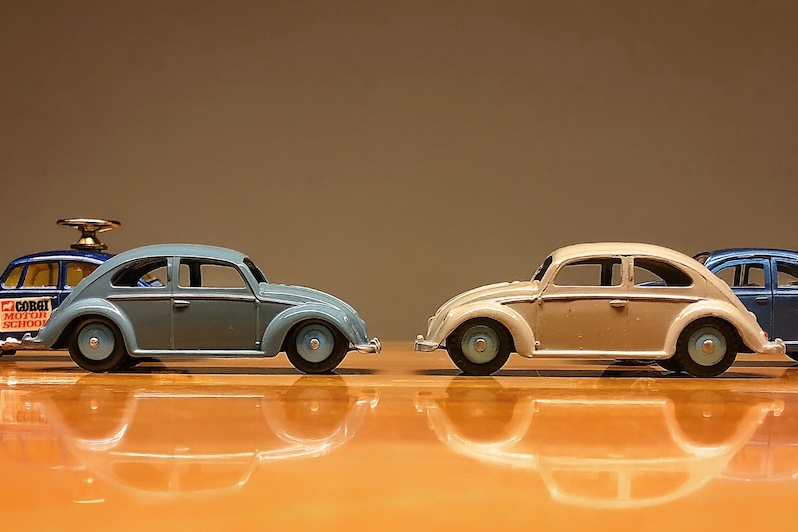
Of course - I would even say: luckily! - I didn't even get a fraction of everything that came my way back then. But I have never forgotten these objects of desire, and today I am on the hunt for them, just like back then, but with the difference that I can now decide for myself whether I want to buy them or ruin myself in some other way - with real cars, for example. I have photographed a few examples of the objects of my dreams that I have rediscovered from childhood memories on my dining table. Nevertheless, to be able to go back in time for just half a day and wander through the pre-Christmas stores in Lucerne - when the anticipation of Christmas was still really great and expectations could hardly be surpassed - that would be an absolute dream!
.jpg)