Winter work

No, this is not a guide on how to store your classic car over the winter or even how to embalm it so that it comes through snow, ice and salt unscathed. It's about making sure you don't get bored during the cold season.
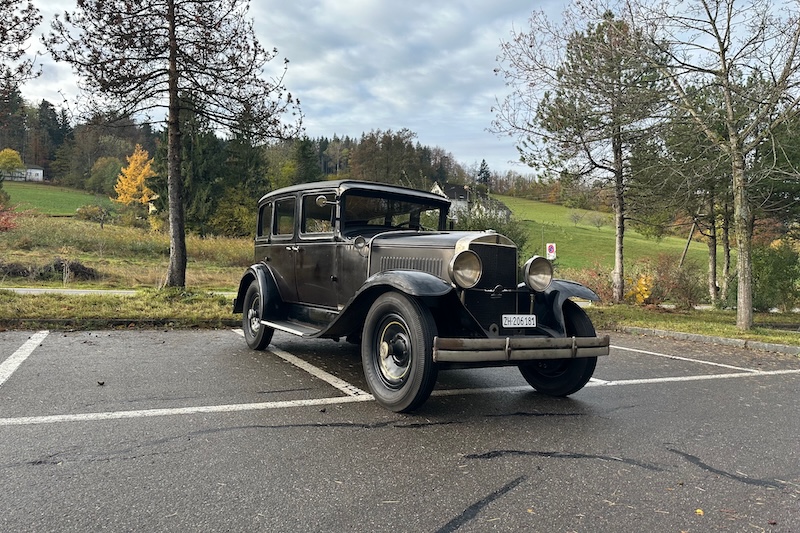
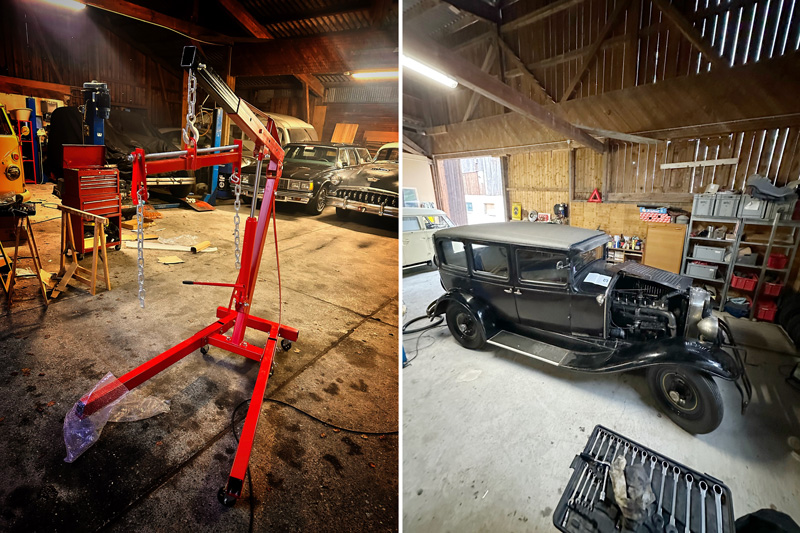
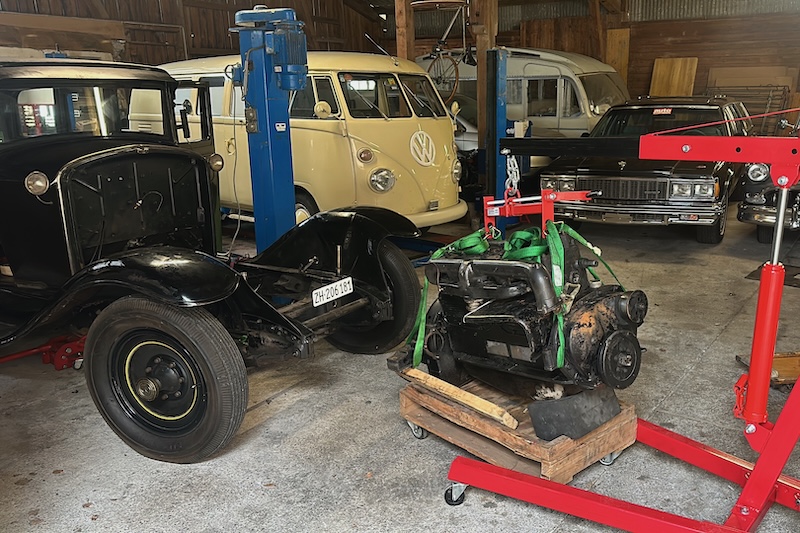
In my case, it won't because my unheated garage would prevent me from sitting idly in a corner twiddling my thumbs. Of course, I could also be bored on the sofa in the warm living room. But I don't have the time. Because I am an optimist. This optimism manifests itself in the fact that, with the help of a friend, I happily managed to remove the engine from my Graham-Paige 619. A ticking noise under load and white metal residue in the engine oil made it seem advisable to send the 4.8-liter 6-cylinder for an overhaul. According to research, the engine had not been overhauled in living memory. However, it must be said that until today, the car has been inconspicuous with cold oil and over short distances away from its "home port", i.e. distances that one would expect from an ancient car of unknown reliability. So it is quite possible that until this summer there was no reason to take the car apart and inspect it after its rediscovery in 2006.
But I want to drive it, even long distances, and rattling noises are of course highly unwelcome, especially those that sound like an imminent engine failure. What convinced me that it was technically possible was the story of the winner of the 1929 Monte Carlo Rally: Dutch mining engineer Jacques Johan Sprenger van Eijk and three companions had driven north from Holland to tackle the competition from Sweden. In this snowy and stormy edition, he would be the only participant to reach the Principality on the Mediterranean from this starting point. Many failed to make it to the starting point, including Rudolph Carracciola. Sprenger van Ejik's car was a Graham-Paige 619 Five-Passenger-Sedan that he had obtained from the importer for the Netherlands at the time, Nefkens in Utrecht. In 1929, Paige Automobile AG in Zurich, a Franz AG company, had supplied the wine importer and schnapps distiller Arnold Dettling in Brunnen with exactly the same car - my car.
So now the engine is out and afterwards it seemed like child's play. The only thing to note is that, as a rule, all the parts that are found to be necessary for removal during an initial inspection of the engine compartment actually have to be removed - including the horn, for example. Once the engine is hanging from the crane, it becomes a tricky job.
In two sessions, we managed to lift the engine out of its chassis. How heavy the top-to-bottom cast-iron part is - a 4.8-liter six-cylinder with upright valves - remains a mystery. But I suspect it's quite a lot. What made the removal much easier was the fact that a 1920s car of US provenance hardly ever puts you to the test. Everything is easily accessible; if you can see five screws holding the steering column, for example, then it is precisely these screws that do the job - and nothing else.
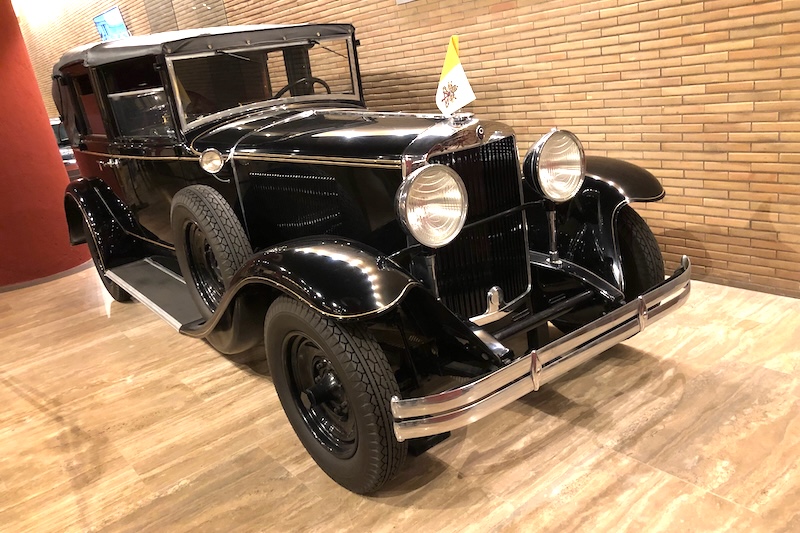
The entire front of the car could be dismantled in around 30 minutes. In principle, there were four elements: the radiator, two headlights and the bumper.
So, the engine is out, it will now be dismantled, inspected - not by me, but by a professional - and then the necessary measures defined. The aim is to be able to lift the engine back into the chassis in the spring. Until then, I will be preparing its "surroundings". No paint will be used, just a little rust converter and a wafer-thin layer of wax, preferably a completely transparent product. That defines my tasks: Research, lots of "Elbow-Grease" as the Brits like to say - for cleaning, polishing and brushing - and many a phone call with the mechanic and engine builder, occasional visits to see how things are going and probably also help with finding parts. The good thing is that the Graham has a complete parts catalog and for American cars there is an index that lists the parts of all models and notes where the same parts were installed, for example in the bearing shells. So I'm confident for the time being. If things continue as they have been, then it's going to be good!