And yet history repeats itself!

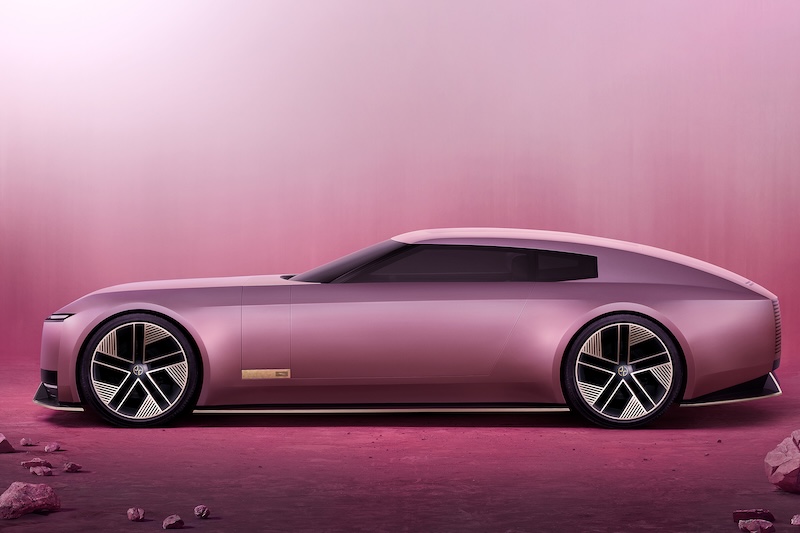
"Jaguar is no place for ordinary. When you see a new Jaguar for the first time, it must have a sense of awe, of never having been seen before. Type 00 commands attention, like all the best Jaguars of the past. It has a dramatic presence, channelling a unique spirit of British creativity and originality. It celebrates art and embodies the essence of Exuberant Modernism. "
Constantino Segui Gilabert, Chief Exterior Designer Jaguar
"Jaguar is not a place for the ordinary. When you see a new Jaguar for the first time, it must exude an air of awe, as if you've never seen it before. The Type 00 attracts attention like all the best Jaguars of the past. It has a dramatic presence that reflects the unique spirit of British creativity and originality. It celebrates art and embodies the essence of exuberant modernism .
Yes, me too, I also have an opinion on what is probably the most talked about relaunch of a brand in recent years. There was no shortage of excitement when Jaguar recently got us all in an uproar with pink logos and weird 30-second films. Finally, on December 2, the Brits took the wraps off their concept car in Miami, appropriately enough at an art event.
After some reflection and trying to "digest" what happened, it has become quite clear to me: History repeats itself. The fact that Jaguar is now using the slogan "Copy nothing" seems unconvincing, as everything the brand currently delivers seems to have a role model somewhere.
First of all, there is the name of the new car - Jaguar 00 - which aims to do away with the past and make it clear that the (Jaguar) era is to start anew: At the end of the 1920s, Jaguar founder William Lyons was fed up with only being exhibited by suppliers instead of in the main hall at the London Motor Show - because he was not a member of the Society of Motor Manufacturers and Traders - so he changed his strategy in 1931 and from then on supplied his cars under his own name. Instead of fitting a third-party chassis with a Swallow body, as had previously been the case with the popular Austin Seven, Lyons wanted to do the same thing in future, but in a completely different way: He agreed with John Black of the Standard Motor Company to supply chassis and engines - in principle no change at all to the old approach - and used bodies of his own design on top. This was - now - also exactly the same type of car construction as had previously been carried out by the "Swallow Sidecar and Coachbuilding Company". The difference lay in the naming of the car, which Lyons proudly called simply SS 1. John Black saw SS as the derivation of Standard Swallow instead of Swallow Sidecar. The coup succeeded; from 1934 Lyons was a member of the Society of British Automobile Manufacturers founded in 1902 and S.S., also trading under the name S.S. Cars Limited since 1934, was henceforth able to bring its cars to the public together with the competition.
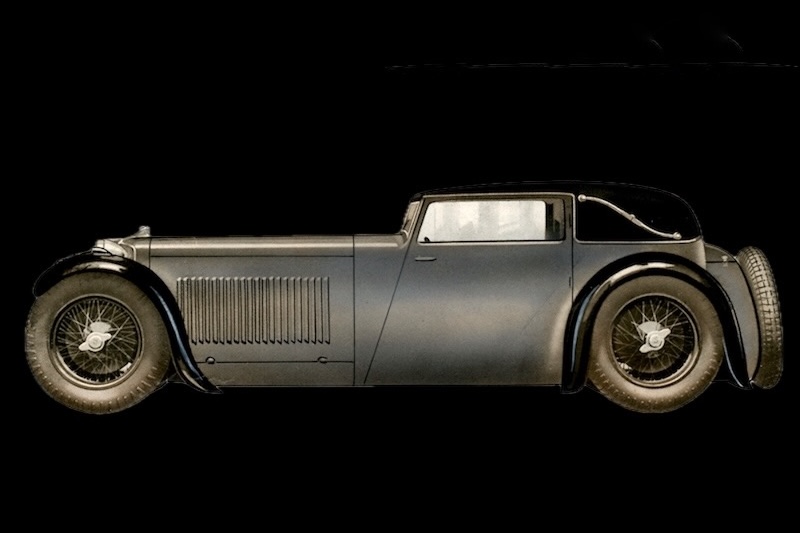
And the parallels continue: the SS 1 Four Light Saloon, basically a coupé, was very close to Lyons' heart, as he loved the closed two-door - more than any other form of automobile. His design therefore showed an extremely low, very elongated car. The drawing was so extreme (see picture) that Lyons' business partner at the time, William Walmsley, took the opportunity to have the roof of the car built higher when Lyons was absent, much to his later dismay. Nevertheless, one of the main reasons for buying an SS 1 was its spectacular shape and, not least, its low price.
Because, as already mentioned, the technology was quite simple and not very unusual. It was not until the development of a separate OHV cylinder head for the standard engines in 1935 - with the 2.5-liter - that a further argument for buying an SS was made, incidentally for the first time with the suffix "Jaguar" for this very 2.5-liter model.
Now, at the end of 2024, we will once again see a car with a very long hood and a name that starts at the very front, not at 1 but even at 00. The fact that this used to be the inscription on the communal toilet in cheap dormitories has been deliberately ignored. But that's not the point, on the contrary.
Jaguar shows us another coupé when it comes to cutting off old habits. Lyons had done exactly the same in 1931, when he presented the SS 1. Although his company continued to build Swallow sidecars until the 1930s, a new era had dawned for cars. Now we are again experiencing a break with the past. However, this seems far less understandable than in the 1930s. Because unlike back then, our focus is now firmly set backwards - there is no trace of optimism about the future with such changes. The good lies in the past, and we celebrate it ourselves with our work, day after day. The success of the new strategy will show whether Jaguar's management made the right decision to shed the past. In view of the completely unsuccessful preview - the only plus point is probably that Jaguar is once again a talking point in the global car community - we can hope that Jaguar will get its act together again. After all, if the glory days of many major brands are now only behind them, then we have definitely lost something.