When model cars were still on the Christmas wish list

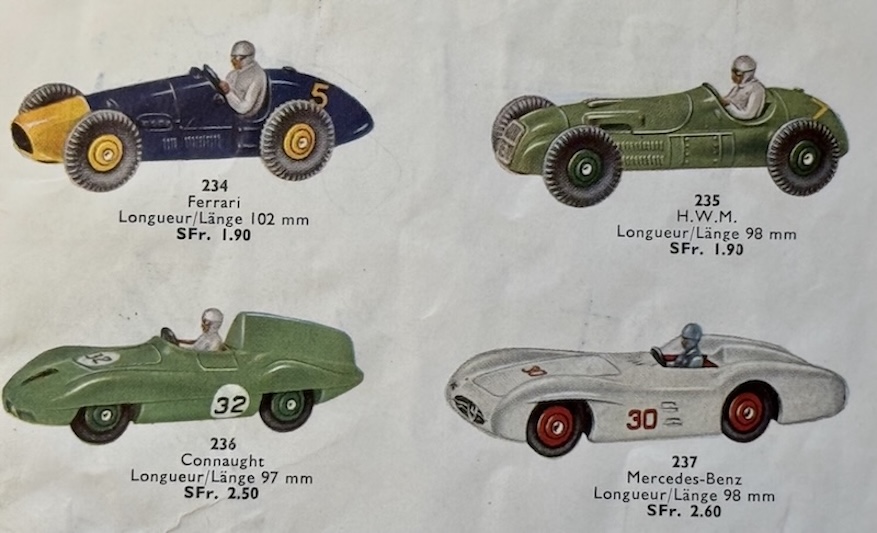
In 1958, a Dinky Toys racing car cost CHF 1.90. That sounds cheap. But the pocket money was two francs a month. That doesn't sound so cheap. Creativity was required from a boy from a car-free household who could only live out his enthusiasm for cars with toy cars. And this creativity had to manifest itself in several concrete measures, as I have listed them individually here:
A) By far the cheapest measure
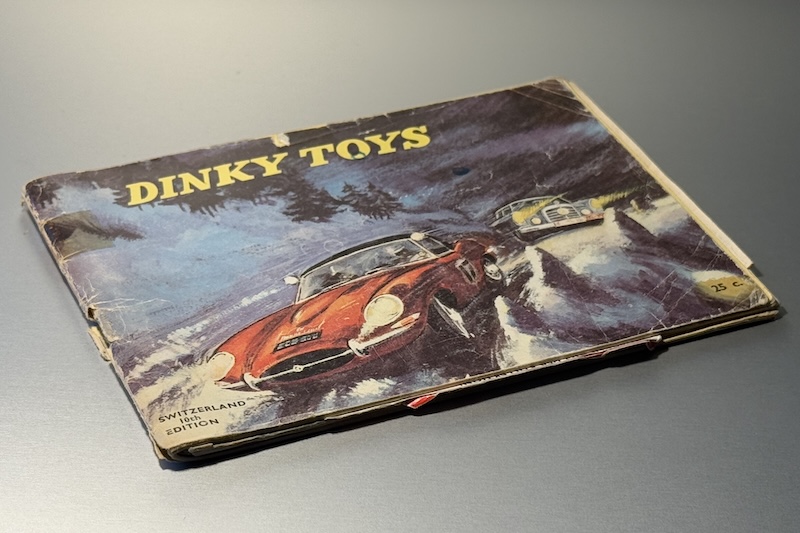
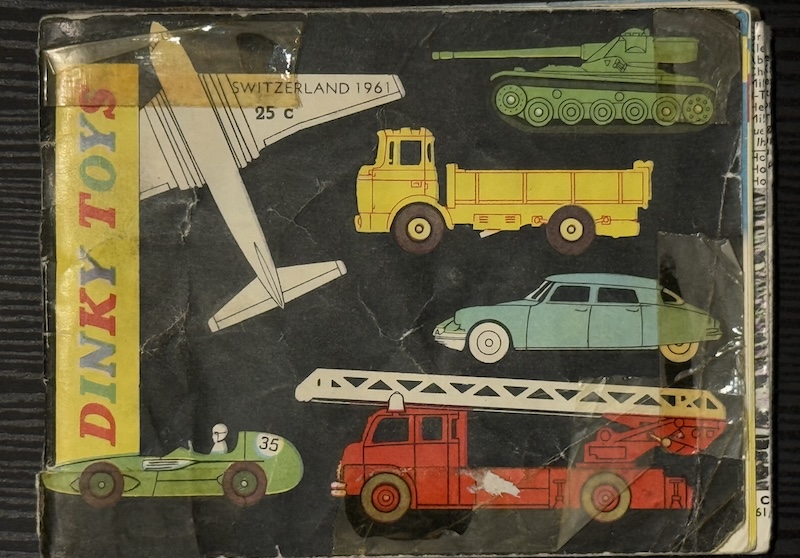
Buy only the colored catalog - for 25 centimes. But that was still half a week's salary! And then spend days dreaming of all the splendors. Ticking off what I absolutely had to buy, what I might buy and what was definitely not interesting - virtual shopping, so to speak, but structured. Whereby: "buying the catalog"... sometimes it was given to you as a gift in the store. Or sometimes you gave it to yourself - er - in the basement of the hardware and toy store near the model cars, where you were sometimes all alone on Wednesday afternoons.
B) The strictest measure
Not spending any money - except on model cars. A kind of building society model, i.e. a discipline of spending trained early on. In purely mathematical terms, this resulted in a maximum of 12 model cars per year. If it was ever a truck or even a large construction machine for the sandpit in the summer, the number of annual purchases fell accordingly.
C) The cost-neutral measure
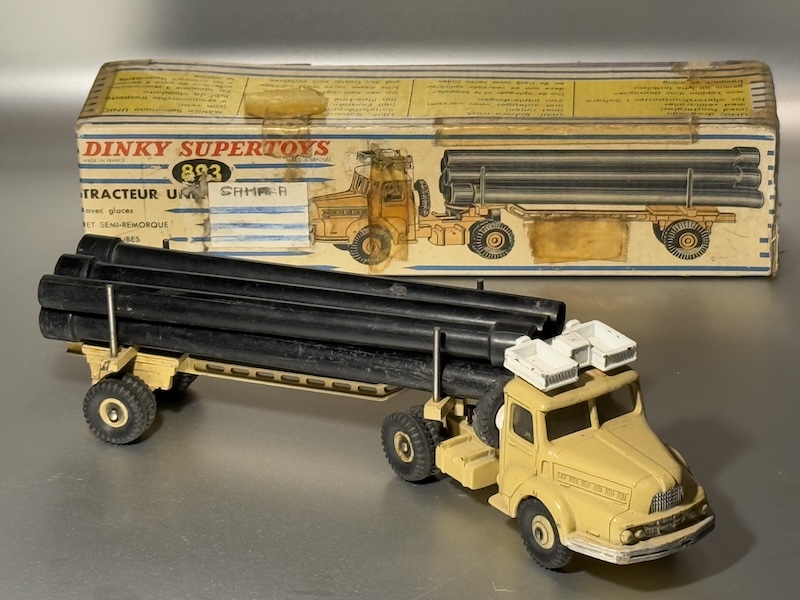
Consistently put car models on the wish list: For birthdays, Christmas or on the occasion of passing the transfer exam to secondary school. In 1960, for example, the latter resulted in a Unic Pipeline tube transporter for an impressive eight francs!
D) The most creative measure - with a social component
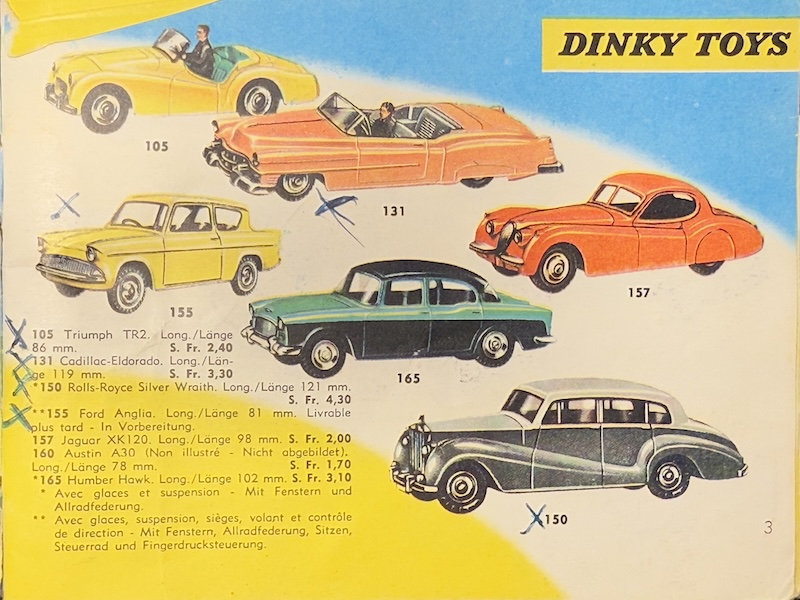
I had invented a kind of role-playing game for my younger brother and my two younger sisters. I ran a building company, my brother ran a farm and my sisters ran a large house in the doll's house. The three areas were the fields of activity of a fictitious, ramified family, a kind of family holding. There was a lively exchange in improvised dialogs between the farm, the building company and the household, and the respective areas of activity and exchange naturally required the corresponding vehicles, especially as the communal area (fire department, police) also had to be covered. And this vehicle fleet in turn naturally called for regular new investments, which were carefully planned under my management.
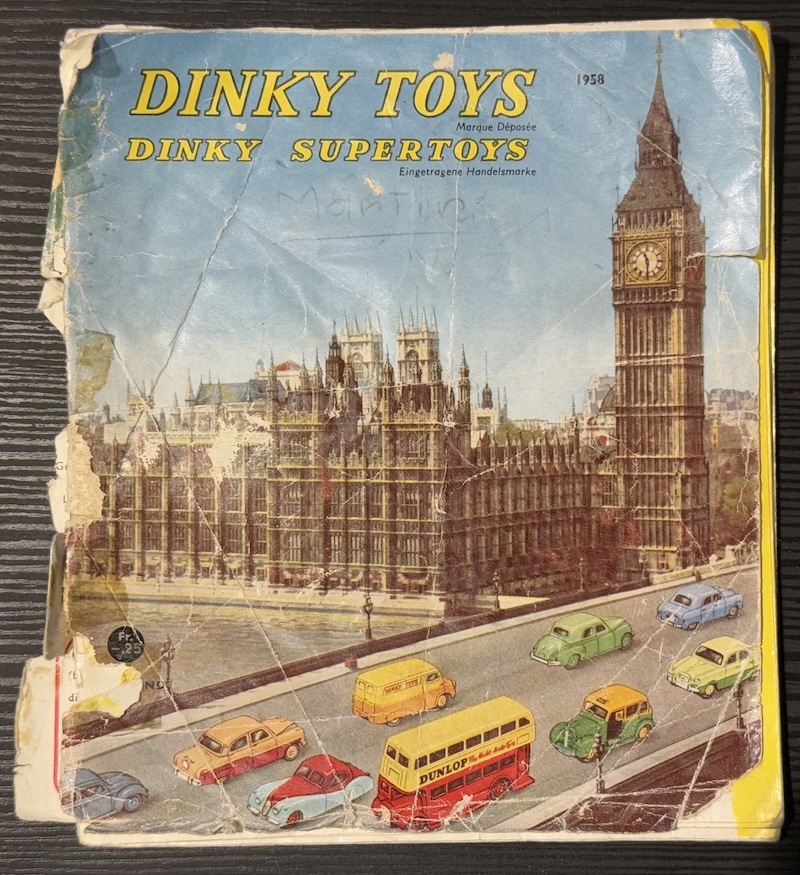
The planning work for these investments was catalog-based. The planned purchases were neatly marked with a color for each of the three parties involved and carefully prioritized.
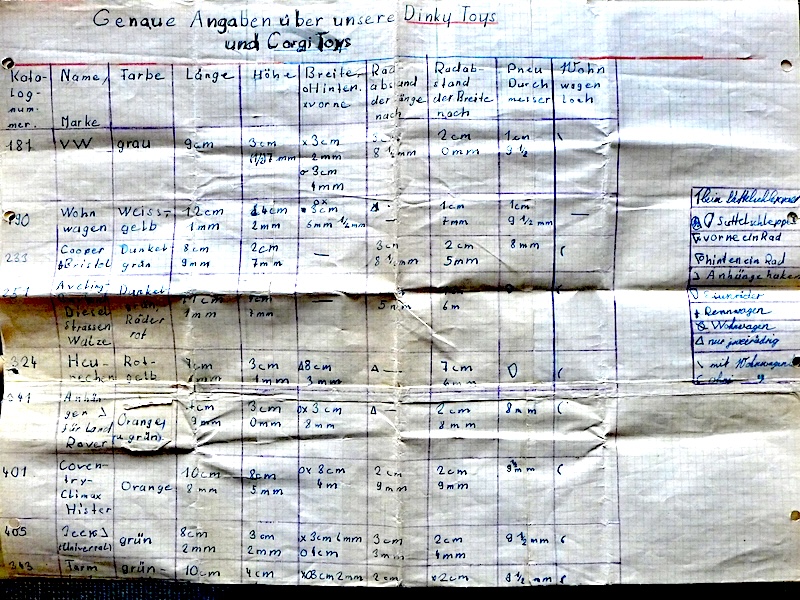
As the chief purchaser of the siblings' car fleet, I kept meticulous records of all purchases. Even the "caravan hole" (trailer coupling hole in the car floor) was documented as well as the tire dimensions with a view to possible replacement. Even model car tires could break at some point.
The problem was, however, that the siblings with their pocket money usually had different plans than me. That's why I had the idea of encouraging them to consider the vehicle purchases necessary for the joint game in a cost-neutral way when making birthday or Christmas wishes, which worked quite well for a while. The fact that my brother once wished for a tractor was of course inconspicuous from a gender perspective at the time. But it was astonishing that nobody in the circle of gift-givers seemed to be surprised when one of my sisters had a tipper truck or a mobile crane on her wish list. Today, some parents would probably - wrongly - celebrate this as an act of early emancipation for their daughter, while others would rightly castigate their son as patriarchal, manipulative machismo.
E) The most professional measure
Going to work. From the 7th grade onwards, schoolchildren could help pick potatoes at the neighboring agricultural school on Wednesday afternoons in the fall. And that brought a proud 5 francs in cash per afternoon, i.e. 10 weekly salaries in one go. Later, unfortunately, the increasing use of the "Samro", the harvesting machine, destroyed these coveted jobs.
During my eighth and ninth school years, I got my first vacation jobs at the local porcelain factory, which gave my model collection a major boost and at the same time relieved the pressure on my siblings, especially as I continued to consistently do without treats, comic books and other short-lived items.
But even at this age, smaller or larger, box-shaped, "hard" Christmas presents - the "soft" ones were the annual woolen socks - were still very welcome.
What was it like for you, dear reader? I hope you received the "right" Christmas presents again this year!