Were the old ones better?


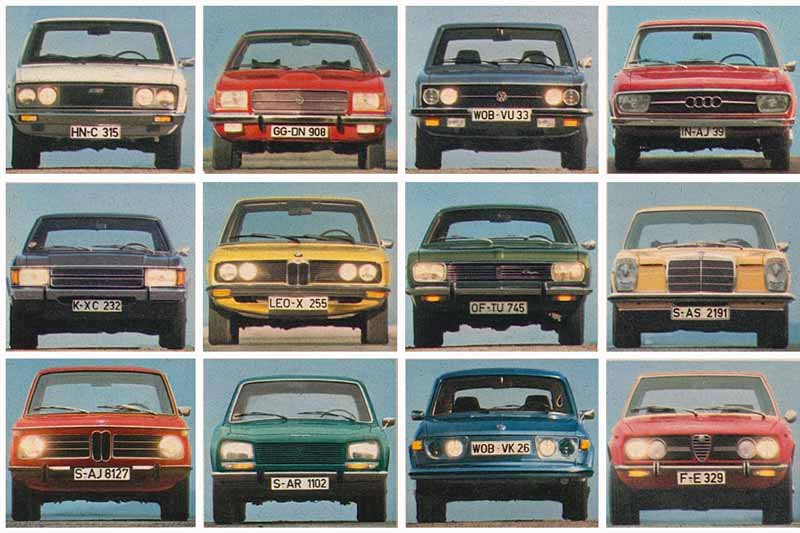
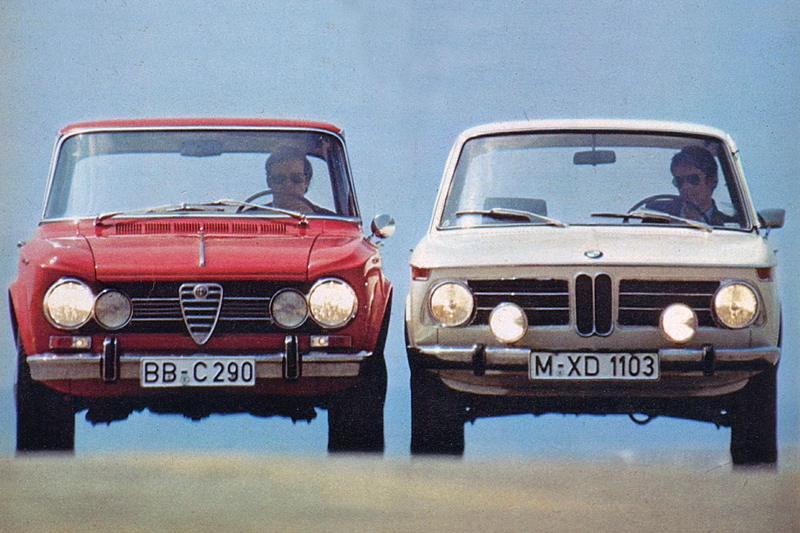
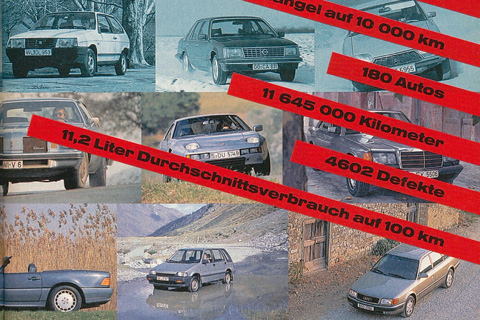
Almost exactly 50 years ago, in issue 12/1974 of "auto motor und sport", Dieter Knoop dealt with the question of whether cars were better in the past, a question that still comes up again and again in modern times. Even back then, many car owners apparently looked back to the past with glorified eyes and thought that everything was better in the past.
Knoop dared to argue the opposite. It is worth reading the article again, but we have summarized some of the most interesting statements here:
Engines lasted much longer in the seventies despite significantly higher liter output. Whereas in the thirties an engine overhaul was often necessary after 40,000, sometimes even after 20,000 km, engines in the seventies often did their job for 80,000 or even 100,000 km before an overhaul was necessary. (50 years later, this figure is probably at least double). The reasons for this are/were better materials, more precise production, more effective lubricants and presumably also less stress on the engines.
There is no need to emphasize that the cars of the seventies were significantly faster on the road, reaching speeds of 140 km/h instead of 85 km/h and were superior to the cars of the thirties in every respect in terms of driving performance (the progress of the last 50 years is just as impressive).
Knoop took a critical view of the transition to the unibody construction, which was of course largely complete 50 years ago, but was still in its infancy in the 1930s: "...with its reduced weight, it (the unibody) also offered reduced costs for manufacturers and low prices for the customer. But from then on, and with each passing decade, it determined the service life of the entire car. The more skillfully one learned to process ever thinner sheet metal with almost undiminished rigidity, the lower the life expectancy of the sheet metal body became: after accidents, when it warped irreparably. Or, even more frequently and increasingly so, when rust gnawed at load-bearing parts that were not very strong ... "
On the other hand, it was thanks to the rigid "framework" that many pre-war cars survived (and were clad in new bodywork if necessary). On the other hand, 1970s cars were also lighter, cheaper and more torsionally rigid. At the same time, the chassis became much more sophisticated and safer, the cars had crumple zones, and seat belts were already obligatory for front-seat passengers in the mid-seventies. (This has all been perfected to this day, and rust protection has been significantly improved since the 1980s).
The "accessories" also improved significantly between the thirties and the seventies. This includes, for example, tires, brake pads, shock absorbers, spark plugs, windscreen wipers and the like. (And all of these things have been further perfected to this day, as can be seen, for example, in windshield wipers, but also in spark plugs, which now easily ignite reliably for 50,000 or more kilometers instead of 10,000 km).
There were also major differences between the cars of the 1930s and 1970s in terms of ongoing maintenance. Whereas in the thirties a driver still had a lot to do before every journey, by the seventies the maintenance intervals had been extended to 10,000 km and more, and oil changes were no longer necessary every 1000 or 1500 km, but every 5000, 10,000 or even 20,000 km (e.g. Porsche). (Today, the first owner of a car often never even experiences the first oil change, as this is only necessary after 40,000 or 60,000 km).
In the 1970s, grease tins and lubrication work were rarely part of everyday life for car owners, whereas their predecessors always had to ensure that bearings or the clutch cable were lubricated at all times. (Today, car owners often never open the hood of their car themselves for years).
Yes, the car of the seventies was easier to maintain, more reliable and safer than its pre-war predecessors. We have probably made a similar leap since then, to the point where car owners hardly have to deal with their modern cars and let them do a lot of things themselves. However, the increasing complexity of the vehicle limits the chances of today's automobiles surviving in the long term, and the opposite is the case with the comparatively primitive classic of the pre-war era.