The not always fair battle between drive technologies

Almost from the very beginning, different drive technologies fought for supremacy in the automobile. Around 1900, gasoline combustion engines, steam engines and electric motors were all in the running. The steam engine proved to be too cumbersome and the electric drive ultimately suffered from too short a range, after it had temporarily had the edge in terms of simplicity.
From the 1920s onwards, the petrol engine became completely established in passenger cars, while diesel engines initially enjoyed more of a niche existence. Electric motors were almost only used in experimental vehicles or for special applications (e.g. purely city cars).
In the 1960s, a new promising competitor appeared on the scene, the rotary piston or Wankel engine. Many car companies tried to get a foothold in the new technology, because the Wankel engine had some impressive advantages, namely its compact design, low-vibration running and small number of parts, resulting in less complexity. Had it not also had significant weaknesses, perhaps we would all be driving Wankels today.
In the new millennium, the renaissance of the electric car slowly began, driven by environmental concerns (exhaust fumes, noise) about combustion engines. In a short space of time, the electric drive became much more competitive in terms of range and efficiency and, like the Wankel engine, it also had the advantage of being less complex and requiring less space.
But then something happened that had never happened before. Politicians, spurred on by the diesel scandal from the mid-teens, intervened directly in technology decisions. Instead of setting limit values as before and leaving the choice of technology to the manufacturers and buyers, they began to promote electric vehicles directly, through taxes and support payments. The fact that some of the arguments were based on questionable figures and different yardsticks was ignored. Car manufacturers were thus forced to promote a technology unilaterally, regardless of their own convictions and technological knowledge.
What would have happened if this had happened earlier? What would the car world look like today if states and politicians had spoken out in favor of the dominance of the Wankel engine in the 1960s or steam cars in 1900?
Governments/authorities should set limits, not technologies. The limits should be defined in such a way that they meet the overriding objectives (e.g. well-to-wheel optimization).
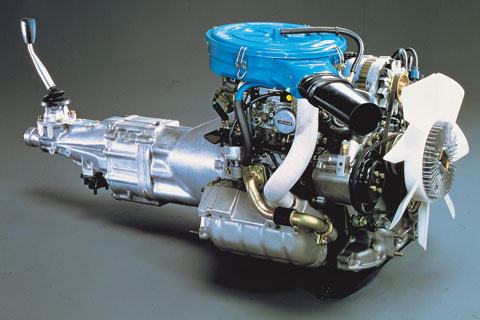
P.S. By the way, the picture above shows a Wankel engine as installed in the Mazda RX-7.