Is the classic car still a good investment?

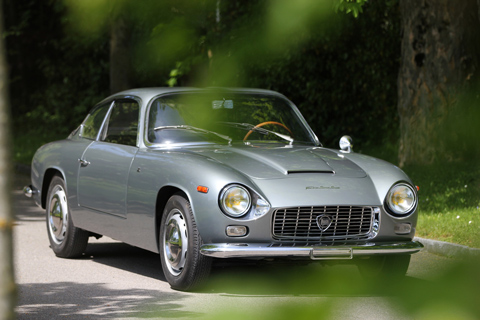
The days when classic cars increased in value by double-digit percentages every year seem to be over. In fact, the turnaround began in the mid-teens. Cars that were still being traded for EUR 400,000 five years ago can now be had for EUR 200,000 or 250,000 again. The good news is that we are still in positive territory for most classic cars if you compare today's prices with those of 2010 or so. So from a long-term perspective, classic car owners have mostly benefited from increased valuations. Exceptions confirm the rule.
Time and again, however, readers come to us with the question of how things are going. Many classic car owners have invested considerable sums in their old car and perhaps its restoration. And they don't want to lose it all.
Of course, we can't see into the future either, nor do we have a crystal ball with magical powers. So let's start with an analysis. What could happen around the old car?
Driving restrictions, price increases, bans
One risk is certainly new restrictions or even bans. A massive increase in the price of petrol or road tax could also have an impact on the value of old cars. The more practical and versatile a classic car (or youngtimer) is, the more it would probably fall in value. Pure exhibition cars or vehicles that are only used on the racetrack or for special occasions (e.g. London-Brighton Run) would probably be much less affected. Cheaper classic cars would probably - relatively speaking - suffer more from a loss in value than expensive cars. A complete ban would certainly have drastic effects and would only spare cars with museum value.
Declining interest because future generations are no longer car-savvy
In this case, too, the value of old cars is likely to fall, because where there is no longer a market, there is no longer much demand. The effects would probably be similar to those of driving restrictions, but the process would be slower and take decades.
It doesn't have to be like this, because we still have an influence on the course of history. Old cars are far more than just a means of transportation, they are part of our culture. They should not disappear any more than steam locomotives or horse-drawn carriages. They are just as much a part of our development history as hot air balloons or propeller airplanes. It is up to us to demonstrate this historical and cultural value and to prove it again and again. And it is up to us to inspire future generations with enthusiasm for this mobile cultural asset. If we succeed, then not only will we be able to enjoy the historic automobile for many years to come, but our investments will not disappear without a return. And even if not all the money can be saved, at least the joy of the beauty of the old sheet metal and the driving experience that modern technology cannot offer in this form will remain.
The question posed at the beginning can therefore be answered with "yes", but "value" should not be understood only in monetary terms.