The car of tomorrow was yesterday


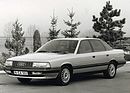
In 1980, the future looked quite realistic. Volkswagenpresented a research vehicle which, from a purely visual point of view, looked very similar to the existing range of the time and was based on the Passat.
It was called the IRVW II and was intended to meet the social requirements of tomorrow. It offered more protection in the event of an accident, had the fuel consumption of a small car (8 liters per 100 km in the city, 5.3 liters at 90 km/h and 7.4 liters at 120 km/h) and undercut the emission limits planned for 1985. It was also quiet, with exterior noise levels reduced by 70 percent compared to the series models.
The optimized Passat was not slow, it ran at 169 km/h and accelerated from 0 to 100 km/h in 15 seconds. A 1.3-liter four-cylinder petrol engine with a compression ratio of 13:1 was sufficient for this. Thanks to an electronic adaptive knock control system, this was possible with conventional premium gasoline.
To make the engine's work easier, the Passat had been significantly improved in the wind tunnel compared to the Seiren version; after the cure, the Cd value was 0.33 instead of 0.38. Fine-tuning, such as a modified front section, the cladding of the car floor or a rear spoiler were all that was needed.
A lot was also done inside to increase passive safety. And the driver was given a "co-pilot", which today would be called a "consumption assistant". This ensured that acceleration at low engine speeds was powerful in order to reduce part-load consumption.
The research vehicle was even equipped with a kind of freewheel.
Yes, the progress of 1980 may not have looked spectacular, but it did set the course. And some of it could be seen again in later Volkswagen models. In any case, the IRVW II was clearly more future-oriented than other research projects, such as the gas turbine, which was also being worked on.
You can read the whole report in AMS issue 23 from 1980 in the Zwischengas magazine archive .