The VW Beetle - the ideal winter car?

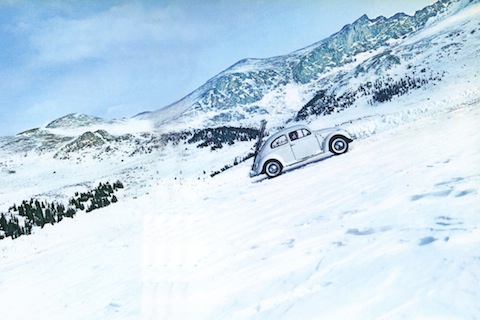
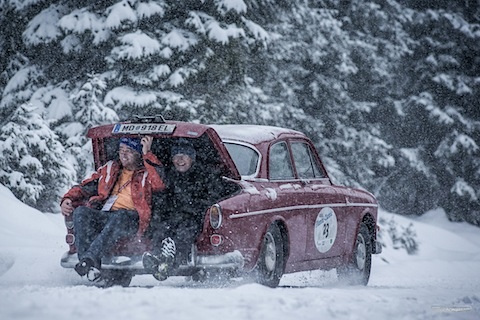
For decades, the streetscape in Germany and Switzerland was dominated by the VW Beetle. But even when modern descendants inherited it, the chubby Wolfsburg remained a popular means of transportation, especially in mountainous regions and in winter. There were good reasons for this, because even in the 1970s, hardly any other car could hold a candle to it in terms of winter suitability. Firstly, there were the large and narrow wheels, which promised particularly good grip on snow. And there was the rear engine, which loaded the driven rear wheels and thus ensured maximum traction. Of course, other cars also had an engine above the drive axle, e.g. the Renault 4 or the Audi 80, but they were front-wheel drive cars and this took the load off the driving wheels when starting off, which had a negative effect on traction. But the Beetle had other advantages too. It was air-cooled, so there was no cooling water that could freeze. And on the whole, it was a reliable starter.
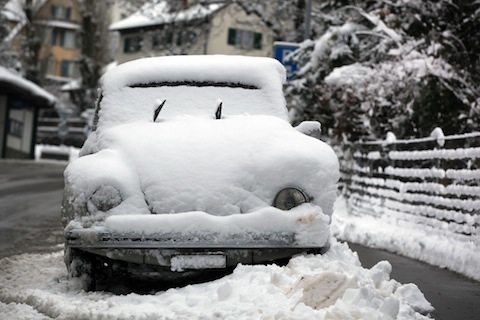
Of course, the Beetle also had disadvantages in winter. The heating effect was not outstanding and was also dependent on the engine speed. Many a Beetle driver struggled with icy windscreens. And once the traction and lateral control of the rear wheels was lost, the rear of the Volkswagen often overtook its own front. And all too often, the Beetle was first stopped by a wheel block or some other obstacle, causing it to lie on its side. But then another advantage of the Beetle came into play. It was relatively light, two strong men could easily put the car back on all four wheels and an experienced mechanic could replace the two mudguards in the garage at home, reasonably inexpensively.
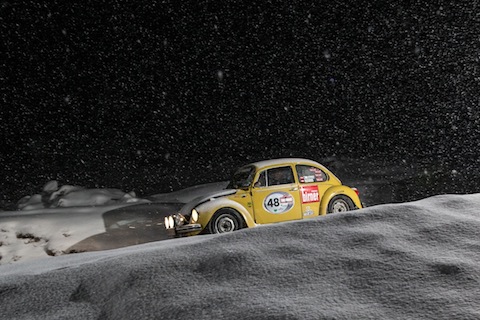
There were certainly similarly designed alternatives to the Beetle, such as the Simca 1000 or the Renault 8, the Fiat 650 or Hillman Imp. But none of these cars could compete with the Volkswagen in this country, not even the Beetle alternatives from VW itself.
And so many people drove a Beetle in winter who used a less traction-happy but sportier and more spacious BMW 2002 or Peugeot 404 in summer. And if necessary, they fitted studded tires, then almost nothing could stop them.
Despite its excellent winter characteristics, the VW Beetle never became a great rally winner, as it simply lacked a few horsepower under the (rear) hood. The competition, e.g. the Citroën DS, the Mini Cooper or the sporty, flat Beetle brothers Porsche 356/911, were much more successful. But in terms of units sold, no one could surpass it at the time, as evidenced by the well over 20 million Beetles produced.
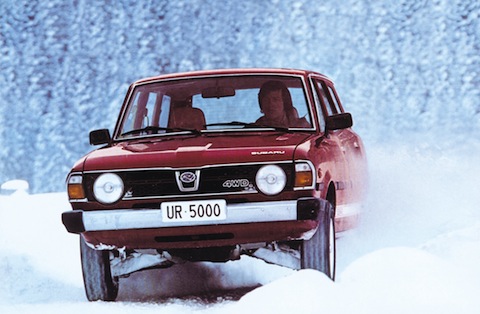
A better winter car finally came from a surprising source, namely Japan. Subaru began selling sedans and station wagons with selectable rear-wheel drive in the early 1970s, and even the Beetle was no match for four-wheel drive. The Subaru 1600 4WD was officially launched in Switzerland in 1979 and soon stormed the sales charts, not coincidentally in the mountainous cantons. An early Subaru owner recounts: "If you wanted to be the deer in the ski resort, you drove up in a Subaru. Because it was more comfortable and could even get through where the then omnipresent Beetle got stuck."
Lots of information, pictures and reports on the VW Beetle can be found on a dedicated topic page.