Old winter tricks

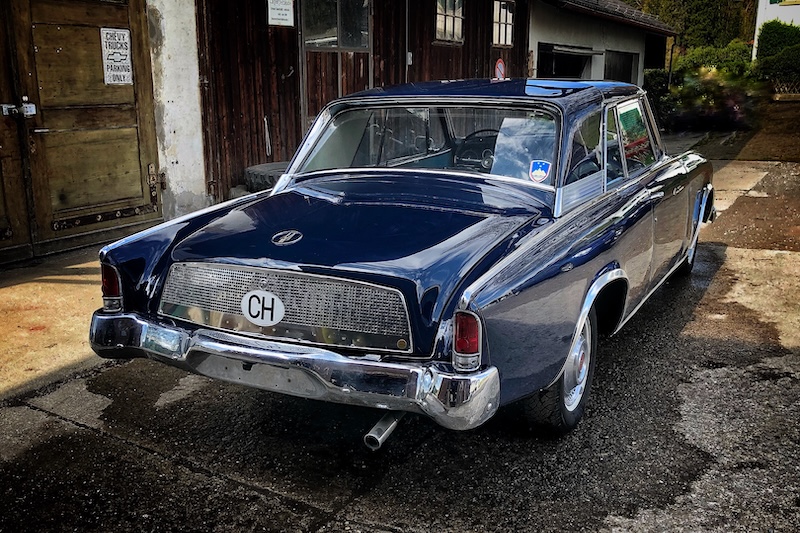
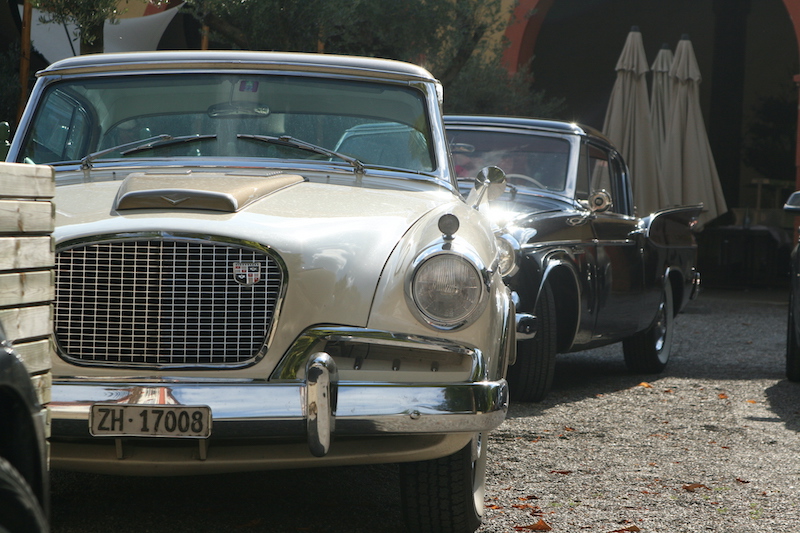
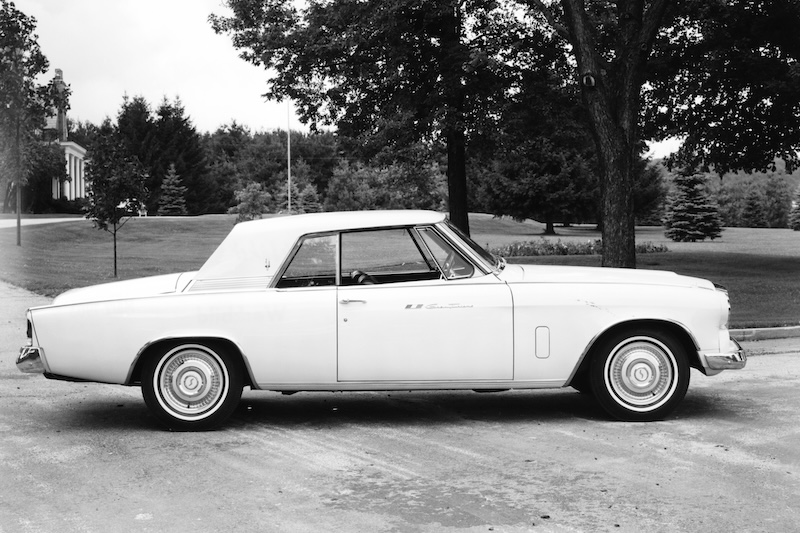
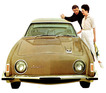
At the time, I found it beautifully framed under a hood made from the original material, the massive piece of cast iron lying at the end of the trunk right next to the spare wheel in our 1962 Studebaker GT Hawk. The cuboid is so heavy that, contrary to expectations, it is impossible to remove it with one hand. The reason for its existence is the driveway to the garage of the previous owner, who bought our 1962 Studebaker new and drove it until 1996. She alone was responsible for clearing the snow from the short stretch of road. And she sometimes saved herself the trouble. So that she could still drive up in her car, she had the cast iron piece placed in the trunk of her somewhat top-heavy Grand Turismo Hawk with V8 engine to increase the rear axle load.
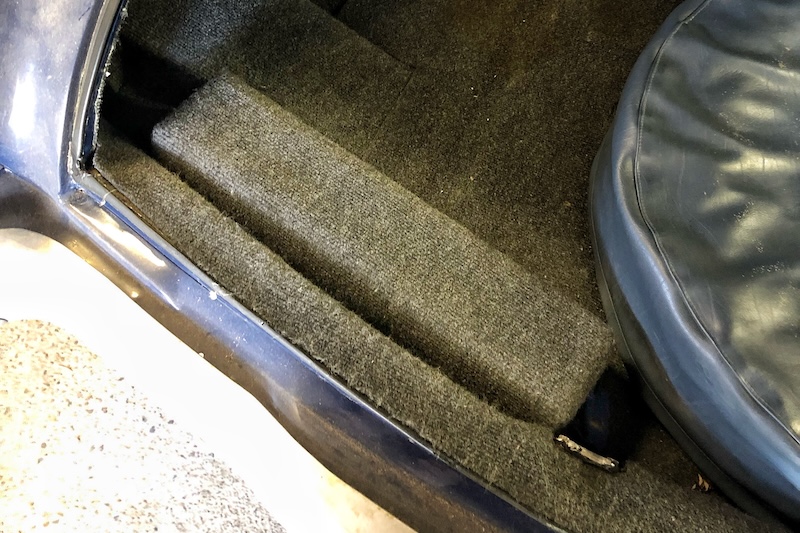
A heavy lump: a piece of solid cast iron lurks under the cover
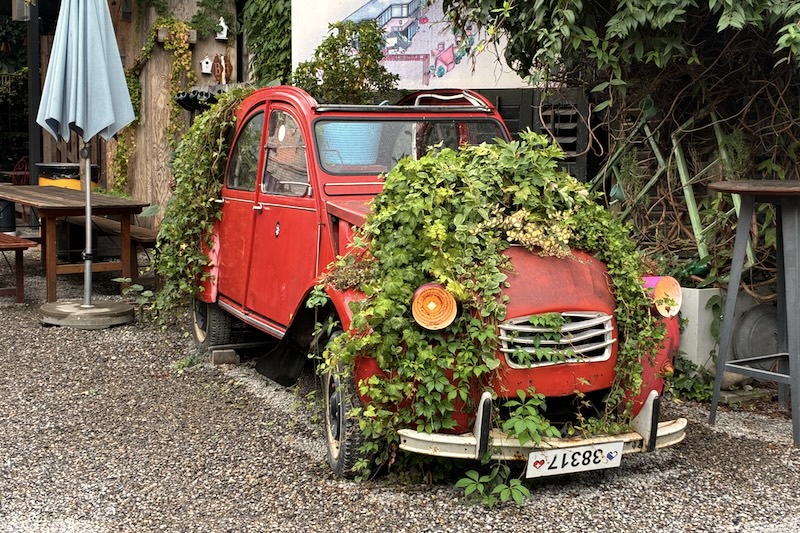
Sandbags are another story, but they primarily serve the same purpose - as weights. So much so that I used to place such bags behind the characteristic horns on the bumper of my Citroën 2CV and secure them with a rope around the headlights. This was to help put more weight on the front axle. But the "Döschwo" was always a brilliant car on snow, the sandbags were an additional aid to reach an alpine hut at the foot of the Pilatus mountain in winter on a freshly snow-covered road (nevertheless).
Apart from that, I always had the utmost confidence in the two-horse's climbing abilities - even without any special measures. You could say less about the duck heater! The trick was to bind the cardboard pipes, most of which were already very frayed, tightly to the heat exchangers of the 2-CV engine using additional foam rubber and external adhesive tape. The same applied to the distributor piece on the front bulkhead, where a flap regulated the distribution between the defroster nozzle and the footwell. However, to ensure that the engine warmed up at all, I usually "sewed" a piece of cardboard with a more or less large hole in the middle directly onto the grille of the radiator fan with cable ties in addition to the little snout provided for this purpose - the cooling air limiter, which, according to the operating manual, could be placed in front of the grille if the outside temperature was below 10 degrees.
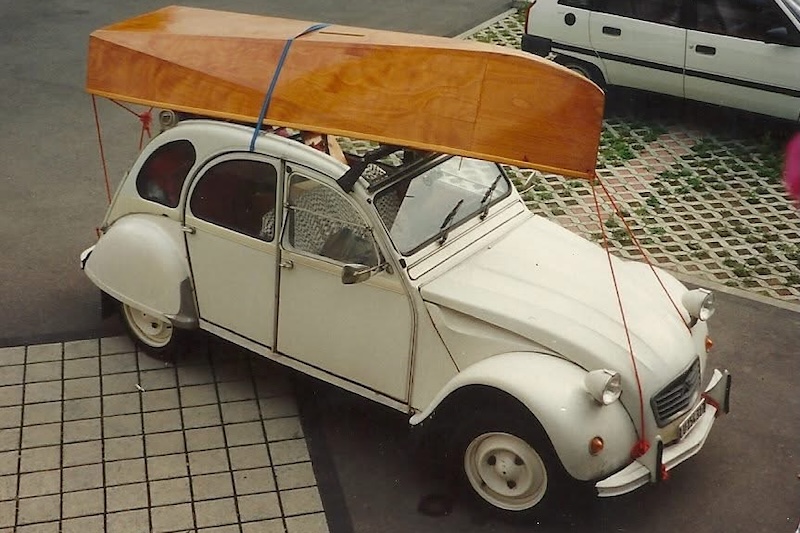
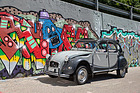
It rusted faster than I could photograph it, so there's only one summer picture: I winterized the 2CV with adhesive tape, cardboard and Indian woven carpeting. Sandbags placed behind the bumper horns provided extra traction
These were the measures taken on the engine side to conduct every ounce of heat into the Döschwo interior. Another trick, which an old Döschwo driver had once told me, was a piece of foam rubber that I had glued into a roll and placed under the front seat bench, because its purpose was to prevent the warm air from simply escaping under the high-legged duck seats into the trunk. On the other hand, the engine exhaust air rose up along your legs, keeping you nice and warm. As I was usually traveling alone, I didn't really care about the climate in the back seat. Last but not least, an Indian woven carpet of the correct size was tucked under the roof to prevent the heat from escaping immediately through the roof - and it provided some sound insulation. The seats were also covered with such a thick, cloth-like patchwork carpet and offered a little more warmth than the black artificial leather of the original upholstery of my standard duck. And when crossing with trucks, the closed folding roof hit the bows less hard when the truck's bow wave caught the thin-walled vehicle.
So my 2CV was perfectly equipped for the winter, but at the time I had no effective means of combating rust. After 16 years on our planet, the white 1984 2CV6 Spécial breathed its last in the spring of 2000 when the chassis collapsed while stationary (!) during a long period of inactivity. The car still exists as a vehicle registration document and manufacturer's sticker in a drawer in my workshop. I put the engine with gearbox, the add-on parts, seats and axles to one side, but cut the rest into manageable pieces and took it with a small trailer to Gotthard Schnyder, a scrap iron dealer in Emmenbrücke LU, where I threw it onto a huge heap myself - piece by piece and by hand.