A little driving culture please!

What is that anyway? In car tests, it used to describe the smoothness of the ride, the smoothness of the engine or the comfort of the interior. A refined car tended to be a luxurious car. However, I also understand it to mean something else.
Human development is measured by culture. Yes, in anthropology, the presence of traces of actions that are not directly purpose-oriented proves whether a form of human life already existed or not. Culture is an indicator of human behavior, so I'll take the liberty of concluding that so is driving culture.
But right, I wanted to explain what I mean by driving culture: it is the way of "getting around", how one moves in public, with which means of transportation and how.
For example, I can remember a visit to Paris as a child, I mean even the first time I was in the French capital. I remember the flow of traffic on the Champs Elysées, which tended to be very fast and quite chaotic; there was a lot of speeding and, as a logical consequence, braking. The cars, no matter what price category, all had a dent of some kind and at the wheel of even the most badly worn and rust-ridden Fourgonettes and the like were fine businessmen or businesswomen on their way to or from work.
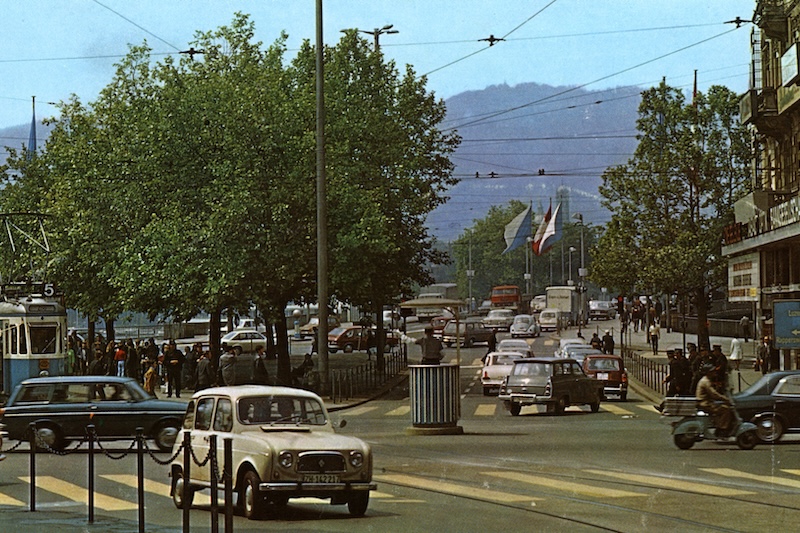
It was all somehow different, the flow of traffic, the perception of the people around us, their interaction with this perpetual stream. But it could also have been Zurich, as the cover picture from the ETH library e-pics of Bellevue around 1973 shows, or Lucerne - just as well as any other city. Because I admit it: watching cars has never bored me. In Paris, however, it wasn't the types or individual models that fascinated me, I knew almost everything that drove around there, it was - as I mentioned - the way they drove and the people who did so. The whole thing had an air of mysterious exoticism about it.
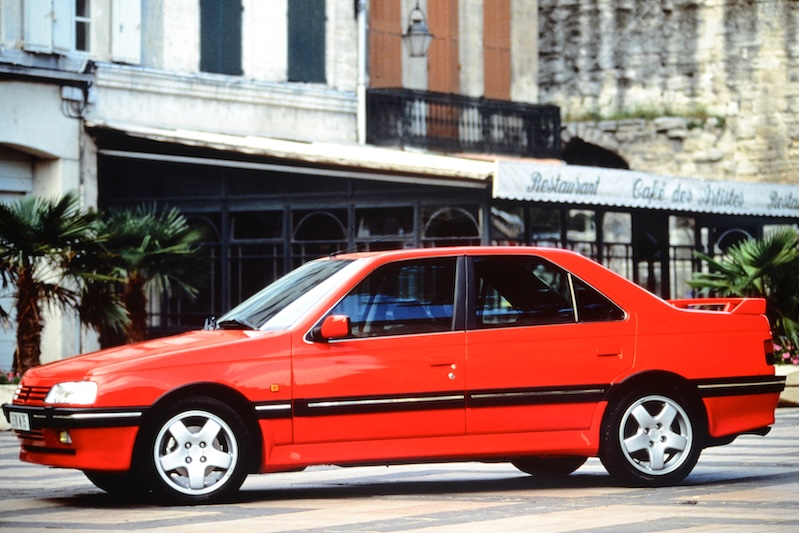
Peugeot 405 Mi16 in a Paris street
But Paris really was a place with a very special character, because the really interesting cars, it seemed, regularly only appeared on the streets at nightfall, the good models, the Peugot with a 16-valve engine, for example - instead of those with a bump and a naturally aspirated diesel. Or then the cars were really different: I had my first live encounter with a Ferrari F40 in the Latin Quarter. I saw a Facel-Vega - before I even knew the brand - drive past me on the street in Paris. It was probably a Facellia, according to subsequent research based on memory.
But there were also examples in my home town that I would now classify as driving culture. I regularly encountered the first Porsche 911 Cabriolet while waiting for the bus. The driver, always out in the open and dressed in a Hawaiian shirt, made his rounds between the train station and Löwenplatz, always crossing the Seebrücke in between. Today that would be a poser, back then I thought we were part of the world because we also had great cars on the road.
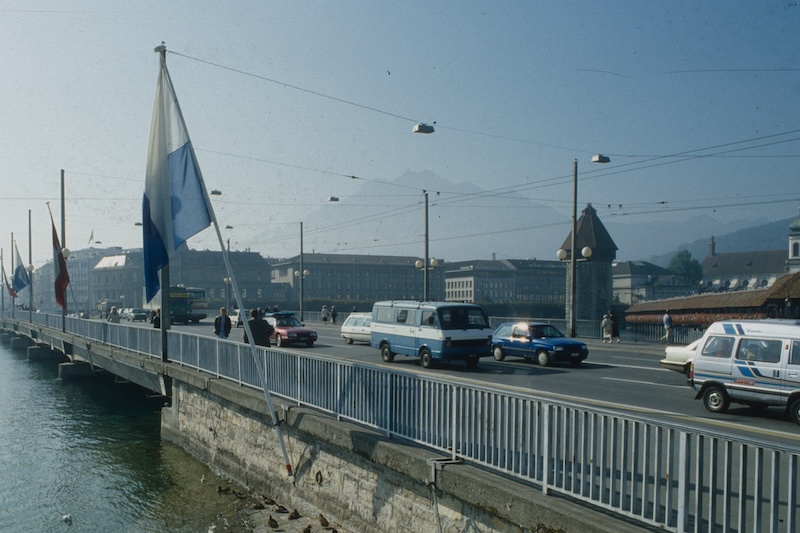
The Lucerne lake bridge in the late 1980s, ideal for car spotting © ETH e-pics
But I also count other things as part of driving culture. For example, people who keep and look after their cars for decades, people like those on my street who have been using their old nine-eleven as their everyday car for ages. They could probably also be "modern", they certainly don't lack money, but they don't maintain this consumption-oriented lifestyle, instead they cherish what they once took responsibility for. This is exactly how it seems to me: things are not simply acquired for sale, but you feel that they have been entrusted to you - an interplay. The owners once found their car through lucky circumstances or hard work - or both at the same time - and now look after it like a family member. Changing it is tantamount to betrayal.
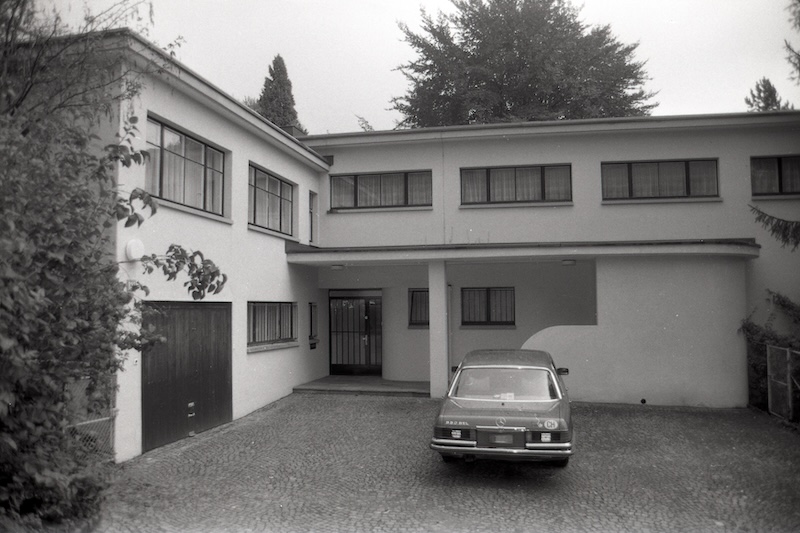
Has the new car become too big for the garage that was once built and sized especially for the old car? © ETH e-pics
And there are people who once had the garage entrance to their house built to the dimensions of their car, so you don't just give it away. Well, maybe that's not culture, but it seems to me to be a very cultivated approach when the focus is not only on the object itself, but also on the network of relationships around it.
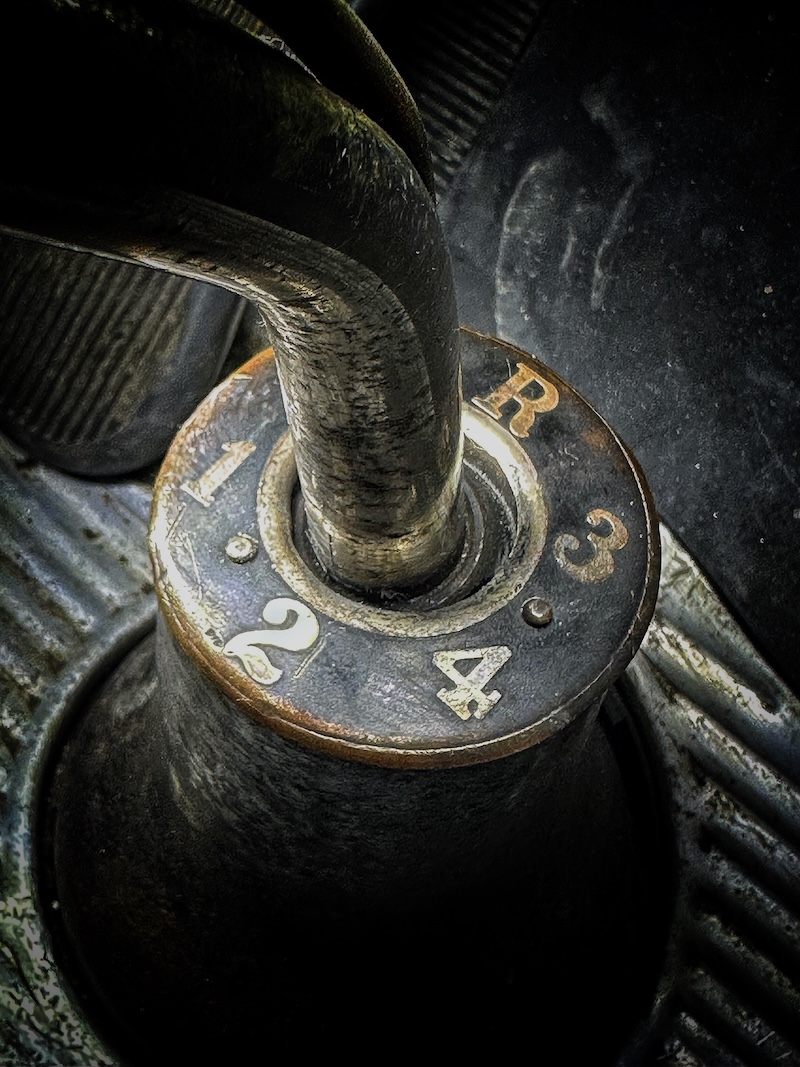
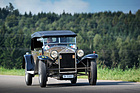
Unsynchronized and tricky: switching gears in the Graham-Paige of 1929
I also feel that voluntarily imposing hardship on oneself and choosing the more difficult, more strenuous path is a higher cultural level than the constant path of least resistance. Sure, power steering or synchronized transmission are great, not to mention air conditioning. But there is something satisfying about using pure muscle power and demonstrating your own operating skills.
And no, driving culture is not only found in large, expensive luxury cars or sports cars. Every now and then, an elderly gentleman drops by my garage with a second-series VW Polo C. To outsiders, this is little more than an old Polo hatchback in a sandy beige color and with a very sparse interior. But its owner has already given the - his! - car has already undergone a full restoration. And recently he had to admit that he had to repaint the car again after a bump - at a cost far beyond its current value. For me, it's driving culture when someone stands by their car instead of always changing it again.