Power overload?

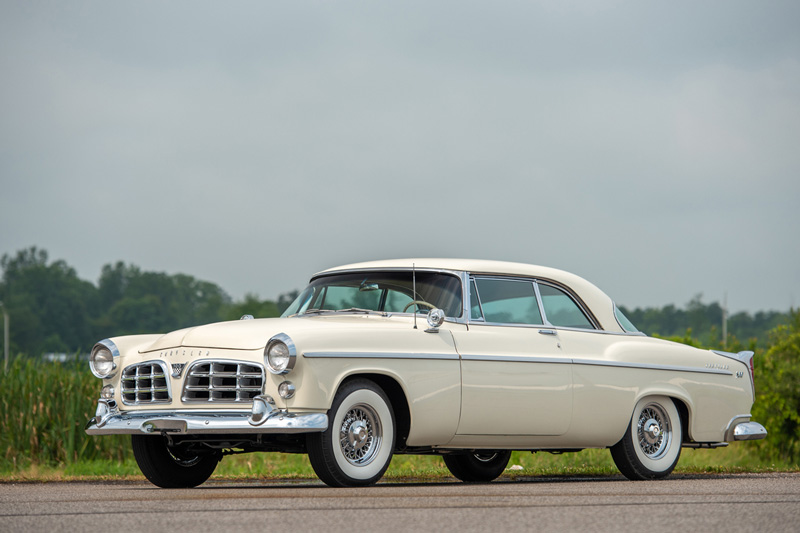
When Chrysler announced the C-300 in 1955, it boasted an almost unbelievably high engine output. In fact, it had the 5.4-liter "FirePower Hemi" V8 under the hood, which produced 300 hp thanks to its generous carburetor configuration.
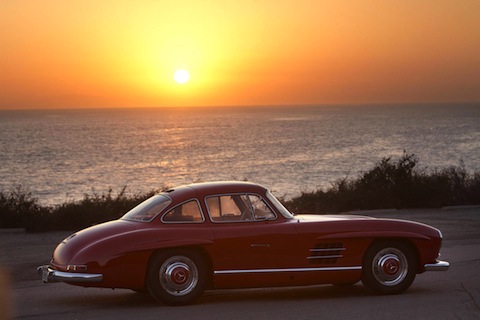
At that time, a VW Beetle produced 30 hp, a BMW 502 100 hp and a Mercedes-Benz 300 SL 215 DIN or 243 SAE hp. The latter, however, was a super sports car, closer to a racing car than an everyday car. The Chrysler, however, was not a cheap car, but in principle a normal road cruiser. There was soon talk of "too much power" and people wondered whether Otto Jedermann could handle so much power.
This was repeated again and again. Some critics said that a Golf with 110 hp (GTI) was overpowered, and similar comments were made about the Fiat Uno Turbo or the Mitsubishi Galant/Lancer Turbo, for example. Yet none of these cars had more than 200 hp and chassis and tire technology had made considerable progress between the 1950s and the 1980s.
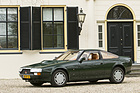
Even the Porsche Turbo with 300 hp at the end of the seventies and the Aston Martin Vantage of the late eighties with 403 hp made people wonder whether this was not too much of a good thing.
Today, you can only smile wearily. Super and hyper sports cars have long since exceeded 1000 hp and a new electric sports car with less than 2000 hp hardly causes a stir any more.
Nevertheless, we were somewhat surprised when BMW announced that these cars, basically normal road saloons, would have up to 1360 hp for the upcoming "New Class".
However, it seems that the end of the power increases is far from being reached, as there is now talk of wheel hub motors (from the Donut Lab company) generating over 850 hp, which multiplied by four (wheels) results in a system output of 3400 hp. Is this not too much of a good thing? After all, such an output would be enough to pull entire railroad trains.
In fact, only very few of these super-powerful road vehicles manage to convert the enormous torques and power peaks into propulsion directly at the wheel. They are regulated and calculated so that safety does not suffer too much. And indeed, the 1.8 to 2 s for the sprint from 0 to 100 km/h seems to be something of a sound barrier that is obviously not so easy to break. Perhaps that's for the best ...
Personally, I enjoy accelerating in a lightweight, small, older sports car with 50 or 120 hp more than this rubber-band-like acceleration in an electric car. After all, the sensitive operation of the accelerator, clutch and gearshift is much more satisfying than the computer-calculated optimum wheel control of the modern super sports car.

_RM.jpg)