Preparations for the start of the Arosa ClassicCar hill climb

With old cars, especially racing cars, things are different than with modern cars. Hardly any of the participants in historic hill climbs simply get into their car in the morning and drive off. No, first there is a whole series of preparations for the start, which vary from vehicle type to vehicle type.
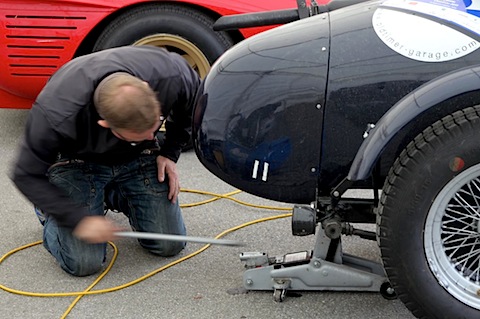
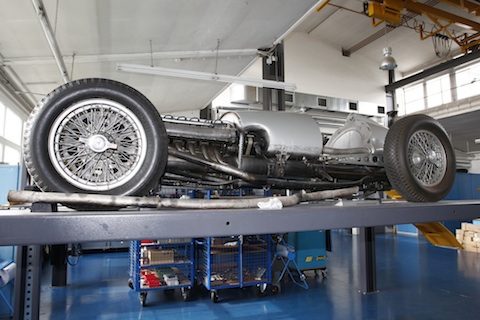
Pre-war racing cars with Wilson preselector gearboxes should never be allowed to warm up idling. These cars are jacked up so that the engine can be warmed up while the wheels are turning.
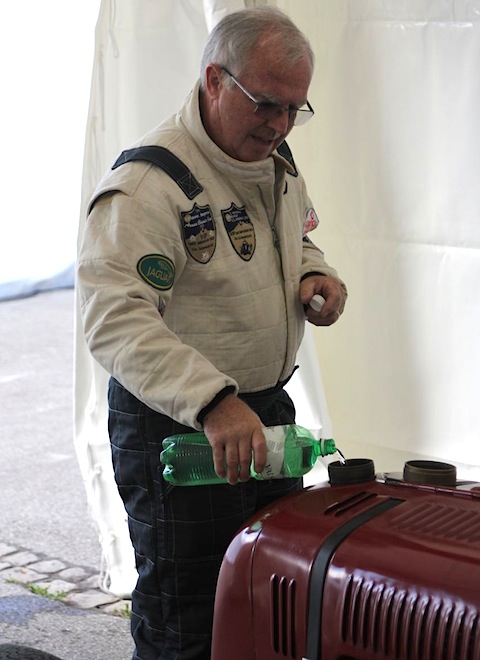
Old cars usually need water and oil, often in large quantities. For this reason, the fluid levels are checked before every start and topped up if necessary.

In hill climbs, every unnecessary kilogramis too much, so as much weight as possible is unloaded. Who needs a spare wheel on a hill?
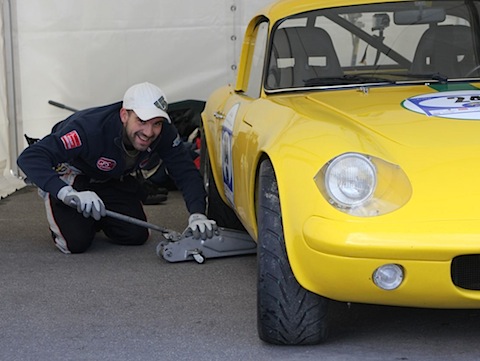
If the rear axle makes unusual noises, it is better to check this before the next race.
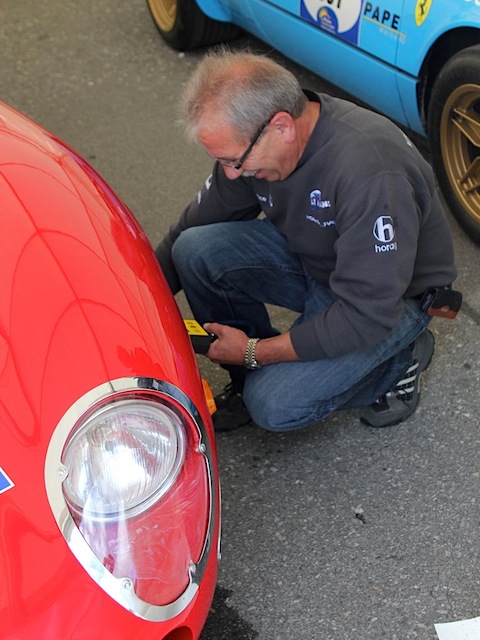
The air pressure must be correct, only with the right pressure can the tires get up to temperature and at the same time grip the road optimally.
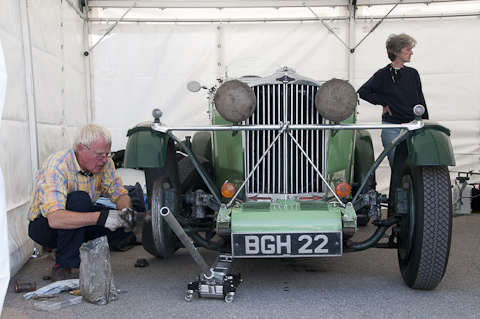
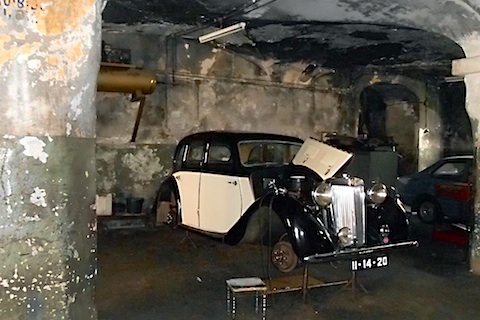
Major repairs are also necessary here and there before the car is ready to race again.
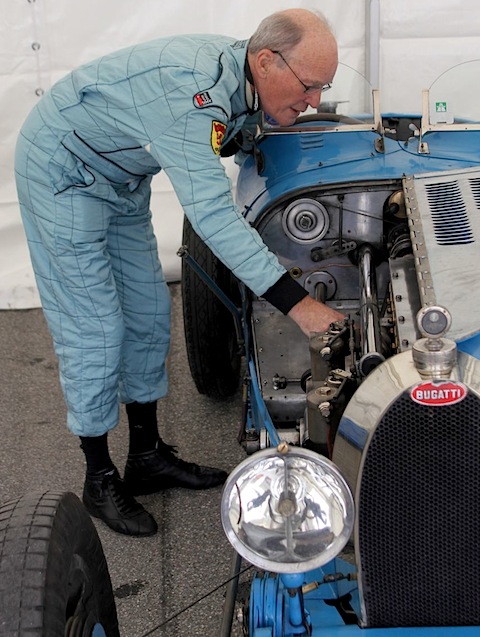
Once everything has been checked, the engine can be carefully started. On many racing cars, this can even be done from the engine compartment. At the same time, it is constantly monitored whether everything is moving and behaving as expected. Ears are pricked up to identify suspicious noises.
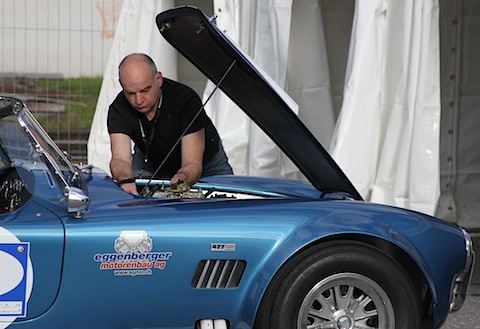
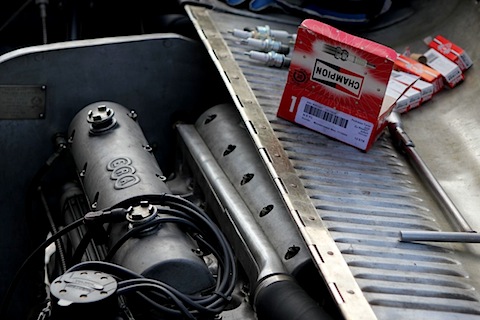
The carburetor setting needs to be adjusted on some vehicles, as Arosa is located in the mountains and the air is therefore much thinner. In addition, the plugs tend to oil up while waiting to start, so a second set should be available and used if necessary (see picture at the beginning of this blog).
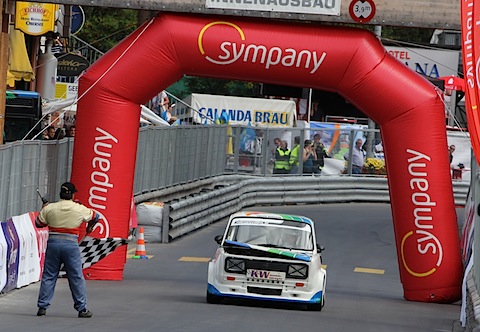
After all the preparations for the start, in Arosa - and this is special, but appreciated by the drivers and racing cars - you first drive slowly down the mountain and then start the fast race run uphill . And if everything works, you can see the chequered flag five to seven minutes later - all the preparation has paid off. Of course, you just have to close the hood properly, otherwise the aerodynamics will suffer.