Looking ahead at the time


Perhaps it seems simpler from today's perspective. Perhaps it was back then, when the Graubünden section of the Automobile Club of Switzerland decided to organize a car race from Tiefencastel to Lenzerheide in the early 1950s.

Government councillors were involved, tourism directors, men of distinction got together and put together a program. On August 26, 1951, the time had come. Cars in the categories "standard touring cars", "special touring cars", "standard sports cars", "racing sports cars" and "racing cars" lined up at the start. Some of the most important names in Swiss racing were on the start list: Emmanuel de Graffenried, Rudolf Fischer, Willy Peter Daetwyler and Albert "Bätsch" Scherrer. Many an amateur did not miss the opportunity to take part with his normal family car.

"Quax" on a Lancia Aprilia
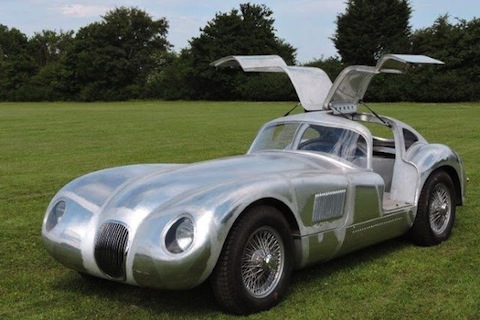
"Bätsch" won the sports car race on the Saturday before the Swiss Grand Prix on the old Bremgartenring in Bern in his aluminum Jaguar XK120 - the same car with which he had already won the Bremgarten Grand Prix earlier in the year.
Financially, the race was probably not quite as successful as it had been from a sporting point of view. For this reason, it took until 1957 before the track was used again - this time as a round of the European Hillclimb Championship.
This weekend, from May 29 to 31, 2026, the cars will once again race on Lenzerheide. Not up the mountain, but on a circuit. The fact that this is possible in a tourist and mountain village is almost a miracle.

But what I'm talking about in this blog is the optimism, confidence and drive with which people managed to get things off the ground in the 1950s. The automobile - although it had been banned in Graubünden until 1925 - was seen as something positive. It brought people into the valleys, guests, travelers and therefore money. And it also brought people from the valleys out into the world, down to the capital Chur, for work and prospects. At the beginning of the 1950s, the exodus from the mountain regions was still a serious issue and the structural weaknesses were obvious.
So when the engines roar across the lake on Lenzerheide again, there may be a moment between all the action, the palpitations and the joy when you remember that the car was once not only seen as a savior, but that it actually was.