Collection concepts

It's clear that you collect what you like, which usually starts with a specific car model or brand. Most people limit themselves to one car for a variety of reasons - money and space - and build up a small to large collection of documents, models and so on. Others own several cars of the same type.
And some are real philosophers of collecting, who think about all sorts of things, develop systems and try to expand or deepen their collection according to strict rules. The complete absence of a recognizable collecting system could then be described as hoarding. The extent to which this can be interpreted as a pathological pattern of behavior depends on the individual case. If it means no harm to the hoarder - let's call him that - or his environment, then it is probably not up to any outside authority to make a judgment about it.
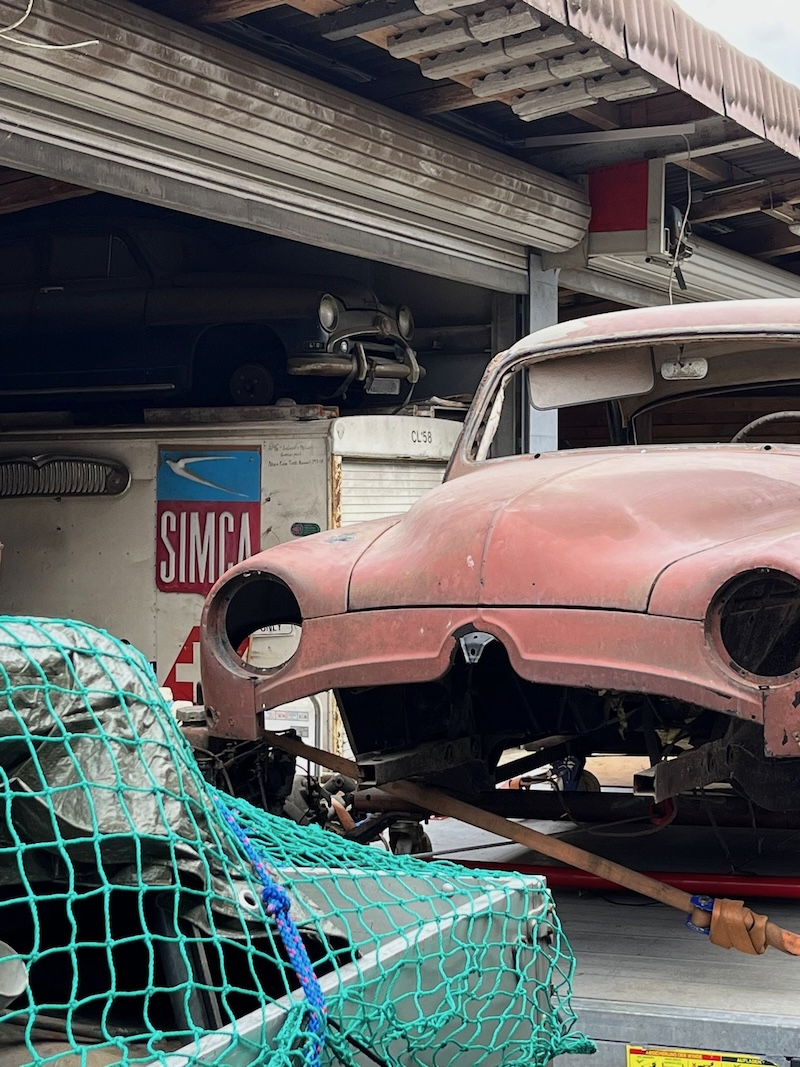
The main thing is Simca - a collection or just a pile of parts?
On a recent trip to England, I had the opportunity to exchange all sorts of thoughts on the subject of collecting. In many cases, it really is space and financial resources that set the limit on how big the collection should be. This was to be expected. However, it is interesting to note that some collectors have adopted a clever form of sublimation. Or to put it more simply: a way of compensating for their collecting instinct.
There is a single car in the garage, for example, but countless linear meters of paper accompany it: cut-out media reports, printouts from the Internet, notes, workshop books and general literature. Others collect parts for their car. This goes so far that I have seen entire display cabinets full of NOS parts from people who will never "use up" the corresponding number of window cranks, fuel pumps or rear end strips of the folding sunroof in their entire lives. But as a collector myself, nobody needs to explain to me how pleasant it can be to see such an abundance of heartfelt pieces, whether you need them - which can even be a plausible argument for collecting spare parts - or not.
It is also interesting to talk to some collectors about their sophisticated collecting system. Some have imposed strict guidelines on themselves as to what their collection should contain. One colleague comes to mind, for example, who combined performance data with financial expenditure and came to the conclusion that a Caterham Super 7 with the Rover K-Series VVC engine really is a purely rational, logical conclusion - brilliant.
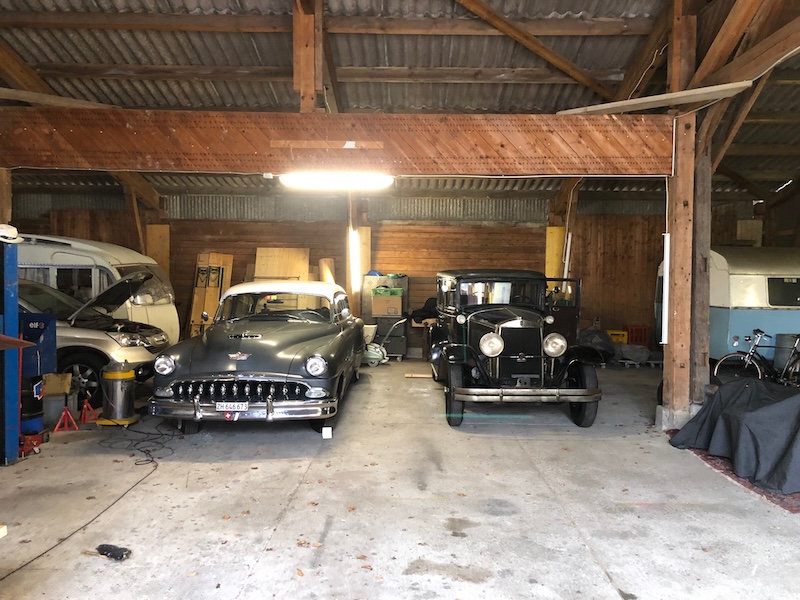
Coincidence: the same place of manufacture!
And of course there are also random collections. There's one in my hall, for example. You could call it "Americans who no longer exist". That was never the intention. I once saw an ad for my 1953 DeSoto Powermaster during a free minute on my ski vacation. Later, through all sorts of remarkable coincidences, my daughter's Studebaker was added, and shortly afterwards the Graham Paige 619 also found its way into my workshop. What I didn't know about this car was the fact that it was built in exactly the same factory as the DeSoto, the "Warren Plant" in Detroit, once taken over by the Graham brothers and sold to Chrysler for the production of the DeSoto in 1947, after the final decision to abandon car production.

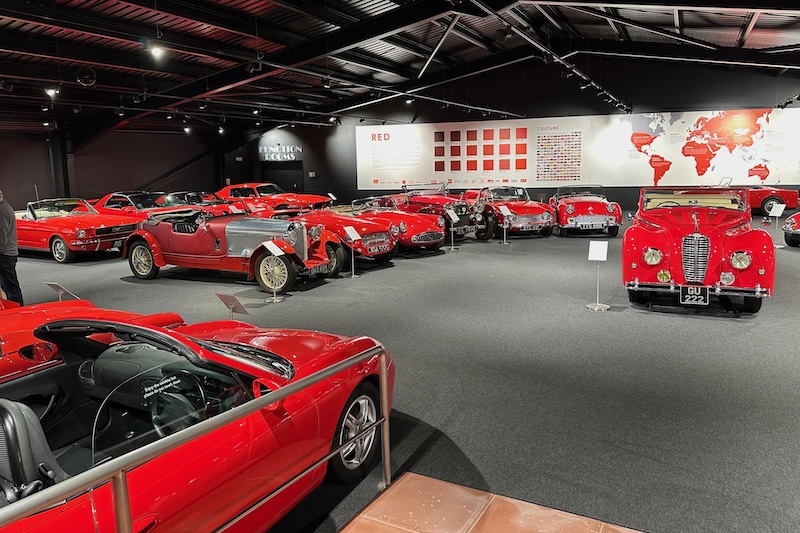
The most ingenious way of establishing a collection system, however, seems to me to have been discovered by the well-known publisher of the Haynes Manuals, the British equivalent of the German series "Jetzt helfe ich mir selbst", who died in 2019. John Harold Haynes collected all kinds of remarkable cars from all over the world, but the most unusual part of his car collection of around 300 objects is simply dedicated to the color "red". What on the surface appears to be a self-restriction, a characteristic that society usually considers desirable, this collection specification in principle gives free rein to passion. And that's exactly how it looks, the hall crammed with red cars. After my unfortunately all too brief visit to the Haynes Motor Museum in Sparkford, Somerset last weekend, one thing is clear to me: I will continue to collect whatever I feel like. Space and cost are natural limiting factors, because I don't want to ruin myself or be killed by an avalanche in my own house one day.