Why not all V8 engines sound similar

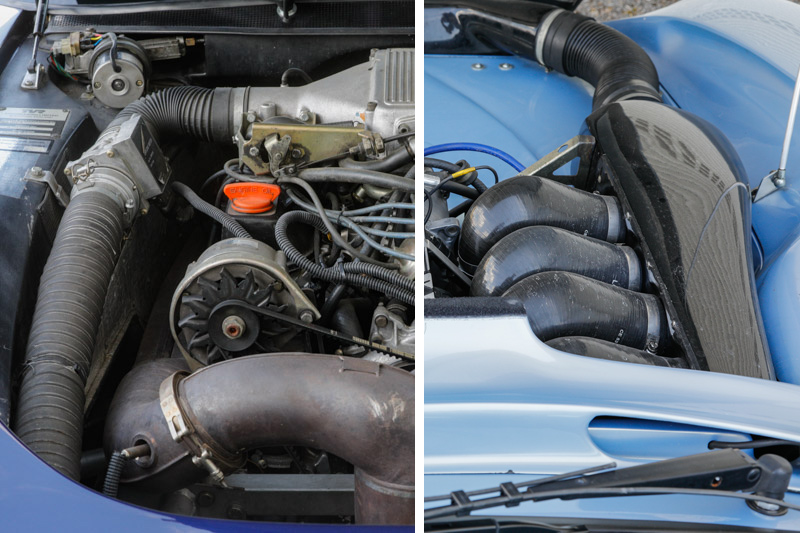
For some years now, so-called "flat-plane" V8 engines have been appearing again and again, which, in contrast to "cross-plane" engines, have their stroke journals offset by 180 instead of 90 degrees. Accordingly, the mixture in a flat-plane V8 always ignites alternately in one cylinder of one cylinder bank and then the other. This leads to a less even running, as one is used to with American V8 engines.
The sound is very different, as "flat-plane crank" eight-cylinder engines sound more like four-cylinder units. This was already the case with the Ferrari 308 GTB, but also with the Lotus Esprit V8. The advantage of flat-plane crank engines lies in their free-revving nature, lighter construction and higher power output. On the negative side, there are additional vibrations and a certain lack of torque at lower engine speeds.
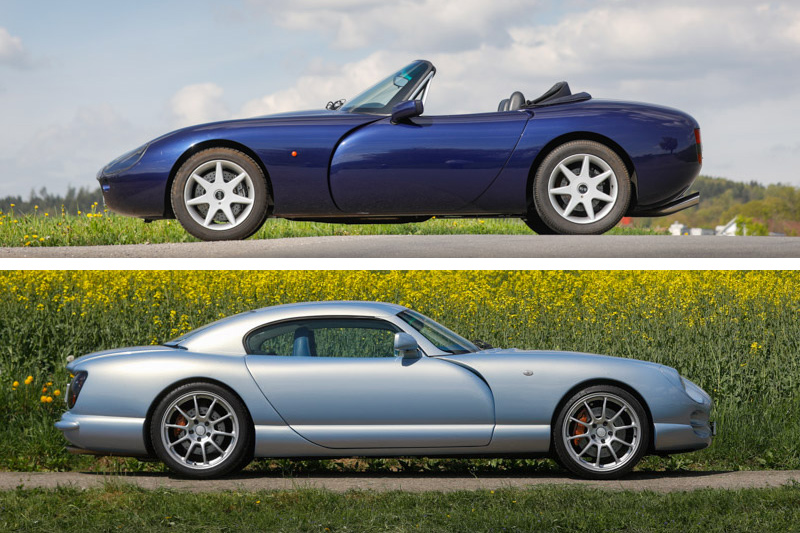
We were recently able to directly compare the two design philosophies during a photo shoot with the TVR Cerbera and the TVR Griffith 500. Only rarely can you put two such different engine designs in context within one manufacturer and one era!
While the Cerbera has a 4.2-liter V8 flat-plane crank engine, the V8 engine from Rover in the TVR Griffith 500 corresponds to the American engine philosophy. After all, Rover also took over this V8 from Buick around 60 years ago.
Here is the sound of the Cerbera ...
... and here is the sound of the Griffith.
The difference is considerable. By the way, we have already published the article on the TVR Cerbera .