On back roads through automotive history (6): When do you have to honk?

It's true: the most beautiful, interesting and sometimes weirdest discoveries are always made on the back roads. This also applies to the back roads of automobile history.
In 1912, the following was reported in a French newspaper:
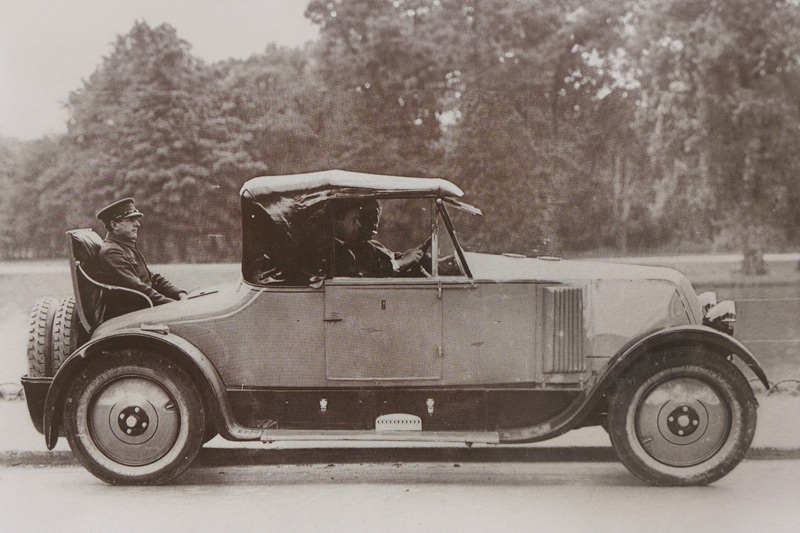
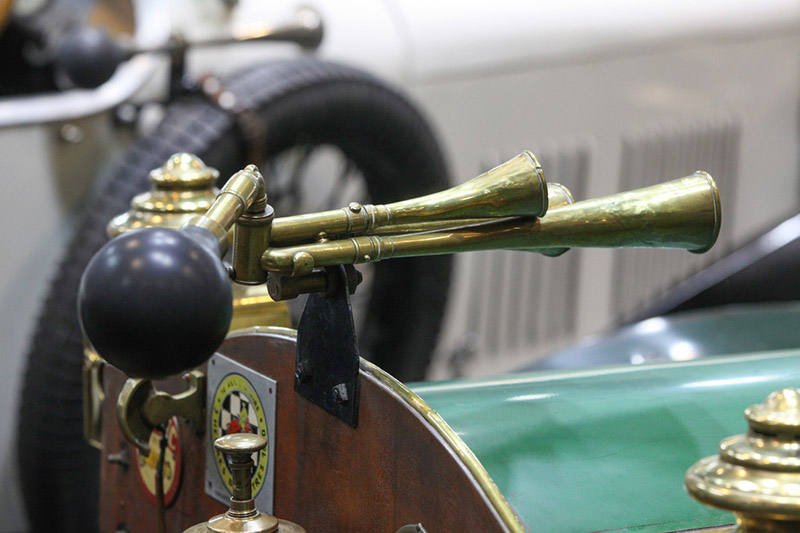
I still remember the time, not so long ago, when our first automobiles had no signaling device. It would have been useless in view of the thousands of noises the machine made. The infernal noise and the slow speed didn't need a horn. But very quickly, with the tires and the quieter engines, that changed, and you had to be able to warn the numerous other road users. Why did the horn prevail and not the whistle as on locomotives or the siren as on ferries? The bicycle probably played a role here as a forerunner.
The simplicity of the horn spoke in its favor: robust and rudimentary construction, easy to install, small space requirement quickly helped it to become widespread.
You have to sound the horn at junctions, on bends and when overtaking. On lonely straight stretches, however, it is superfluous because you can be sure that the driver of an oncoming vehicle has the road in view. When crossing a horse-drawn carriage, you must sound the horn: coachmen are often distracted and it is difficult to know whether the horses are being led or not. How many a driver reads the newspaper and has the reins hanging from the whip or somewhere else!
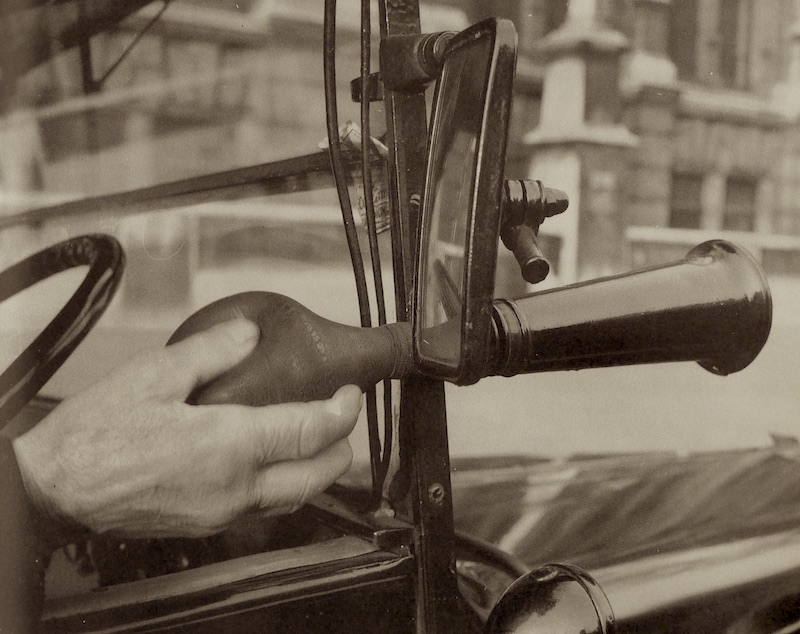
You have to blow the horn when passing through a village, just as a train whistles when passing through a station. A resident, a child or an animal can step onto the road at any time. You must sound the horn when overtaking a pedestrian or cyclist, even if they are keeping to the right. They could suddenly cross the road. You must sound the horn when overtaking a streetcar or a car that has stopped to let someone in or out.
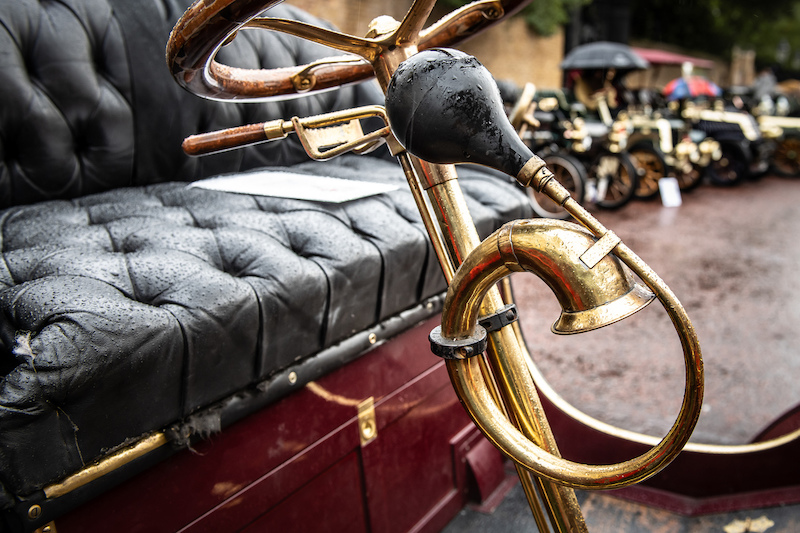
You also have to honk when you meet a herd to alert the shepherd. I also honk at some chickens or a dog and thus avoid some unnecessary killings. The animals respond well to the horn these days. These creatures are an obstacle in the legal sense, and only in exceptional cases can you refrain from honking, for example if you have to keep both hands on the wheel on a bad road.
In such a case, the driver cannot be expected to endanger his own safety and his expensive vehicle just to warn a chicken.
Unfortunately, the horn has one major disadvantage: it is not loud enough. Low-pitched sounds penetrate less than high-pitched ones. In view of increasing speeds, attempts are being made to amplify horns. The siren was born. But it has a frightening effect on animals and passers-by, and its misuse has led to it being banned in some municipalities. Although no national law prohibits it, the Code de la Route, Article 15 of the decree of March 10, 1899, requires the horn.