Useful or pointless?

Does it really make sense to take a reconditioned engine to a test bench before installing it? Not only does it cost a lot of money, it is also logistically complicated depending on the situation - but in the end it can be much more tedious to install the engine only to have to remove it again due to a small leak or a running problem. And then perhaps the whole thing a second and possibly even a third time.
It is even worse if the combustion engine gives up the ghost on the first short test drive due to a lack of or low oil pressure, or suddenly overheats for inexplicable reasons.
On the test bench, everything can be checked to the customer's satisfaction and, if necessary, simply improved so that there are no big surprises after the engine has been installed. At the same time, the careful approach also exudes a high level of safety, and you can expect a correspondingly high level of reliability from the engine.
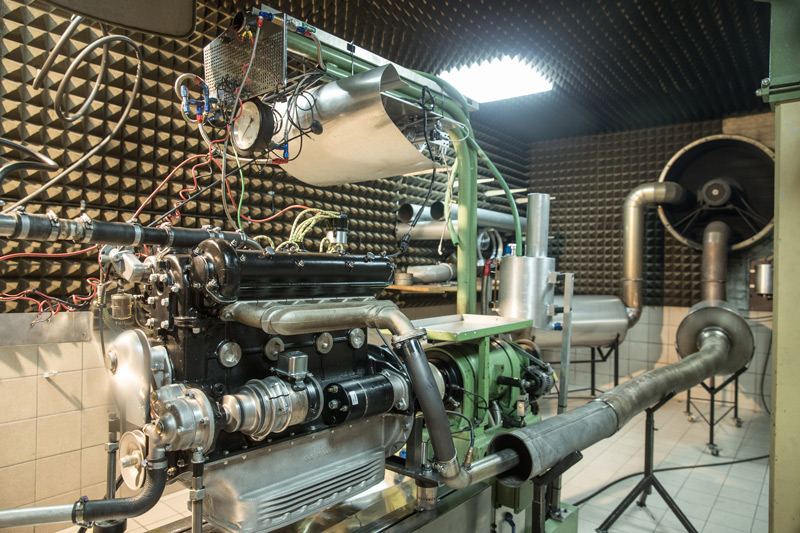
In the picture (above), the engine of an Alfa-Romeo 6C 2500 SS from 1950 with around 110 hp is being put through its paces on "Bemani's" test bench. Around 30 years ago, hot racing engines were already being tuned for performance in this room when Beni Bühler's team first entered the Toyota Supra in the European Touring Car Championship in 1988 and then in the DTM in 1989.