The impact of currency developments on the value of the classics

As classic car owners, we keep a watchful eye on the performance of classic cars. We usually think in our own currency, whether CHF or euro. For us, this currency is practically a constant, but of course this is not the case.
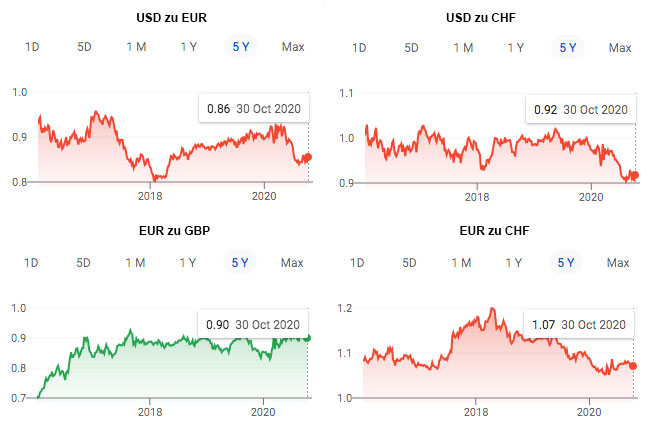
If you look at the exchange rate fluctuations of the last five years, for example, you can see considerable shifts. Whereas five years ago, one euro was worth 0.7 British pounds (GBP), today it is 0.9. Or, five years ago, one US dollar was worth around CHF 1.04, today it has fallen to CHF 0.92. In the case of the pound, the British currency has therefore fallen by over 25 percent, while the USD has lost almost 12 percent against the franc.
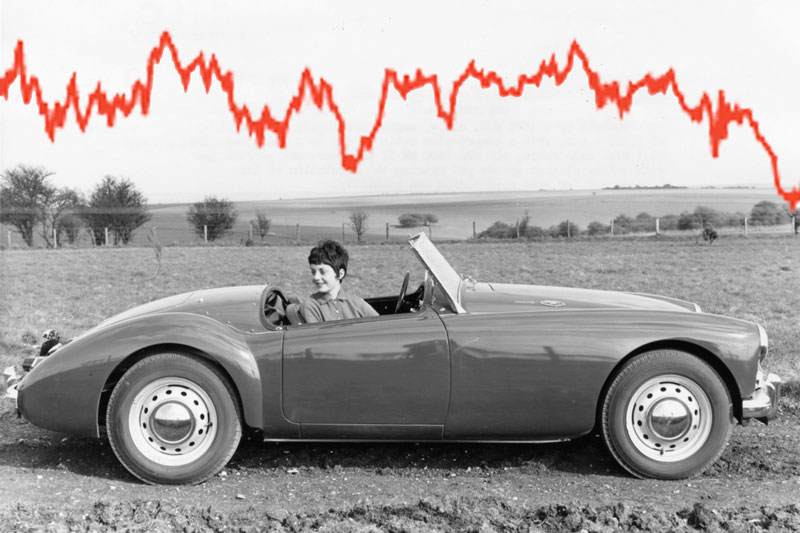
This means that a British MGA costs 25 percent less in Germany today if its value on the British domestic market remained constant. An American Corvette can be bought around 12 percent cheaper today than five years ago, assuming that its value in the USA has remained constant.
These currency gains or losses are in addition to the shifts in value that have occurred independently of this due to supply and demand. However, it is not so easy to separate the effects, because the possibility of importing cars from another country at (lower) prices in turn influences prices in the other country. This is another reason why many British cars have tended to become cheaper in recent years. Of course, individual price developments also depend on other factors, such as whether a German buyer is prepared to buy a right-hand drive car at all.
So it's complicated, but we already suspected that, didn't we? The important insight here is that exchange rates have a significant impact on classic car prices, presumably when the cars are traded internationally.