Heat collapse

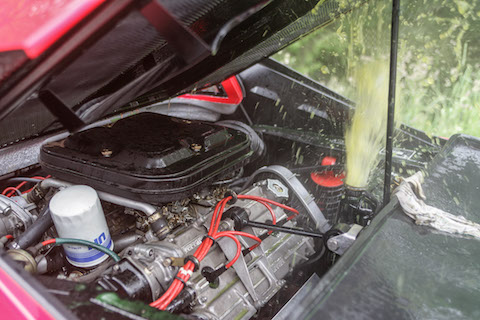
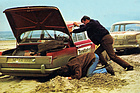
The high summer temperatures of recent days are not only a problem for human circuits, but also for engines, which often can no longer hold their boiling hot water and blow it into the environment, especially if the system is not given time to cool down.

Many classic car owners have a love-hate relationship with hot summer days because they are always worried that the car, or rather its engine, might start to "boil" when they go for a drive. But that doesn't have to be the case, because most cooling systems, especially in post-war classic cars, are perfectly capable of providing sufficient cooling in normal everyday traffic.
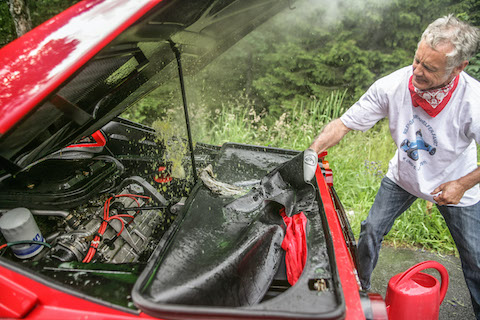
However, if this is no longer the case and the car gets too hot even in a short traffic jam or when driving uphill, this is usually due to a defect or generally to the fact that the cooling system has lost its efficiency and therefore its cooling capacity over the years.
In a water-cooled engine, the coolant circulates through the engine block and cylinder head by means of water channels and is then sent through the attached radiator. Here, the coolant is cooled down again by the airstream and fan so that the engine can operate as close as possible to the optimum operating temperature of 80 degrees Celsius.
In post-war vehicles, fluid circulation is ensured by the water pump, which circulates it more or less quickly depending on the engine speed. In addition, the thermostat ensures that the coolant can only flow through the radiator when a certain temperature is reached, thus ensuring that the engine reaches its operating temperature as quickly as possible.
10 points that can lead to a collapse
- The cooling system has too little fluid.
- The thermostat is defective and either opens the cooling circuit at the wrong time or no longer opens it at all. Check the thermostat.
- If there is air in the cooling system, please bleed it.
- The V-belt that drives the water pump and fan is loose, the pump and fan run more slowly, the V-belt often squeaks when the engine speed changes.
- If a viscous fan is not running, the viscous clutch is probably defective and a new fan is required.
- If an electric fan stops running when the engine is hot, the thermal switch is defective, a fuse has blown or, rarely, the fan motor itself is defective.
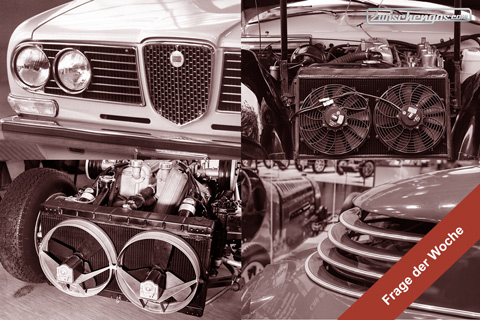
- Dirt in the radiator grille prevents optimum cooling. Clean the network carefully, preferably with compressed air from the rear to the front, i.e. against the direction of the airstream.
- Check the cooling system for leaks. Are all the hoses and seals really tight?
- A trivial reason for a heat problem can also be the outer radiator grille. If this is decorated with club badges, additional headlights and similar accessories, the air intake area is drastically reduced: the radiator itself no longer gets enough airflow.
- However, a heat problem can also be caused by an incorrectly set ignition or carburetors that are set too lean. Incorrect ignition timing or a mixture that is too lean can burn holes in the pistons.