The thing with the reserve (e.g. in the Porsche 356)


50 and more years ago, it was still possible to find a fuel tap in a car that had not just two, but three positions. In the Porsche 356, for example, it was labeled "CLOSED", "OPEN" and "RES".
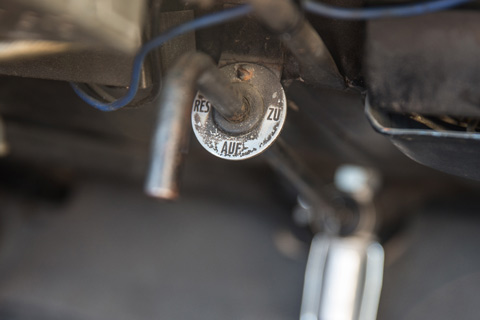
While the first two positions are obvious, the third, i.e. "RES", meant reserve and simply opened a deeper access in the fuel tank, which meant that an additional six liters of fuel could be used. Fuel taps were particularly common at a time when there were no or no precise fuel gauges in the car. So you drove in the "on" position until the engine began to stutter, then switched to "RES" and knew that you could now continue for another 50 kilometers or so (depending on your driving style). Beetle drivers also lived with this device, motorcyclists even longer.
The prerequisite for the fuel tap was, of course, an appropriately positioned fuel tank. When this began to be installed under the rear seat, it was of course no longer practical to install a fuel tap at the front next to the driver.
However, these fuel taps could also cause problems. For example, if you forgot to switch back to the "OPEN" position when refueling, the tank would eventually run completely empty and you would never be informed that the fuel supply was running low.
Incidentally, careful Porsche 356 drivers switched off the fuel supply every time they parked the car for a longer period of time. This prevented the carburetor from flooding in unfavorable situations. And from time to time they checked whether water had collected at the bottom of the tank by switching to the reserve position when driving faster. If the car then began to stutter, it was clear that there was water deep in the tank. But they still had enough "shot" to switch back to the "OPEN" position.