Why doesn't anyone build cars with three seats anymore?

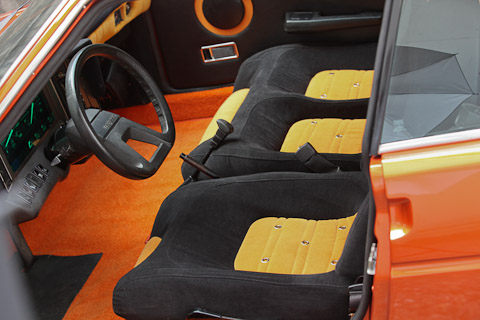
Around half a century ago, cars with three seats were still quite common, often of American origin and with a wide bench seat at the front. With the end of the bench seat and the concentration on individual seats, most manufacturers left it with two seats in the front.
But there were exceptions, for example the Ferrari 365 P, a prototype, or much later the McLaren F1, built in small numbers, with a centrally positioned driver's seat and one passenger seat each on the left and right.
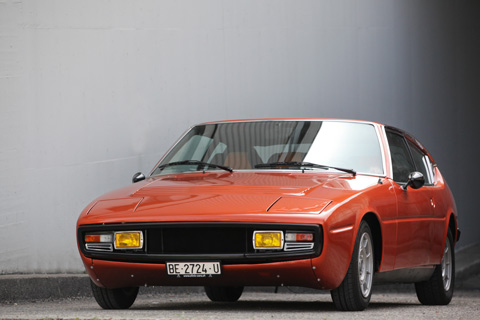
However, it was a French sports car manufacturer, Matra, that popularized the three seats in a row. In the Matra-Simca Bagheera, built from 1973 to 1980, the driver sat on the left and two other people could ride on the right. Almost 48,000 units were produced. The Bagheera was replaced by the Murena, which appeared under the brand name Talbot-Matra and was built almost 11,000 times until 1984, again with the three-seat configuration in front of the mid-engine.
The fact that the Bagheera was a success certainly had at least partly to do with the three seats. Although the passenger in the middle sat in a somewhat cramped seat and full occupancy led to compromises for all three passengers, it was also extremely practical to be able to take an additional guest or an only child with you on an excursion in an emergency.
The question naturally arises as to why nobody chose this seating configuration after the two Matra mid-engined sports cars, apart from six-seaters from Fiat or Honda.
Presumably, as was often the case, it was the safety requirements that demanded the accommodation of three seats in a row, including roller belts with belt tensioners and an Aibag per passenger. Together with the side impact protection, a modern three-seater would probably simply be too wide and too bulky. And the variant with a centrally positioned driver and passengers offset to the rear on the left and right had comfort-specific disadvantages.
In any case, there were no successors for the Bagheera and Murena, not least because Matra was then allowed to produce the Renault Espace for Renault, which was ultimately even a seven-seater.
We will soon be publishing a comprehensive driving report on the Matra-Simca Bagheera.