Cultural heritage or scrap metal? Enchanted cars in Kyrkö Mosse

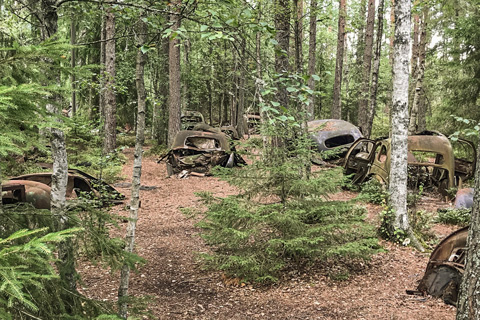
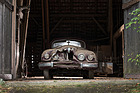
In Kyrkö Mosse, a village in the south of Sweden, 150 scrap cars from the middle of the 20th century - together with bicycles and mopeds - have found their final resting place. Each of these objects offers a glimpse into the forgotten, tells of the first car vacation, reminds us of the local butcher's shop or the painter in the neighboring village of Ryd. The Second World War has also left its mark - with the remains of a bomber that crashed over the frozen Lake Asnen in 1943. History or fairy tale. Cultural heritage or scrap metal? Take a look for yourself!
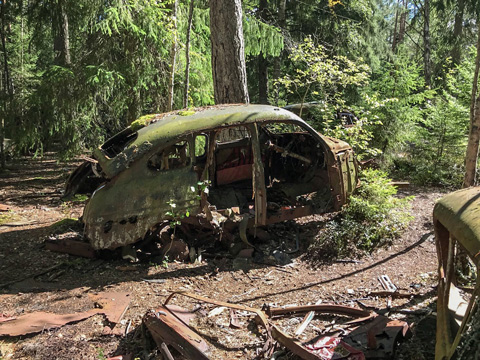
The most important story, however, is the one about the founder of this special place, Ake, known as "Ake vom Moor". Born in the settlement of Tröjemala in 1914, he worked as a farmhand in the southern Swedish provinces of Skane and Smaland after his schooling and confirmation.

In 1935, he bought this peat bog and a spade with a broad blade. There was money to be made from peat moss and peat was what was available here in large quantities. The peat was then "enriched" by the cattle in the barn, and the end product was a sought-after fertilizer. Technically skilled as Ake was, he built a peat factory, whose peat ripper he powered with old car engines.
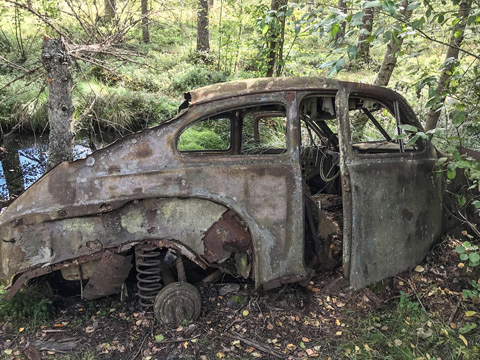
After the Second World War, life became easier and by the 1950s, cars were already considered the "property of the little man". However, many of these new cars were parked in the nearest forest as soon as they stopped running.
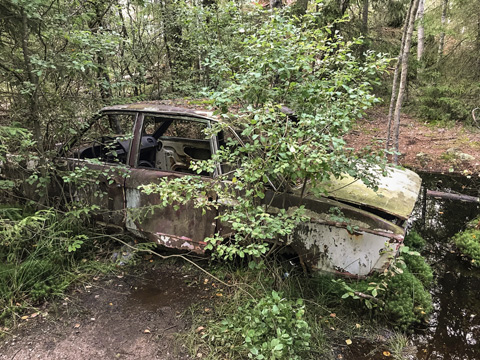
Ake recognized an opportunity here and collected these cars. He taught himself the various models and soon became an expert in spare parts, which he sold from his collection point. In this way, he became a pioneer of recycling, so to speak.
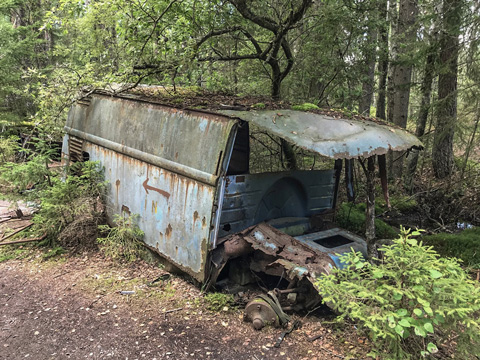
What remained, however, were the wheel-less bodies, which, despite their wretched appearance, can still be used as photo motifs.

The last scrap car was bought in 1974, but the warehouse was full of spare parts, which were sold for many more years. In 1992, Ake moves into the retirement home in Ryd. The car graveyard becomes the subject of much debate.
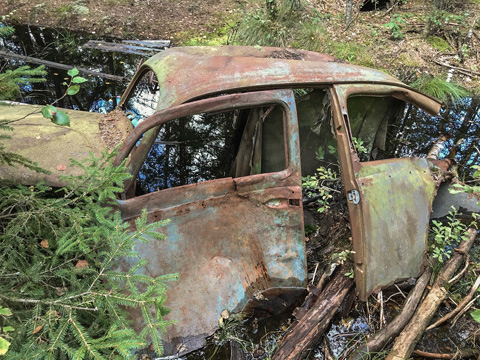
In 2001, the municipality decided to allow the wrecks to remain and let nature reclaim the site. The car graveyard was compared to a self-destructing painting. A certain reverence hovers over the place.
Exactly the same situation existed in Switzerland. However, the much larger car cemetery in Kaufdorf (canton of Bern), which had also already been taken over by nature, had to be cleared. Unfortunately, all the debates held at the time left no alternative.