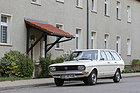
Why owning a classic car is a good thing

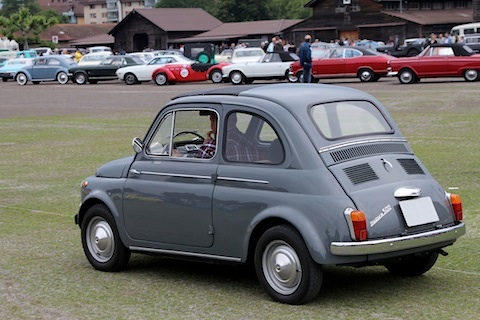
In times when everyone is talking about environmental protection and safety is a top priority, driving your own classic car seems rather archaic. But there are a whole range of rational arguments that make owning a classic car seem perfectly sensible.
Thirty years ago, hardly anyone thought about buying a classic car. Of course, even back then there were people who liked old cars more than current models and who met like-minded people at special events. But that was a minority.
In the last twenty years, however, the classic car hobby has boomed and owning a youngtimer has also become "trendy". And there are good reasons for this!
Keeping cultural assets alive
Over the last 120 years, the automobile has become an increasingly important factor in people's lives. Whereas in the days before the Second World War, only a few people owned their own vehicle, since the 1960s the passenger car has been as much a part of the household as the television or the refrigerator. Cars have become part of our culture and therefore also part of our history.
By owning a classic car, you ensure the survival of a part of this history, you display and drive a cultural asset. You actively share with present and future generations what it was like to drive a car 50 or 100 years ago.
Creating local jobs
A classic car requires care; every 20 or 30 years it may need to be extensively overhauled or even restored. This is where local tradespeople usually come into play, for whom classic car customers have long since become the most financially interesting part of their business. Working with old cars is interesting, craftsmanship is still in demand and nobody regulates the number of hours required for a maintenance service. No wonder more and more local workshops are switching to servicing classic and vintage cars, dispensing with manufacturer-specified sales stamps and preferring to devote themselves to customers and their treasures.
Intelligent investment
A modern car loses 20 to 40% of its value every year, in some cases even more. The situation is completely different with an old vehicle in good condition. It usually retains its value or even increases in value year after year. This development should not be seen as a gold rush, as any gains in value are offset by considerable running costs and investments. But, bought correctly, you can own a classic car with comparatively modest net expenses.
Conserving resources
It takes a lot of material and even more energy to produce a new vehicle. If the car is thrown away and replaced with a new one, the same amount of resources is required again. This is completely different with classic cars. By looking after it and owning it for many years, you save nature from having to regenerate the materials used and avoid mining increasingly rare metals and raw materials. Of course, a classic car also burns gasoline (and in rare cases diesel oil), but it does so in surprisingly modest quantities.
The preconception that old cars consume a lot of fuel is not true for many vehicles. According to current consumption measurements by Auto Bild Klassik, for example, a Fiat Nuova 500 gets by on 4.8, a VW Scirocco GLI on 6.2 and a Porsche 911 from 1983 on 8.6 liters per 100 km. An MG B GT needs 8.2 liters, the Götting Citroën DS 20 8.8 and even an NSU Ro 80, which is feared to be fuel-intensive, does not allow more than 11 liters to flow through the carburetor. The advantage of the "old ones" lies in their low weight (usually less than 900 kg) and the smaller cross-sectional area. Of course, this cannot compensate for the technological development - fuel injection, wind tunnel aerodynamics and myriads of computers, etc. - cannot be compensated for, but the differences are smaller than one would generally think.
Of course, an old car does not manage to let the air escape through the exhaust cleaner than it was sucked in at the front. This only became possible with modern exhaust gas purification technologies (catalytic converters, etc.).
Easier parking
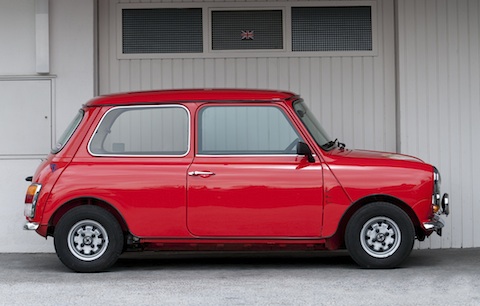
The parking spaces in large cities and parking garages have barely kept pace with the constant increase in the size of everyday vehicles. A modern Mini is 3.7 meters long and almost 1.7 meters wide, whereas its ancestor was 3.05 meters long and 1.39 meters wide. While the old car fits easily into any parking space, the mirrors or more of the modern successor quickly protrude beyond the boundaries, which can cause trouble. And the doors used to be shorter and, above all, thinner, which makes it much easier to get out of tight parking spaces.
Safer than you think
Of course, modern cars are light years better equipped in terms of active safety than the vehicles that were on our roads in 1950 or 1960, for example. Seat belts were only slowly introduced in the 1960s, airbags twenty years later and ABS first found its way into a sports car in 1966. Side impact protection and pre-calculated deformations in the event of an accident were also not an issue decades ago.
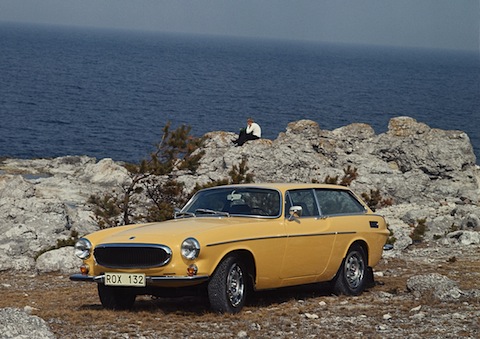
Nevertheless, classic cars do not stand out in the accident statistics and there are good reasons for this. Old cars often offer advantages that we sorely miss today. All-round visibility is one such issue. Cars from the 1970s, for example, allowed an almost unrestricted view in all directions, whereas modern cars literally wall their passengers in. But even more important is the driver's behavior, because classic car drivers take fewer risks, drive with more foresight and are less distracted. And that's why they cause fewer accidents.
Having fun
If all the rational arguments already mentioned are not convincing, then perhaps you are open to the most important reason for owning a classic car. An old car is fun! Unlike any modern vehicle, a sprightly VW Beetle lets you really experience technology. It is still steered under its own power, you can feel the effort of the engine, you can hear the sounds of the mechanics. Movement is perceived more intensely than is possible in today's cars. Maybe that's why so many classic car drivers always have a blissful smile on their faces.