James Bond, his Aston Martin and the tricks of the filmmakers (at the Rétromobile Paris)
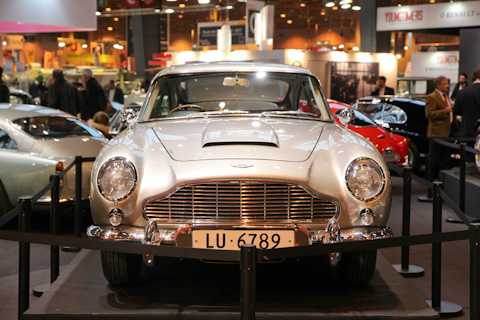
When the third James Bond film, "Goldfinger", was released in 1964, a new car star also entered the stage: the Aston Martin DB5. The elegant silver-colored coupé became the epitome of the James Bond car and, not coincidentally, also made appearances in later Bond films when Aston Martin was already building other cars. Its fame was not least due to the gadgets that "Mr. Q" installed in the car.
This movie Aston is still admired today, as can be seen from the interest this car generates at the Rétromobile in Paris. It is the centerpiece of an extensive David Brown retrospective on a stand set up especially for this purpose.
And there you can also inspect the Aston more closely and learn to understand where mechanics, electronics and film technology had to help each other.
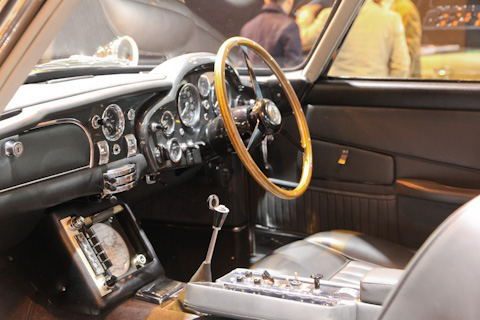
If you look into the interior of the car, you will of course immediately recognize the button for releasing the passenger ejector seat. You shouldn't try this out at the Rétromobile, the height of the hall would hardly be sufficient for a headache-free ascent.
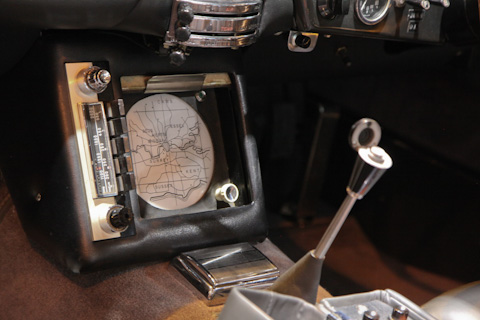
You can also see the special control panel between the seats and the screen for the tracking system. The filmmakers were thinking far ahead here, as a GPS satellite system would have been needed to display the location of the small transmitter on the screen, which of course did not exist at the time.
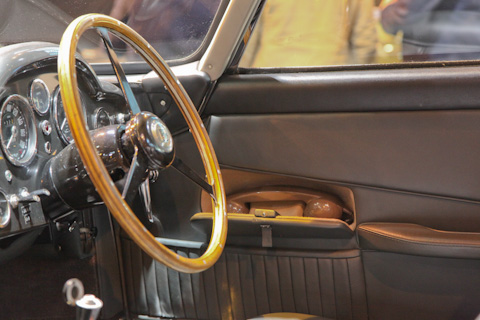
Even the telephone receiver in the door, which was probably taken from a conventional house telephone, would have been of little use in 1964 without sophisticated transmission and reception equipment.
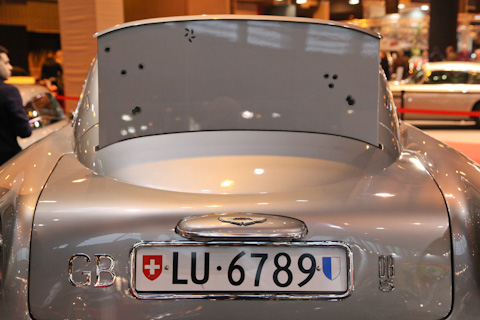
To fend off heavy artillery, the retractable steel wall would probably have had to be considerably thicker (and heavier!) than the built-in version.
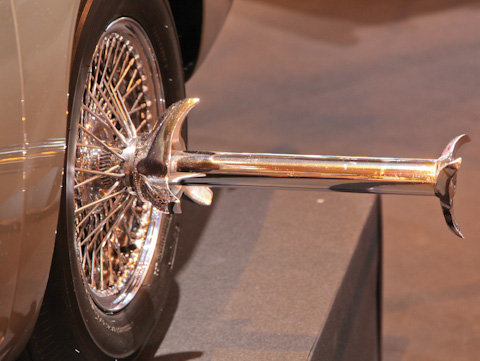
And the tire slasher? Of course, it would have had no place in the Aston axle construction when retracted. So today, as then, it is simply screwed onto the wheel.
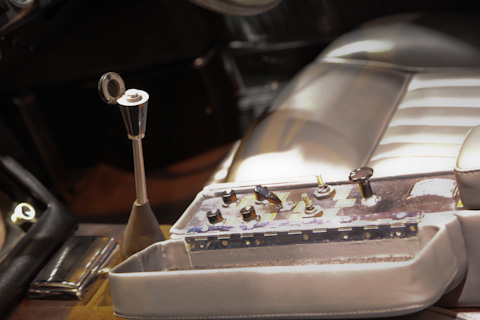
In fact, however, the agent helpers were actually built into the car and only the lack of supplies in the special auxiliary tank prevents black oil from spraying out the back when the button is pressed. The MGs also emerge from behind the blinker lights if you want them to. The license plate can also be rotated while driving. There was a lot of tinkering back then and as much as possible was put back into operation during the restoration.
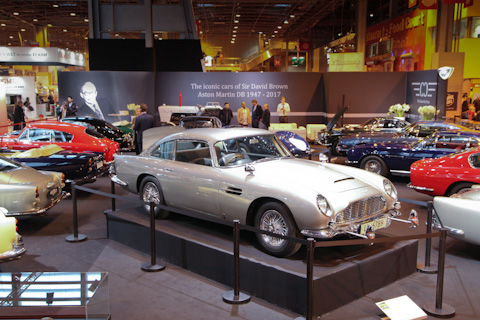
However, the James Bond Aston should not obscure the fact that there were many other attractive and important cars in the David Brown era, even if hardly any of them made money back then. But then there were the tractors, which Brown also built and with which he earned the necessary capital for his sports car. And you can still see one of these on the Classic Car Trust and Roos Engineering stand. Such a compilation has probably rarely been seen before and you should plan enough time at the Rétromobile to be able to view not only the cars but also the other exhibits in detail.
The Rétromobile will remain open until Sunday, February 12, 2017. A detailed report on Zwischengas is of course already in preparation.