50,000 km in the Autobianchi - what it was like back then


It was spring 1972 when the magazine Auto Motor und Sport published the results of an endurance test of an Autobianchi A112 in issue 8/1972 .
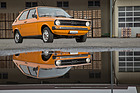
The little speedster had been painted yellow and had covered a distance in just 14 months that would have taken "normal" drivers three to four years. The front-engined mini was loved by the editorial team, as the list of good features was long and included excellent handling, unproblematic driving characteristics, lots of practical benefits and an attractive exterior and interior design.
However, we were surprised by the long list of faults, which included over 30 points. Loose plastic panels, droning noises and a rattling tailgate were the least of the problems. Worse were boiling cooling water (defective thermostat), failed dipped headlights, leaking exhaust, short circuit in the electrics, leaking valve cover, defective speedometer cable, scratching second gear (synchronization) and the like. But at least the Autobianchi never stopped permanently.
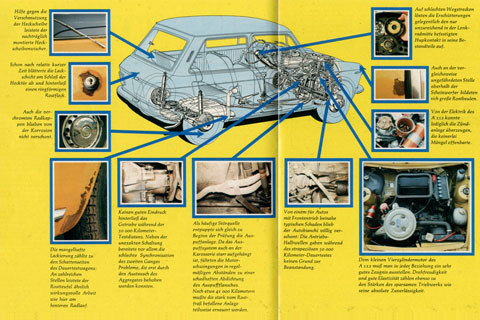
On the other hand, its bodywork had to contend with rust early on. After just a short time, the paint layer around the tailgate lock peeled off and rust also formed early on the wheel arches due to the inadequate paintwork. The "rust devil" was also evident in other places, even in the first year of operation. The prognosis for the long life of the transverse engine front-wheel drive was not good.
Although some of the work could be done under warranty, DM 1726 had to be spent on maintenance and repairs within the first 50,000 km, around a quarter of the car's new price of DM 6199 (!). Calculated per kilometer, the A112 thus cost more than a Fiat 128, a Simca 1100 GLS or even a Mercedes-Benz 230.
The Stuttgart-based company recorded a test consumption of 8.4 liters of premium gasoline per 100 km, and the small engine also consumed 0.34 liters of oil per 1000 km.
Driving an Autobianchi A112 was therefore not a very cheap pleasure at the time, but it was certainly a pleasure, because after all, the active small car offered a lot of fun behind the wheel and good performance (0-100 km/h in 17.4 seconds, 138.4 km/h top speed at the end of the endurance test).