Ford Nucleon - why not with nuclear propulsion?

In the 1950s, there was a belief and hope that technology could solve almost all problems. And people looked to the future with optimism, giving mobility full priority and looking for new ways to make driving cheaper, more comfortable and faster.
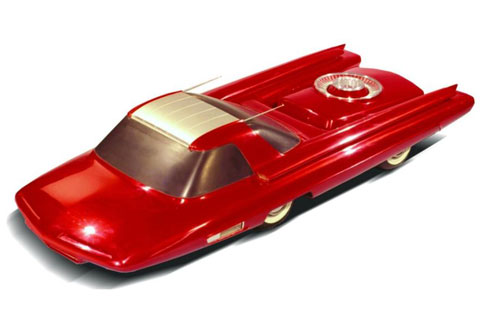
Ford's atomic car fitted perfectly into this era. The Ford Nucleon was introduced in 1957 and it looked breathtaking even when stationary. It didn't have one of the usual V8 engines humming in the back, but a full-blown nuclear reactor. It would have driven the car over 8000 km without refueling and at high speed over highways, and the buyer could even have chosen the characteristics of the power source, from sporty to particularly energy-efficient.
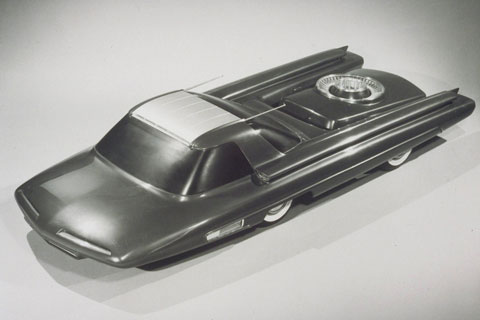
In order to safely accommodate the weighty power source, the passengers were placed in front of the front axle, so it was a front-wheel-drive pickup without a loading area, which looked extremely futuristic and was even used as a model for cars in computer games.
At the time, people were already imagining streets full of nuclear cars. But as we all know, things turned out differently, and not just because of Harrisburg or Chernobyl, which happened much later. At the time, technology in the field of small nuclear reactors and their isolation from the outside world was making much less rapid progress than had been expected. At the same time, people's fear of these not entirely harmless energy sources increased. People realized that it would not be particularly practical if major car accidents also turned into nuclear disasters. And the waste problem was also far from being solved.
As a result, the Ford Nucleon never got off the ground; it remained a model that was barely half the size of the planned production vehicle and was eventually put in the museum. We are still waiting for the nuclear drive in everyday cars today.