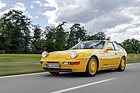
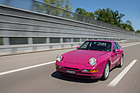
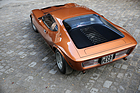
If the engine is at the front of a Porsche but the gearbox is at the rear

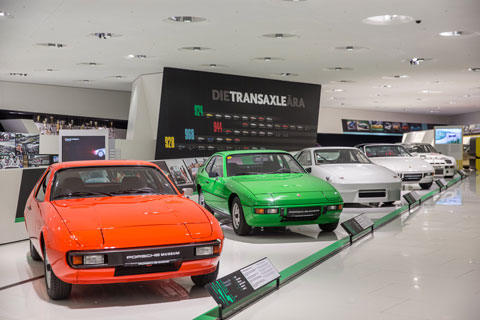
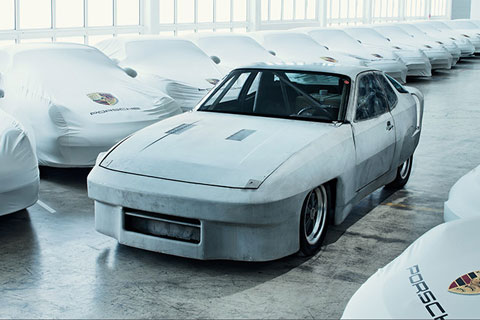
The Porsche Museum is currently showing its transaxle history with the two model series Porsche 924 (944 and 968) and 928 in a special exhibition.
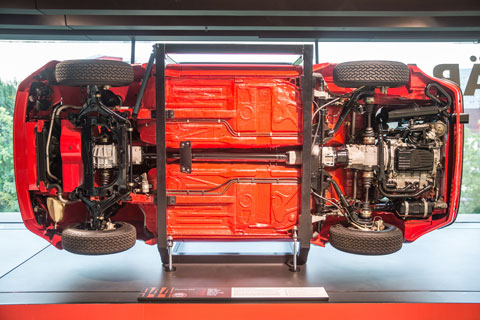
Transaxle means nothing more than engine at the front and gearbox at the rear. For some, they are perfect sports cars, for others an aberration in Porsche history. Between 1976 and 1995, Porsche built a generation of sports cars with this technology and a new futuristic design. The transaxle models were a great commercial success for the sports car manufacturer at the time, as almost 400,000 customers were won over by the new design. This drive concept was also used by Alfa-Romeo in the Alfetta and GTV models at the same time. But its history is much longer.
The 924 served Porsche as a new entry-level model after the end of the 914 and marked the beginning of the transaxle era: front engine and rear gearbox, connected to one axle.
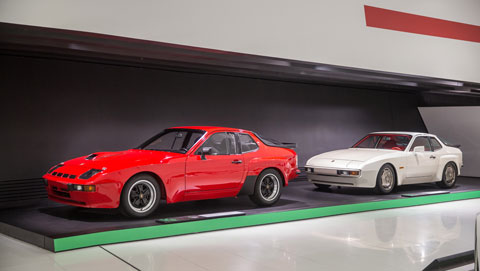
The Porsche 928, which celebrated its premiere at the Geneva Motor Show in March 1977, was originally intended to replace the 911. The 928, regarded as the new sports car from Porsche, is the only sports car to date to be awarded the title "Car of the Year". It broke completely new ground as a Gran Turismo and luxury sports car with significantly more driving comfort and a large luggage compartment.
In September 1981, the 944 followed, which was positioned as the link between the 924 and the 911 with its 163 hp four-cylinder engine of its own manufacture. The 944, which impressed with its successful sales figures, offered Porsche enthusiasts an extended model family. By the end of production in 1991, 163,302 sports cars of the 944 series had been produced.
In the special exhibition, the Cabriolet study from 1985 can be seen for the first time. The model, painted in flamingo pink, is characterized by a 183 hp four-valve engine with catalytic converter, airbag and ABS.
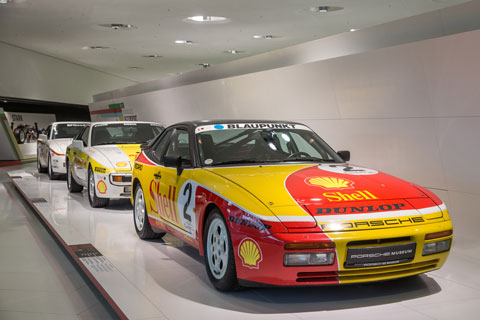
Other 944 models presented in the special exhibition include the "Luna" project, with which the Austrian long-distance specialist Gerhard Plattner completed an endurance test from North America via Europe to Asia within 258 days and 384,405 kilometers in 1987 - thus covering the distance from the earth to the moon.
The highlight of the transaxle series at the time was the 968, which benefited from 15 years of technical evolution. At its heart was a 240 hp 3-liter engine, which with 305 Nm was considered the world's highest-torque four-cylinder naturally aspirated engine.
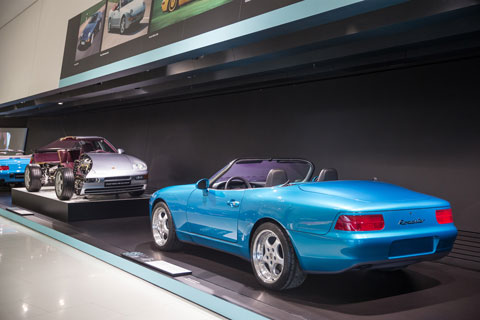
Under the direction of the then chief designer Harm Laagay, a roadster study of the Porsche 968 was created in 1992, which visitors can certainly look forward to seeing. The main features of this prototype were the soft and muscular shape of the fenders, a dynamic cockpit cut-out and a highly emotional interior. At the end of 1992, however, the 968 Roadster project was discontinued in favor of the Boxster study presented at the beginning of 1993.
The special exhibition at the Porsche Museumcan be visited until October 16, and the most beautiful exhibits are alsoimmortalized in our photo archive .