On the road in the best car in the world...


In its first test, Auto Motor und Sport magazine described the Mercedes-Benz 450 SEL 6.9 from the W 116 model series as the best car in the world. That was almost exactly 40 years ago and a self-experiment reveals how the automobile as a whole has evolved.
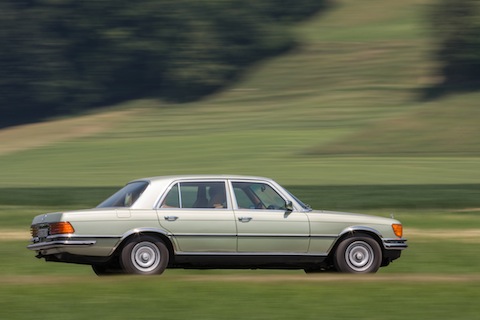
Eight cylinders with a total displacement of 6.8 liters and 286 hp were needed by the saloon, which was just over five meters long, to accelerate from 0 to 100 km/h in around eight seconds and reach a top speed of 234.1 km/h. Thanks to better aerodynamics and less weight, a Volkswagen Passat with a two-liter turbodiesel can achieve this today. As a side effect of "downsizing", the Passat consumed five to eight liters of diesel fuel, while the Mercedes at the time consumed 15 to 23 liters, or even 28 liters.
There was room for five people in the 1.87-meter-wide Mercedes saloon; the same family sits almost as comfortably in the modern Passat. And of course the Passat is significantly cheaper when adjusted for inflation. But of course it is also much less rare.
Can we still understand today that the 6.9-liter was the measure of all things back then? Actually, yes, because even today the large saloon is pleasant to drive and feels much easier to handle than its exterior dimensions and weight would suggest. However, you only realize how good the W 116 really was back then when you sit in other cars from the 1970s, such as an Opel Ascona or an Audi 80, vehicles that are closer to today's Passat in terms of design than the S-Class, but which required significantly more compromises back then than the top Mercedes model.
The "innovative standard extras" of the large saloon are also interesting! For example, cruise control was on board and the interior lighting switched off with a delay. Both were extensive comments to journalists at the time, but today a car no longer even notices them, such features have become such a matter of course.
We recently published a comprehensive driving report .