The somewhat different Volvo PV 36 "Carioca"

Volvo 's image was primarily influenced by the cars of the seventies and eighties, which were considered safe and attracted attention with their robustness and somewhat coarse design.
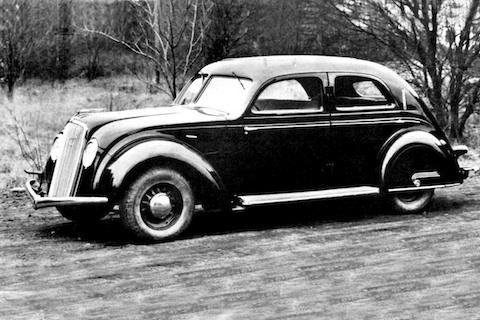
But Volvo also built completely different cars, such as the PV 36, a streamlined sedan with an all-steel body, as early as 1935.
Equipped with a six-cylinder engine with 84 hp, a top speed of 120 km/h was possible, which was quite an achievement in the 1930s, especially as the aerodynamic shape also offered passengers a great deal of comfort.
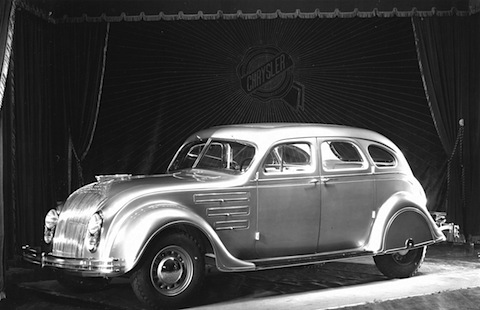
A comparison with the Chrysler Airflow , which appeared in 1933, shows that the Volvo engineers had cast more than a sideways glance at competing products from the USA. In contrast to the Volvo, which was only built around 500 times between 1935 and 1938, the Chrysler Airflow managed to sell almost 30,000 units. In both cases, relatively high prices and probably also a public for whom the shape was too modern prevented greater sales success.
The fact that the PV 36, which was also known as the "Carioca", was also a robust Volvo is proven by the story of a car that had to drive on a dry riverbed during a long journey from Sweden to Iran. Apparently, the riverbed was so uneven that the entire contents of the suitcases were destroyed. However, the Volvo withstood the strain without suffering any damage.